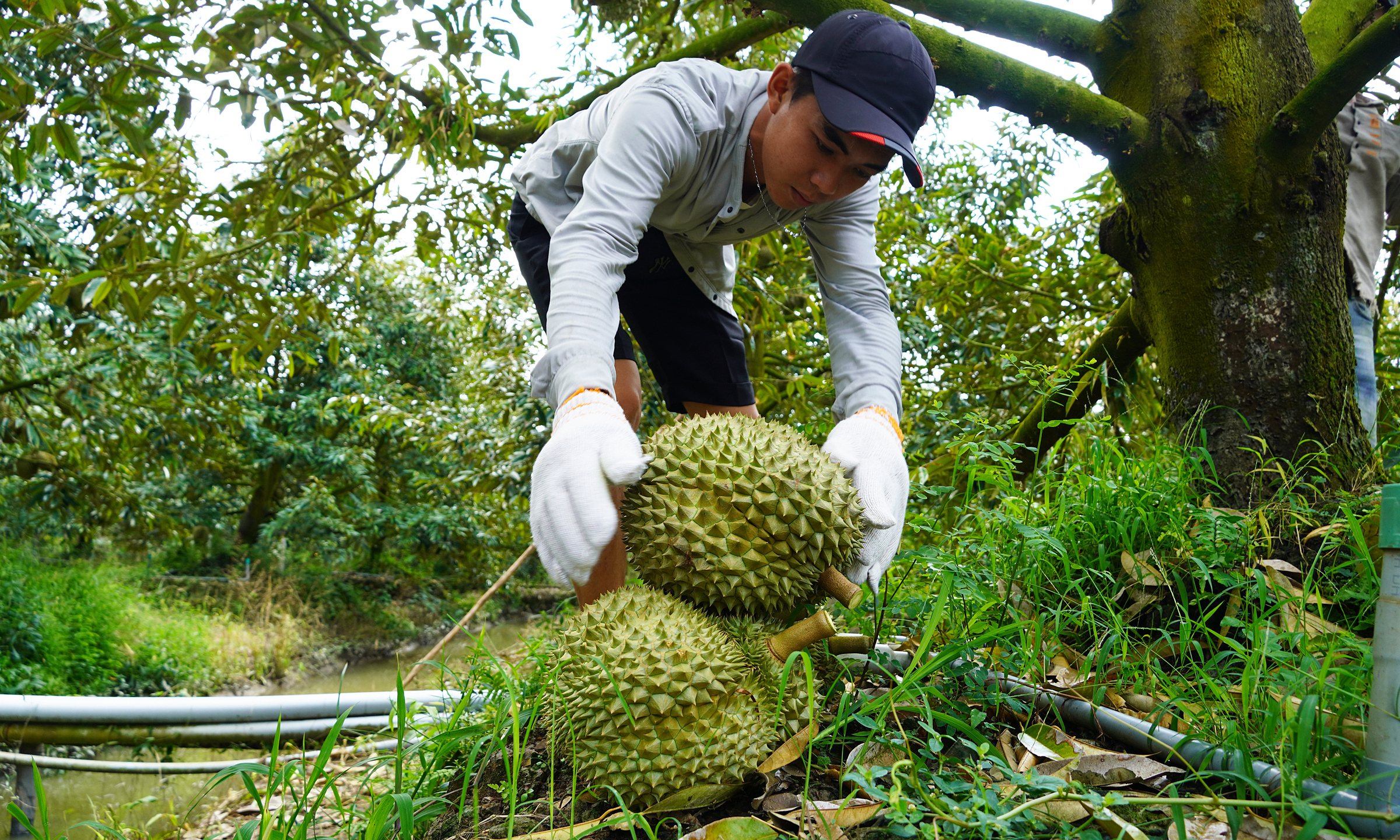
Dak Lak is preparing to host its first-ever durian farm auction, aiming to connect businesses directly with growers and address market uncertainties. The auction, featuring approximately 4,600 tons of export-standard durian, is part of the 2026 Dak Lak Durian Festival. Lai Duc Dai, Chairman of Krong Pak Commune People's Committee, announced on 8/7 that preparations are nearing completion.
The initiative will involve about 200 hectares of durian farms, all possessing cultivation area codes and meeting traceability requirements. These selected farms are expected to yield 4,600 tons of fruit. To ensure quality, soil, leaf, and fruit samples from all participating areas underwent testing, with results meeting required standards. Businesses will visit the farms on 12/7 to assess production processes before submitting their bids.
Scheduled from 22/7 to 20/8, the auction will employ a direct, closed-bid format for individual farms. Starting prices will be determined by the growers' proposals at the time of the auction. In addition to the bidding, the locality plans to showcase OCOP products, foster business connections, introduce cultivation areas, and livestream the auction sessions.
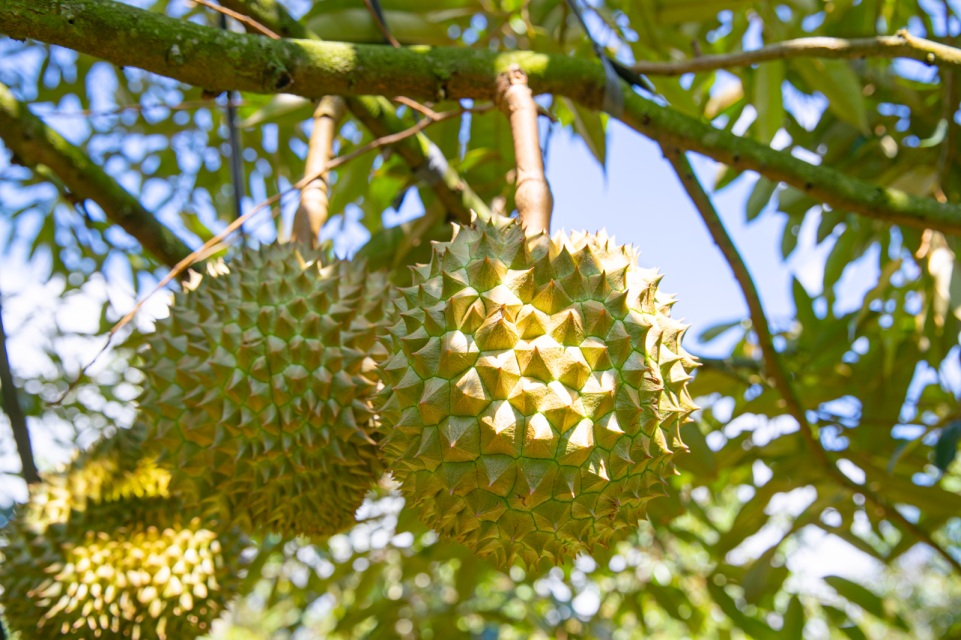 |
Durian in the Central Highlands. Photo: Hong Chau |
Durian in the Central Highlands. Photo: Hong Chau
This inaugural auction comes at a critical time, as durian prices in Dak Lak have fallen significantly compared to last year. For instance, Ri6 durian is currently priced at 20,000-38,000 VND per kg at the farm, a notable decrease from 40,000-50,000 VND during the same period last year. Similarly, Thai Dona durian is being purchased for 55,000-68,000 VND per kg, about 25,000 VND lower than the previous year. This price decline is attributed to a sharp increase in supply during the main harvest season and the temporary suspension of some cultivation area codes and packing facilities.
Krong Pak Commune, a key durian-growing region, boasts approximately 3,000 hectares of durian, with 1,400 hectares already holding cultivation area codes. This year, the commune anticipates a harvest of 50,000 tons, valued at roughly 3 trillion VND. However, the temporary suspension of 5 of 37 cultivation area codes and 6 of 11 packing facilities within the area poses a challenge to export durian output. In response, the local authorities are strengthening post-inspection measures, monitoring cultivation areas, and strictly penalizing violations to uphold export standards.
Thi Ha