Four months ago, Wang Lei, 39, decided to part with his 10-year-old electric vehicle (EV) as its battery life and range diminished. He was among the first to purchase an EV in 2016, when the industry was still in its experimental phase.
Wang sold his car through a government old-vehicle trade-in program, receiving 20,000 yuan (over 2,800 USD). For the waste battery, he chose a small scrap dealer on the outskirts of the city, which offered the highest price on Douyin, 8,000 yuan (1,100 USD).
Many car owners follow Wang's example, selling their waste batteries to small, informal facilities for profit. According to battery recycling experts speaking to MIT Technology Review, these facilities can offer higher prices because they operate illegally, bypassing many compliance costs.
After a decade of rapid EV growth, China faces a massive disposal challenge for first-generation batteries. This year, according to Securities Daily, the number of discarded EVs is projected to reach 15-20 million units, along with approximately 60 GWh of battery waste. Xinhua News Agency reports that the country's used battery volume has reached 1,04 million tons, with forecasts indicating a surge to 3,5 million tons by 2030.
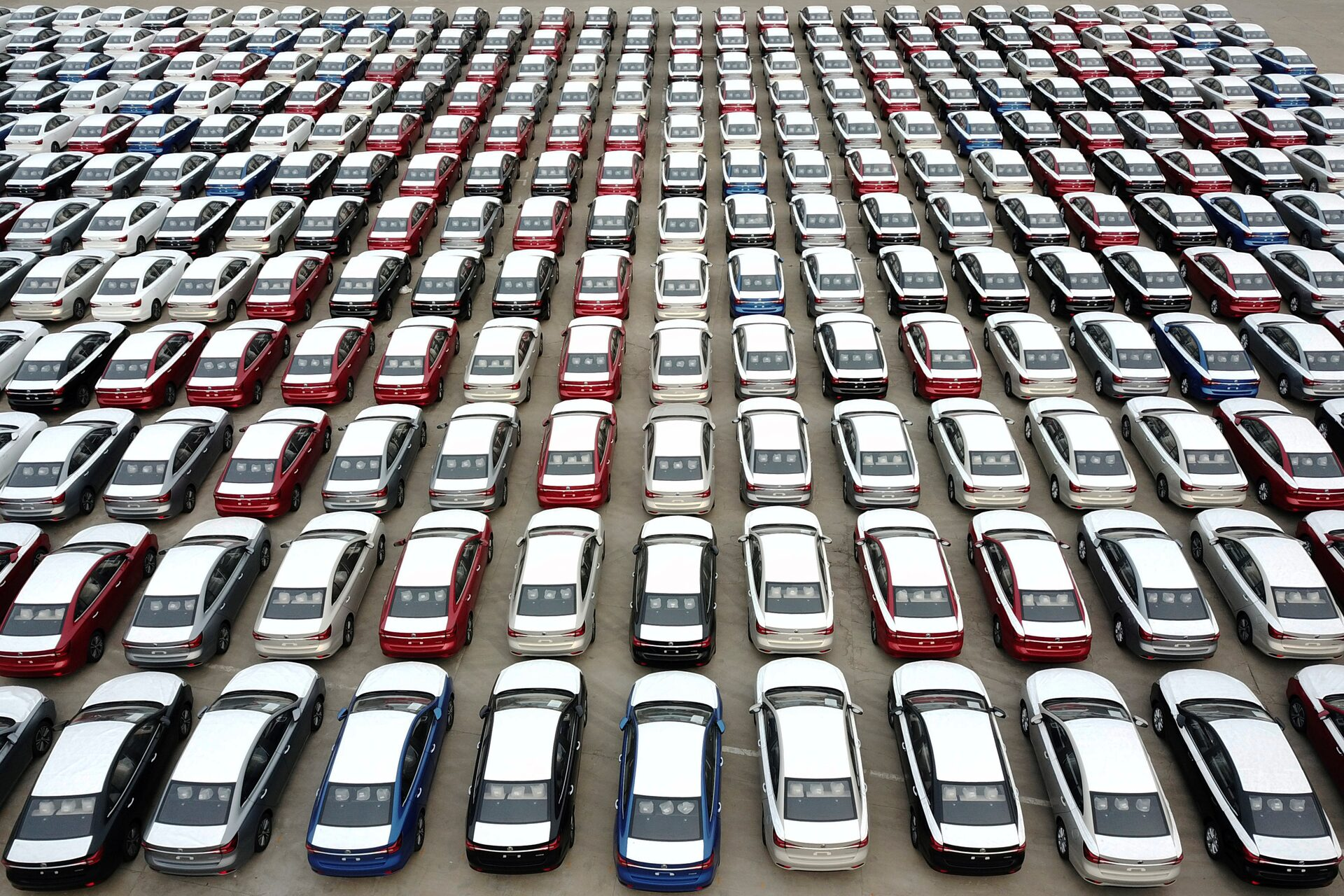 |
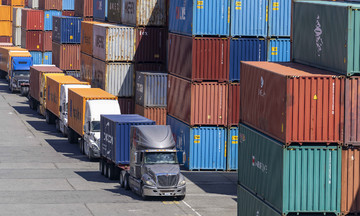
Vehicles awaiting export at Lianyungang, Jiangsu province, China, 2/4/2020. Photo: Reuters |
This situation puts pressure on China's developing recycling system, as most waste batteries flow into the "underground" economy, comprising numerous small, unofficial operations.
If waste batteries enter the official recycling stream, they are processed in two ways, depending on their post-inspection performance. Batteries retaining significant usability (though insufficient for vehicle operation) can be repurposed for battery energy storage systems (BESS) or emergency backup systems. Those that do not meet standards are fully recycled by dismantling them to recover valuable metals like lithium, nickel, cobalt, and manganese, creating recycled materials for new battery production.
Both methods require substantial initial investment. In contrast, small businesses often lack capital and focus on immediate profits. To compete for waste batteries, they purchase them at higher prices from consumers, with processing and recycling procedures that bypass environmental protection, fire safety, and wastewater treatment standards.
Gary Lin, a worker at several unlicensed facilities from 2022-2024, stated that they typically open batteries, reassemble internal components, create new battery packs, and then package them for resale. Sometimes, these batteries are sold to consumers as "new" products. Overly old or damaged batteries are dismantled to separate precious metals. "Wastewater used to soak batteries is often discharged directly into sewers," he said.
This disposal method can release harmful substances, polluting water and soil, and poses fire hazards. This is why the Chinese government is working to redirect waste batteries to official, certified recycling facilities.
Since 2018, the Ministry of Industry and Information Technology has issued five "white lists" of approved electric battery recycling facilities. This catalog currently includes a total of 156 companies. In practice, major automotive and battery manufacturers are also involved in collecting and recycling these products from consumers, offering discounts on new product purchases in return.
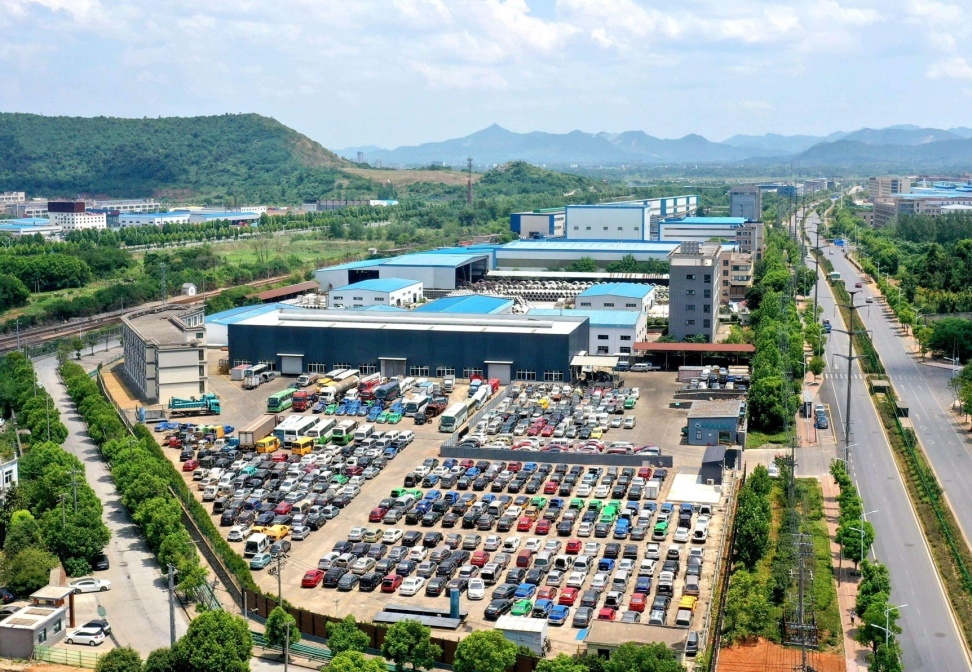 |
Vehicles being dismantled at a factory in Tongling, Anhui province, China. Photo: People's Daily |
BYD operates its own recycling facilities and collaborates with professional material recovery units, processing thousands of expired battery packs annually. Geely has established a circular production system, combining the dismantling of discarded vehicles with the recycling of EV batteries.
CATL has developed one of the industry's most advanced battery recycling systems through its subsidiary, Brunp, with over 240 collection points and a processing capacity of up to 270,000 tons per year. They claim to recover over 99% of nickel, cobalt, and manganese from waste batteries.
"Battery manufacturers are the most suitable entities to recycle them," said Alex Li, a battery engineer in Shanghai. He explained that they possess deep knowledge of chemistry, supply chains, and the subsequent application steps for recovered materials. Li added that automakers and battery manufacturers "need to create more of a closed-loop recycling economy in the future."
Closed-loop recycling is a method that maximizes material recovery, regenerating raw materials to produce new products of equivalent quality. This cycle of raw materials, production, use, and recycling can repeat continuously without degrading material properties, forming a closed circular process that minimizes environmental waste and conserves resources.
However, from the consumer perspective, many do not receive support for waste battery collection from vehicle sellers. This is because many EV manufacturers have exited the market after a decade of intense growth. In just five years, over 400 small EV brands and startups have gone bankrupt due to price wars, making survival challenging in the EV market. According to the MIT publication, China still has around 100 active EV brands.
Analysts predict that the volume of waste batteries will increase further in the coming years, as the first wave of EVs purchased with generous government subsidies becomes due for replacement. "China needs to move towards a more comprehensive EV battery recycling system. They need a system that can trace, reuse, and recycle on a large scale, instead of allowing too many batteries to leak into the underground market," Li stated.
Conversely, a large volume of waste batteries presents significant potential for the recycling industry. Du Huanzheng, a professor specializing in circular economy at Tongji University (Shanghai), noted that in the past, the recycling industry was primarily driven by environmental concerns. Now, mineral recycling also helps ensure resource security and has become a new growth driver, reducing dependence on imported metals from US allies.
With over 40 million new energy vehicles in circulation, China is striving to transform their batteries into an "urban gold mine" rather than an environmental burden. According to the State Administration for Market Regulation (SAMR), the market potential for recycled batteries in the country is 48 billion yuan (6.75 billion USD), projected to double in the next five years.
Bao Bao (according to MIT Technology Review, SCMP)