Effective 00:01 on 24/2 (US time), goods imported into the US are subject to an additional 10% tariff, following an executive order signed by President Donald Trump on 20/2.
This new tariff is added to existing duties, such as the 25% rates on steel, aluminum, copper, lumber, oto, and parts (under Section 232). It also applies to Chinese goods (under Section 301, with varying rates for different items). Furthermore, basic tariffs under the Harmonized Tariff Schedule (HTS) and Most Favored Nation (MFN) status remain in effect.
The average effective import tariff into the US decreased to approximately 11,6%, down from 15,3%. This change occurred after the Supreme Court rejected tariffs imposed under the International Emergency Economic Powers Act (IEEPA), according to calculations by Global Trade Alert.
The effective import tariff represents the actual average duty applied to imports, calculated based on the total value of goods. This rate is often lower than nominal tariff rates due to the utilization of incentives and exemptions.
Despite the reduction in average US import tariffs, experts and officials warn that consumers are unlikely to notice a significant change. Kyle Handley, an economics professor at the University of California, San Diego, suggests that goods prices might decrease once imported inventory (subject to old tariffs) is sold. However, he notes this reduction would be minor, while uncertainty continues to affect US businesses and trade partners.
Data from Global Trade Alert indicates that around 90 US trade partners, including 10 major ones, now face lower average import tariffs. Notably, countries previously subjected to high IEEPA tariffs, such as Brazil, China, and India, will see substantial reductions with the implementation of the additional 10% tariff.
For instance, some Brazilian goods were previously subject to tariffs as high as 50% under IEEPA. However, from 24/2, the new rate for this South American nation is only around 10%. Similarly, the average import tariff on Chinese goods decreased from 36,8% to 26,9%.
For India, President Trump had previously lowered punitive tariffs from 50% to 18%. Yet, the abolition of IEEPA, replaced by the additional 10% rate, means Indian goods entering the US are now subject to tariffs of less than 14%.
Professor Kyle Handley of the University of California, San Diego, considers Brazil, India, and several Asian countries that reached trade agreements with Mr. Trump as "temporary winners."
Nearly 130 countries and territories experienced no change in tariff rates after the cessation of IEEPA tariffs. Only over 10 US partners, including Australia, Belgium, and Portugal, face higher tariffs following the imposition of the additional 10% duty under Section 122. However, the increase is minimal, averaging about 0,01-0,07 percentage points.
Even if the additional tariff rises to a maximum of 15%, countries such as Brazil, Canada, China, India, Indonesia, Mexico, and South Africa would still enjoy lower tariffs compared to before the US Supreme Court's ruling, according to Joe Brusuelas, chief economist at RSM US. Only a few nations, including the UK, Italy, Singapore, Argentina, Australia, and Saudi Arabia, would pay more or experience a noticeable impact.
US Trade Representative Jamieson Greer stated that tariff agreements negotiated by economies with the Trump administration remain valid. However, experts believe the reality is far more complex, as agreements signed from 4/2025 were based on various commitments and legal frameworks. Some provisions regarding reciprocal tariff modifications were implemented under IEEPA, while others relied on Section 232 or investment and procurement commitments.
The Supreme Court's ruling does not affect provisions outside IEEPA, so they remain in force. However, parts dependent on this act have lost their legal basis, rendering enforcement mechanisms obsolete.
For example, in the US-Switzerland trade agreement, the tariff floor applied to Swiss imports was based on IEEPA. With the cancellation of this tariff, the legal tool to maintain the floor no longer exists.
Similarly, for tariff reduction agreements, the US had agreed to lower tariff rates on Indian goods from 25% to 18%. But when the underlying 25% tariff (under IEEPA) was rejected by the court, the agreement to reduce it to 18% lost its validity.
Deepali Bhargava, Head of Asia-Pacific Research at ING, a Dutch investment bank, believes the US Supreme Court's ruling significantly improves India's negotiating position. "With the IEEPA threat removed, the country has more room to review elements of its agreement with the US, which might have been difficult to accept previously," she commented.
Therefore, to fully implement the signed agreements, the Trump administration must initiate other procedures to utilize the Section 122 framework or renegotiate based on new legal grounds.
On 23/2, the European Parliament (EP) postponed a vote on a trade agreement with the US. The EP plans to reconvene on 4/3 to assess whether the US has provided clear information on the current situation and committed to upholding the bilateral agreement reached last year.
Long-term tariff strategy
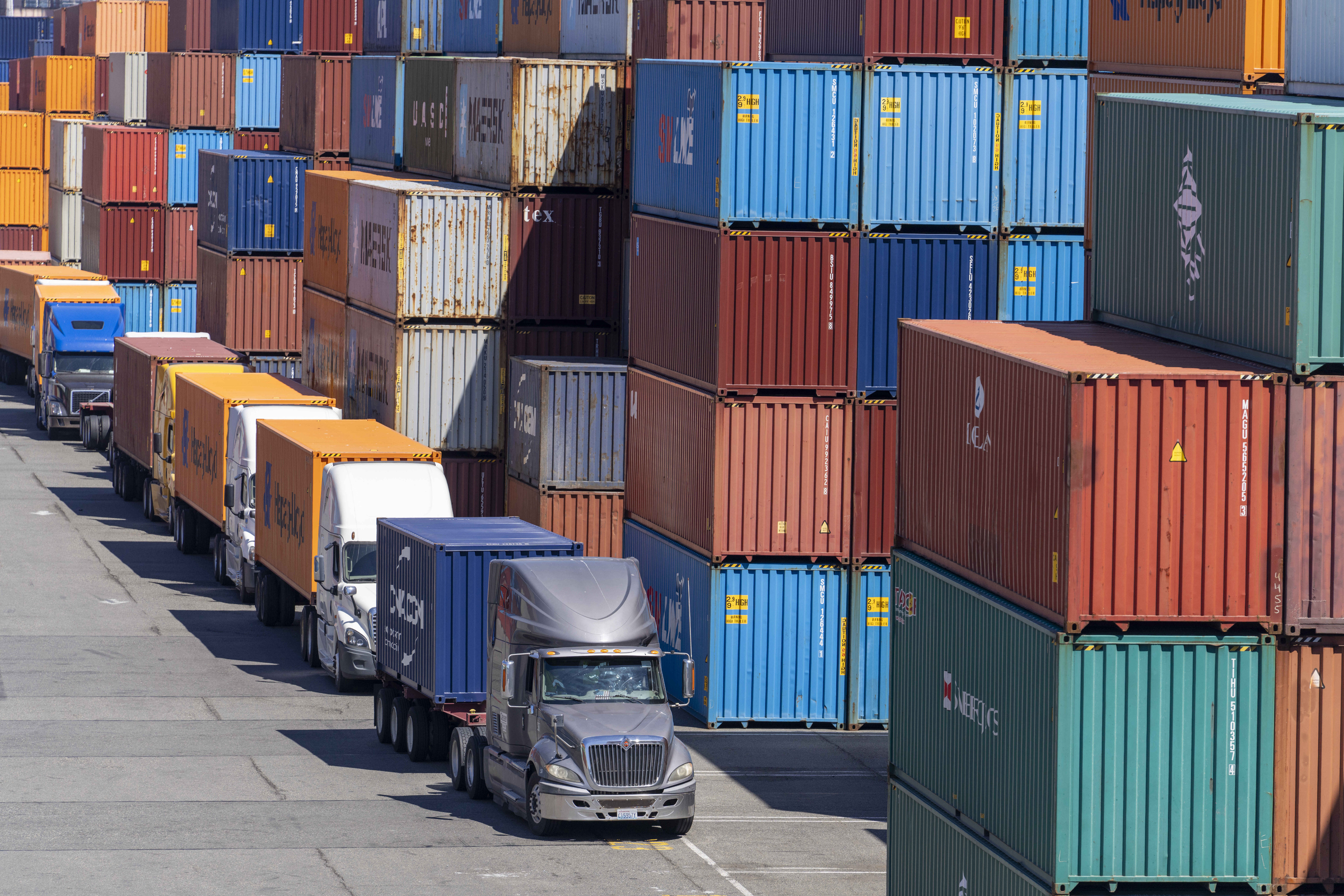 |
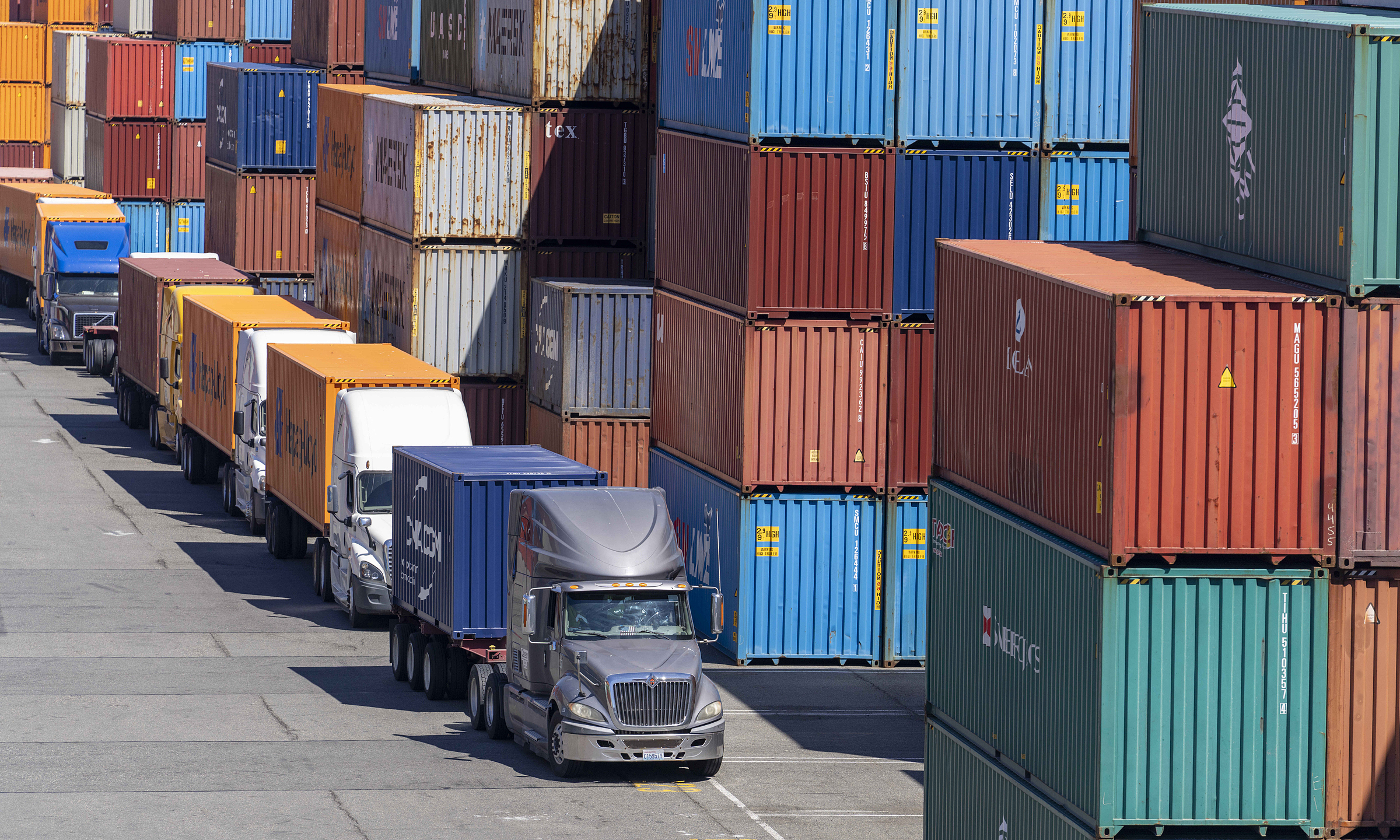
Container trucks at the Port of Seattle, Washington, on 11/8/2025. Photo: Reuters |
Unlike IEEPA tariffs, which had no specific expiration date, the additional tariffs (up to 15%) under Section 122 will expire after 150 days. After this period, Congress must approve any extension.
Analysts suggest that while US tariffs may decrease in the short term, the Trump administration's protectionist stance remains unchanged. The White House is shifting towards more robust legal instruments like Sections 232 and 301.
In fact, beyond existing tariffs, the US is expanding Section 232 investigations into robots, wind turbines, drones, and pharmaceuticals. Section 301 investigations into digital trade with Brazil, and digital service taxes targeting Canada, France, Austria, Italy, Spain, Turkey, and the UK are ongoing.
Last week, Jamieson Greer mentioned that the Trump administration might launch additional Section 301 investigations. These inquiries are expected to target most major trade partners, focusing on issues such as overcapacity, discrimination against US technology, and digital service taxes. The Trump administration anticipates these will proceed on an "expedited timeline."
On 23/2, President Trump warned partners not to withdraw from any previously negotiated trade agreements with the US, threatening to impose much higher tariffs using other legal tools.
Japan has also asked the US to ensure the new tariff regime is as favorable as their existing agreement. The UK and Taiwan (China) expressed a desire to maintain their agreed bilateral accords.
Meanwhile, China urged Washington to abandon "unilateral tariffs." The country's Ministry of Commerce stated its readiness to hold a new round of trade talks with the US.
Phi An (according to GTA, CNN, Reuters)