As the Mid-Autumn Festival approaches, Chinese-imported mooncakes are increasingly prevalent in the market, from 40-60 gram mini cakes sold by the kilogram to larger 300-500 gram varieties. Prices vary significantly across different sizes.
The mini mooncakes are the most affordable, sold by the kilogram for 78,000-100,000 dong, which amounts to about 25-30 pieces. These come in various colors and flavors, with fillings like lava, mung bean, red bean, and taro. In contrast, Vietnamese mini mooncakes in the popular segment typically cost 18,000-35,000 dong per piece.
For 100-150 gram mooncakes, Chinese products sell for 18,000-22,000 dong per piece, while Vietnamese mooncakes of the same weight range from 72,000-100,000 dong. Larger 250-300 gram Chinese mooncakes are also half the price of their Vietnamese counterparts.
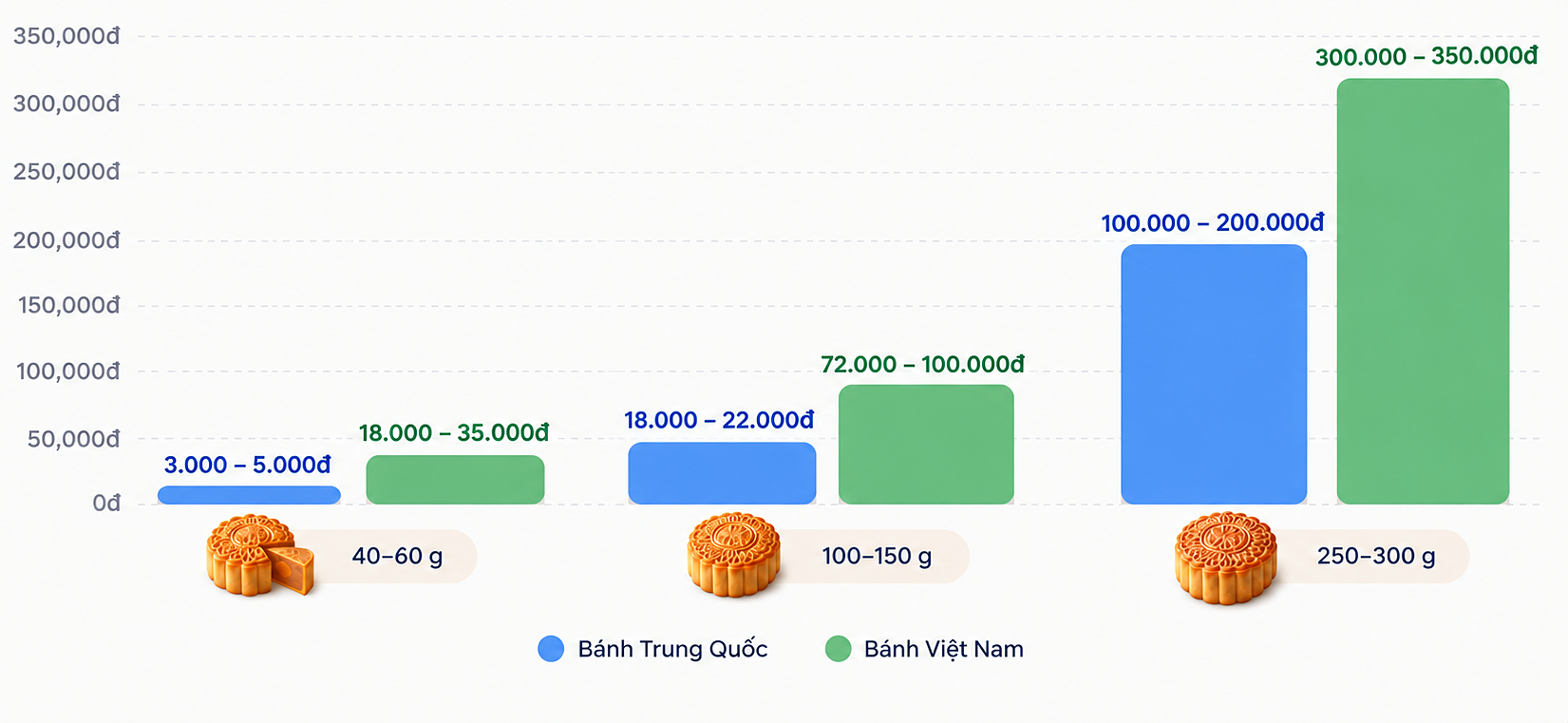 |
Comparison of Chinese and Vietnamese mooncake prices by weight and segment. Graphics by AI.
The scale of supply is a primary reason for the low prices of Chinese mooncakes. Importers often purchase directly from factories in large quantities. Chinese manufacturers also benefit from readily available raw materials and extensive production capabilities, which collectively reduce costs per product.
Wholesale prices on the Chinese market are also notably low. For instance, on 1688, Alibaba Group's domestic Chinese wholesale e-commerce platform, mixed mini mooncake boxes weighing 2,5-5 kg are offered for approximately 9-18 yuan per kg, which is 31,500-63,000 dong. This translates to a wholesale price of 800-1,600 dong per piece.
Other mooncake varieties, such as those with five-nut or red bean fillings, start from 0,95 yuan per piece, equivalent to 3,300 dong. Lava egg yolk, sea salt cheese, or Suzhou-style mooncakes are priced at 2,38-8,7 yuan, or 8,300-30,500 dong per piece. These are platform prices in China and do not include shipping, import, warehousing, or distribution costs to Vietnam.
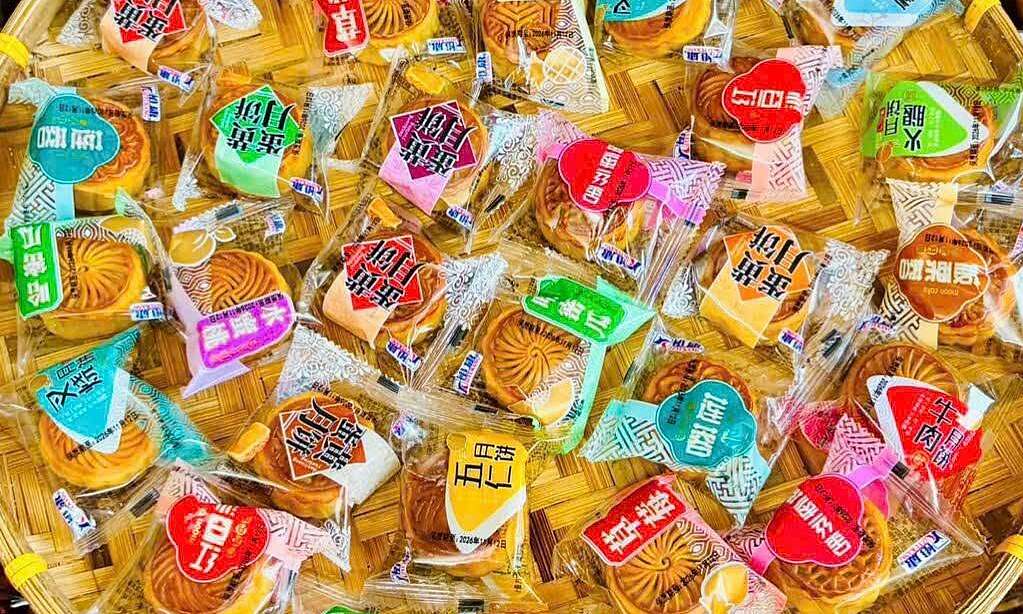 |
Chinese mini mooncakes are sold by the kilogram. Photo: Hong Chau.
The low price point makes Chinese mooncakes easily accessible to Vietnamese buyers. Ms. Phuong, a mooncake vendor in Tan Thoi Hiep ward, TP HCM, noted that Chinese mooncakes began arriving around mid-July of the lunar calendar. Mini mooncakes outsell larger varieties, accounting for about 6 out of every 10 sales.
Beyond mini mooncakes, larger varieties are also imported in significant quantities. A distributor in Lao Cai reported that this Mid-Autumn Festival season, mini mooncake imports into Vietnam reached tons. Each shipment of large mooncakes comprised 3,000-4,000 pieces, marking a 10% increase from last year. This distributor also began importing mid-range mooncakes in tin boxes, weighing about 1 kg, with some shipments totaling 1,000 boxes.
The preference for reasonably priced products is also a prevailing trend in China. According to iiMedia Research, the country's mooncake market sales in 2025 decreased by 5,9% to 28,24 billion yuan. Demand for high-priced gift boxes has declined, with consumers increasingly favoring affordable and popular segment products. This price-sensitive trend is expected to continue into 2026.
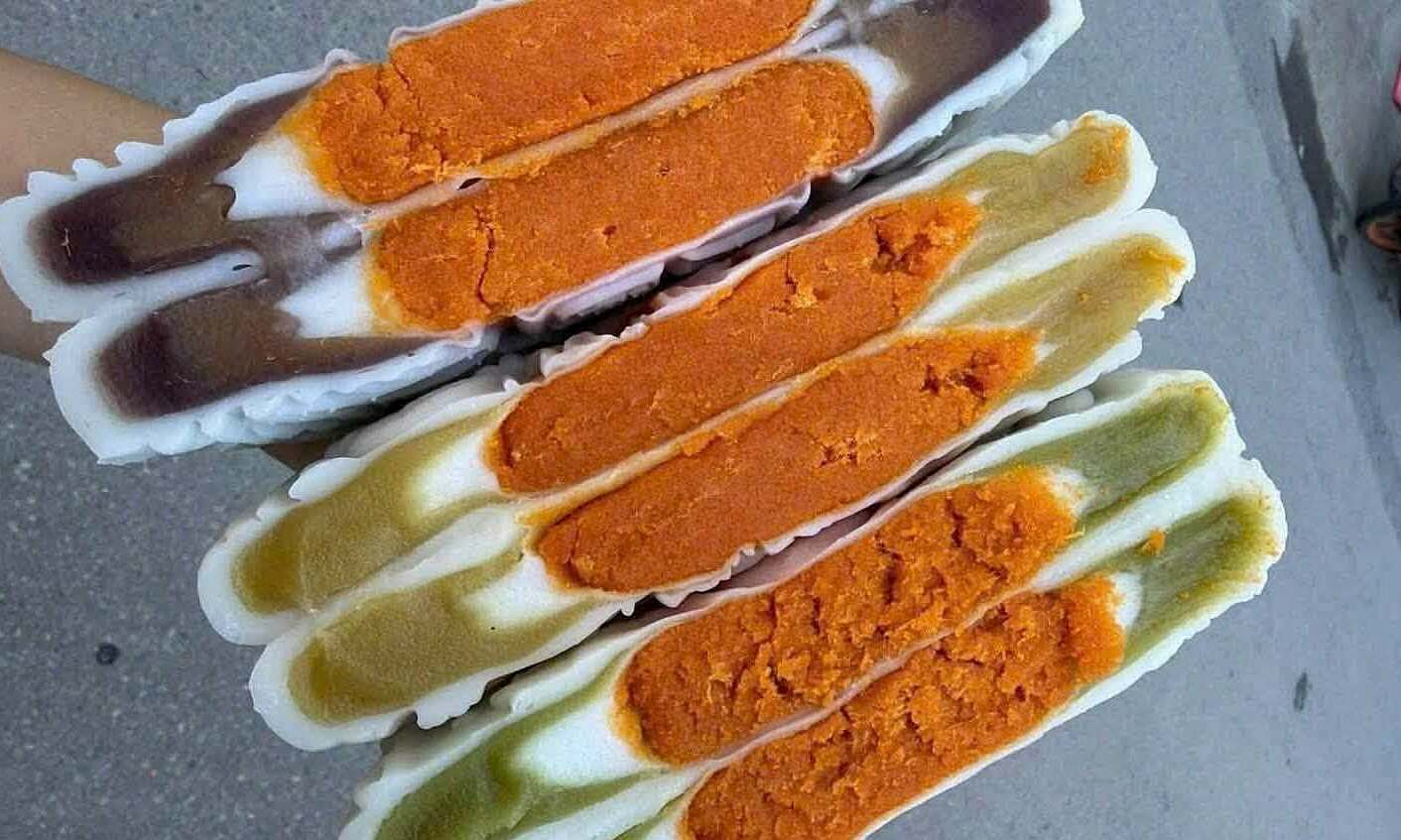 |
Large mooncakes with lava egg yolk, lotus seed paste, or taro filling cost 85,000 dong per piece. Photo: Contributed.
In Vietnam, a similar trend of tightening consumer spending has been observed for many years, as consumers increasingly prioritize price in their purchasing decisions. For mooncakes, lower prices can effectively reach the mass market segment.
However, consumers should remain vigilant about product origin and label information. In early September, market management forces in Quang Ninh uncovered two incidents involving the transport of Chinese-origin mooncakes lacking proper invoices and documentation, confiscating a total of 3,384 cakes and 112 bottles of wine. Authorities in Ha Noi and other localities have also identified and addressed cases of smuggled mooncakes without proper paperwork.
Authorities advise buyers to verify the origin, product label, and distributor before purchase, especially for products with unusually low prices.
Thi Ha