Watch US television for long enough, and viewers will notice that almost every advertisement falls into one of three categories: processed foods, pharmaceuticals, and those featuring a single personality – David Beckham.
An Australian television program even produced a humorous video, dubbing Beckham "the hardest working man in America", because he appears to dedicate every moment of his day to selling products. Beckham promotes everything from morning coffee and home improvement essentials to lunch items, watches, and cars, before concluding his day on a luxury mattress.
During the World Cup 2026, Beckham is expected to earn tens of millions of USD from advertisements broadcast during the three-minute hydration breaks between halves. On the Fox channel alone, he could feature in three distinct commercials. Beckham is part of campaigns for Home Depot, McDonald's, Stella Artois, Verizon, Adidas, Bank of America, Pepsi, and Lay's.
The Guardian notes that viewers often feel they can encounter the English superstar promoting a product whenever they switch on their televisions. Remarkably, Beckham began to dominate the advertising market in the world's largest economy well past the peak of his playing career.
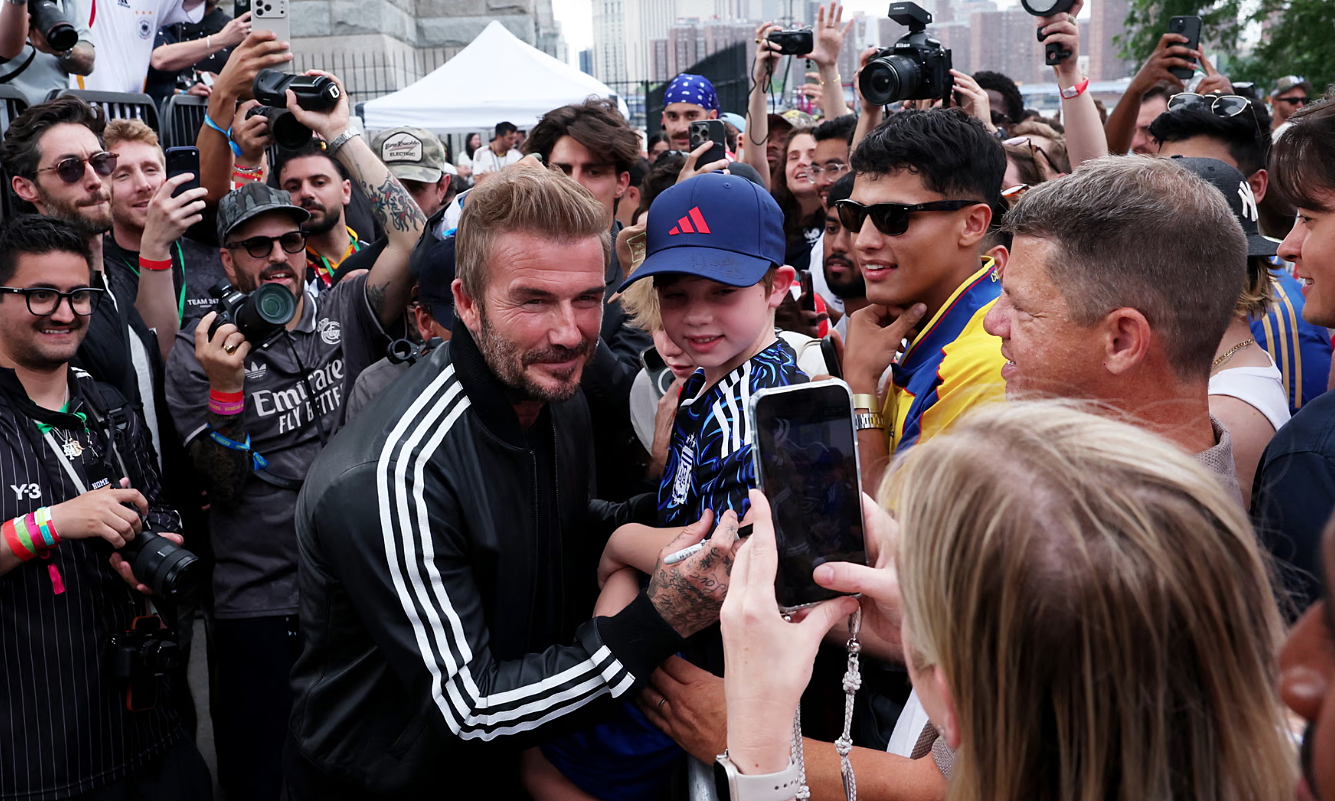 |
David Beckham with fans before the Norway - France match at Brooklyn Bridge Park. Photo: Reuters
Beckham relocated to the US in 2007, joining LA Galaxy at age 32 – an age when many footballers consider retirement. He was once considered one of the world's most elegant and outstanding midfielders.
His on-field talent, however, is now somewhat overshadowed by his global icon status. Few Americans recall the highly accurate crosses from the former Man Utd player's right wing or the pivotal free-kick against Greece that secured England's spot in the 2002 World Cup.
The Guardian suggests this distinction sets Beckham apart from other successful Britons in the US. Unlike The Beatles with music or J.K. Rowling with novels, Beckham did not conquer the American market with a specific talent or product. Instead, he leveraged and commercialized his own image.
Beckham's appeal stems from a meticulously crafted personal brand. Each appearance projects an elegant, positive, and likable image. He maintains a flexible image, allowing brands to associate with diverse messages.
A Miami hairstylist described Beckham as embodying a rugged, masculine charm, yet remaining elegant and approachable. The Guardian attributes his suitability for diverse customer groups and his status as a reliable face for promotional campaigns to this balance.
The most significant turning point in Beckham's US business ventures came with Inter Miami. In 2018, he co-founded the Major League Soccer (MLS) team with two Cuban-American businessmen, Jorge Mas and Jose Mas. Beckham served as the public face, while the Mas family provided financial backing and their network to develop the project.
This partnership transformed Inter Miami from a fledgling team into one of America's most valuable sports brands. The club is currently valued at nearly 1.5 billion USD.
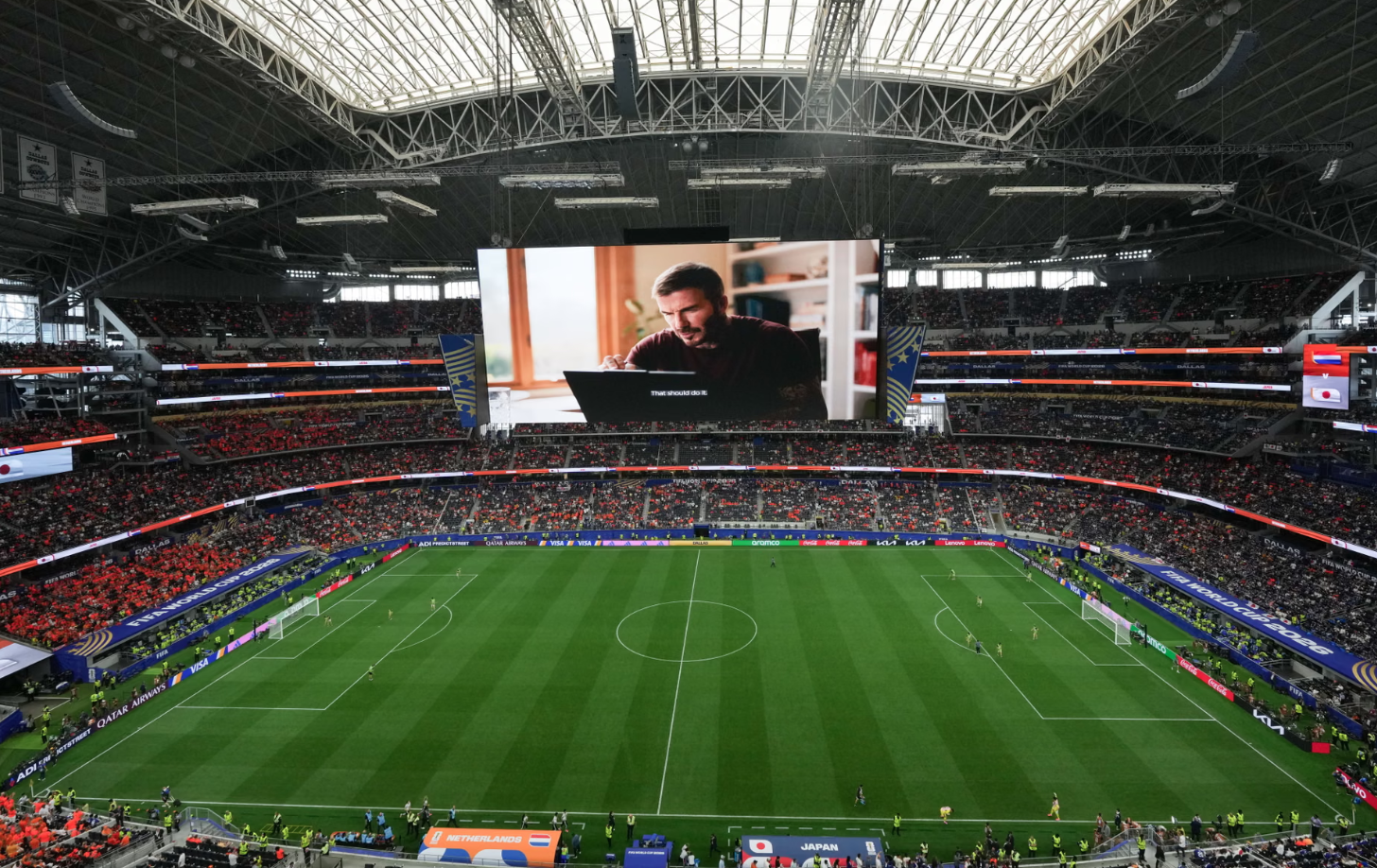 |
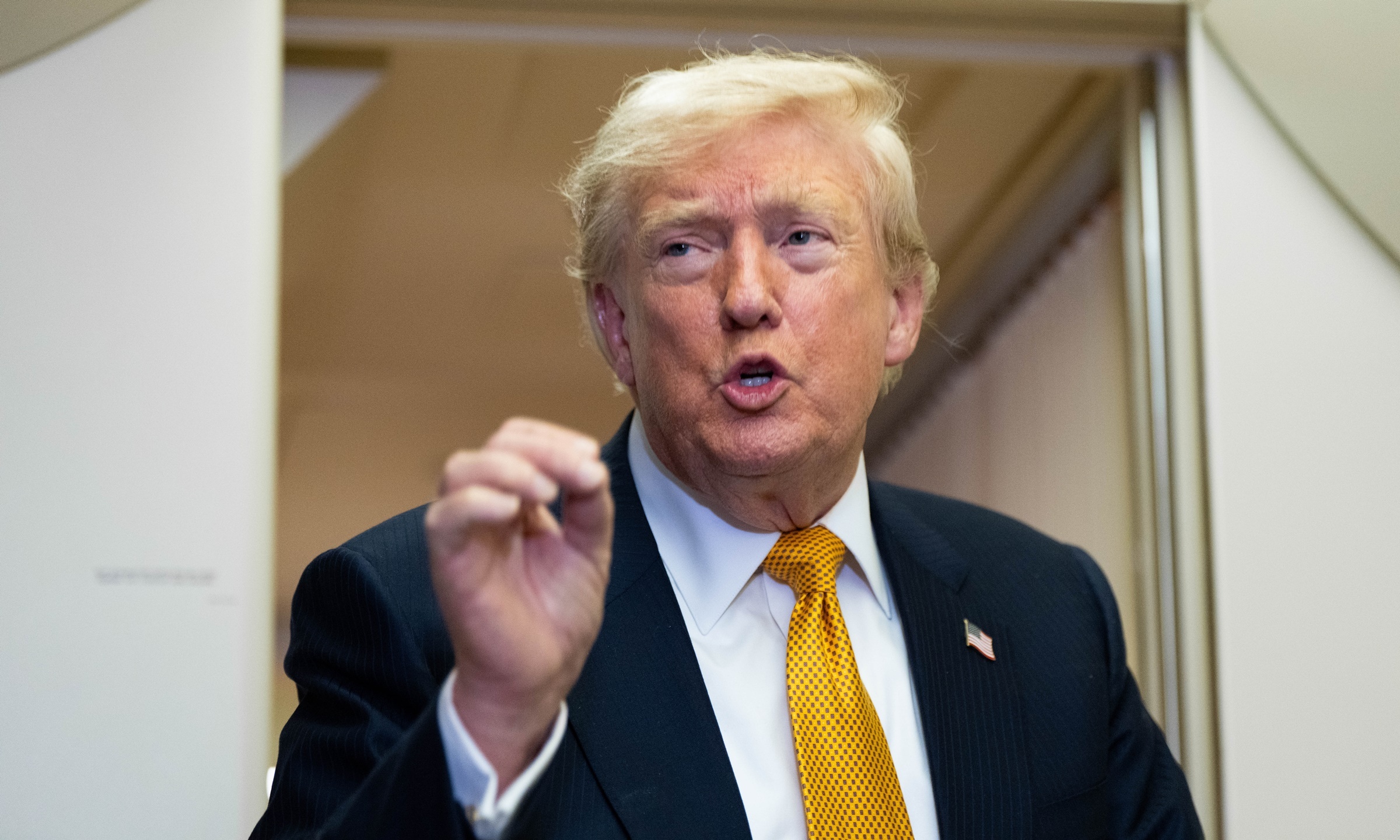
Beckham appears in an advertisement during the Japan - Netherlands match break. Photo: Dave Shopland/Shutterstock
Then in 2023, Lionel Messi joined Inter Miami. The Argentina captain not only elevated the team's professional standing but also generated a significant commercial impact. A giant mural of Messi in Miami's Wynwood district became a fan attraction, and Inter Miami jerseys quickly ranked among the world's best-selling. Beckham established the foundation, and Messi propelled this empire to explode.
Beckham even directly contributed to completing a portion of the Wynwood mural. This act symbolized the synergistic relationship between the two stars in building the Inter Miami brand.
By World Cup 2026, the culmination of David Beckham's three-decade-long strategy will become fully apparent. At times, Beckham appears simultaneously across multiple platforms: on stadium screens, in television commercials, and in person as a FIFA guest.
Forbes has even questioned whether Beckham's pervasive presence might lead to public saturation. However, The Guardian suggests this is unlikely, as the US market can absorb large-scale promotional campaigns. Moreover, Beckham has never concealed his ambition to become a global brand.
Nonetheless, the venerable British daily asserts that it will be difficult for any player from the UK to replicate Beckham's trajectory. This is not merely because he was a pioneer, but because after over 30 years of meticulous image cultivation, Beckham has transcended the role of a former player to become a global brand with enduring appeal across sports, entertainment, and advertising.
Tu Anh (according to The Guardian)