At the meeting of the Steering Committee for Price Management on 23/4, Deputy Prime Minister Nguyen Van Thang acknowledged the volatile international situation, which is putting significant pressure on domestic price levels. Therefore, he urged ministries and sectors to enhance monitoring of supply, demand, and prices of essential goods to prevent policy exploitation, especially in areas directly impacted by fuel costs such as transportation, logistics, construction materials, and food.
"Ministries and sectors must direct and require businesses to strictly implement price declarations and listings, and not exploit cost fluctuations to increase prices unreasonably", he stated.
The Deputy Prime Minister emphasized the need to ensure supply and demand solutions for essential goods such as gasoline, electricity, food, and production input materials. Agencies must promptly regulate the flow of goods between domestic and export markets to stabilize prices.
He stressed the requirement to prevent shortages or supply disruptions that could lead to sudden price increases, especially for essential items. Additionally, the People's Committees of provinces and cities must proactively implement market stabilization programs tailored to actual developments.
Functional agencies must intensify market inspection, examination, and supervision; strictly penalizing acts of speculation, hoarding, and price manipulation, as well as cases where prices are slow to decrease when input costs have fallen in line with global trends. Concurrently, management agencies must tighten controls on gasoline business and transportation activities in border areas, addressing actions that exploit price differences.
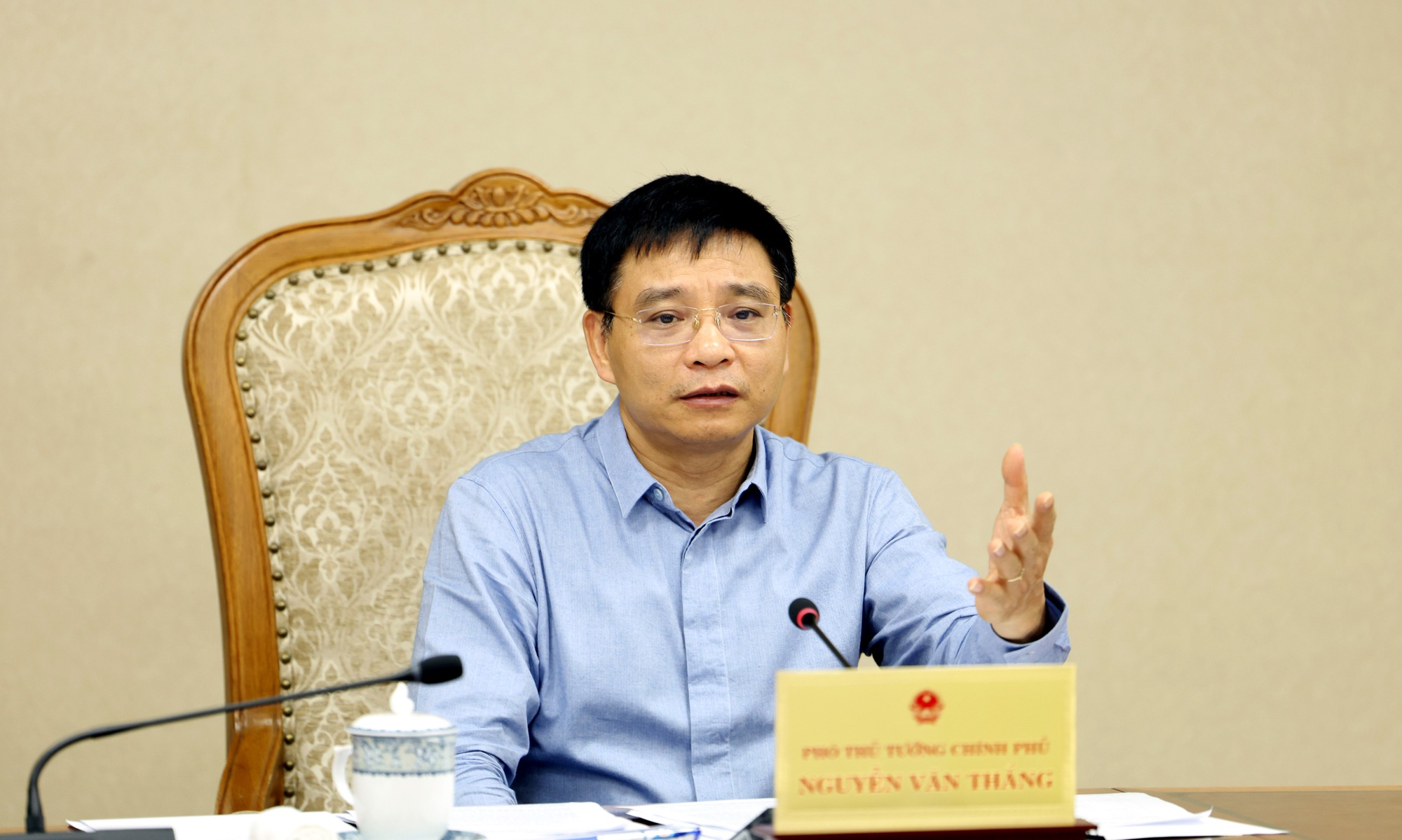 |
Deputy Prime Minister Nguyen Van Thang speaking at the meeting on 23/4. *Photo: VGP* |
The government leader's directive comes amidst conflicts in the Middle East, which have caused a shock increase in global energy market oil prices and a sharp rise in logistics costs since late February.
According to a report from the Ministry of Finance, the average consumer price index (CPI) for Quarter I increased by 3,51% compared to the same period last year, with core inflation rising by 3,63%.
Given these developments, the Ministry of Finance updated three inflation scenarios for 2026, projecting increases of approximately 4,5%, 5%, and 5,5% respectively. The State Bank of Vietnam forecasts average inflation this year to be around 4,5-5,5%. Meanwhile, international organizations predict Vietnam's average inflation to be about 3,8-4,9%.
At the meeting, ministries and sectors reported on upcoming price management solutions.
According to a representative from the Ministry of Construction, in April, the agency organized several inspection teams in localities regarding price listings and declarations and issued official documents to rectify existing issues.
The Ministry of Construction is also encouraging businesses to reduce parking fees, handling costs, and prices for services unrelated to gasoline costs to share difficulties with transportation businesses.
Additionally, according to Deputy Minister of Industry and Trade Nguyen Sinh Nhat Tan, the sector is accelerating the roadmap for E10 gasoline conversion to reduce dependence on imported mineral gasoline. Concurrently, the Ministry proposes not collecting taxes on goods in bonded warehouses, contributing to cost reduction and business support.
Representatives from ministries and sectors stated that the State adjusted several goods and services to support citizens and businesses. Specifically: the tuition fee exemption policy applies to students from preschool to the end of public high school nationwide; textbook prices are expected to decrease by 5-20% in the new academic year; and maritime pilotage service fees for Vietnamese ships have been reduced.
Phuong Dung