Vietnam Electricity (EVN) recently submitted feedback to the Electricity Regulatory Authority of Vietnam (ERAV) regarding the proposed 2026 electricity generation price framework for ground-mounted and floating solar power plants integrated with battery energy storage systems (BESS).
EVN argues that installing storage systems boosts project investment, resulting in a higher electricity price framework compared to conventional solar power plants. This means consumers will face increased costs for projects incorporating storage.
Currently, under the Ministry of Industry and Trade's price framework, solar power projects with battery storage receive a price approximately 140-190 VND per kWh higher than those without, representing an 11-14% increase.
However, EVN states that the investment efficiency and the impact of storage systems on power grid operations are "unclear". Consequently, the group recommends that the Ministry of Industry and Trade clarify control rights and responsibilities, installation objectives, mobilization mechanisms, and investor accountability for ensuring the availability of battery storage systems.
EVN also urged regulators to assess the power system's actual needs before approving solar or wind power projects with storage. This measure aims to prevent over-investment, a situation observed in other regional countries.
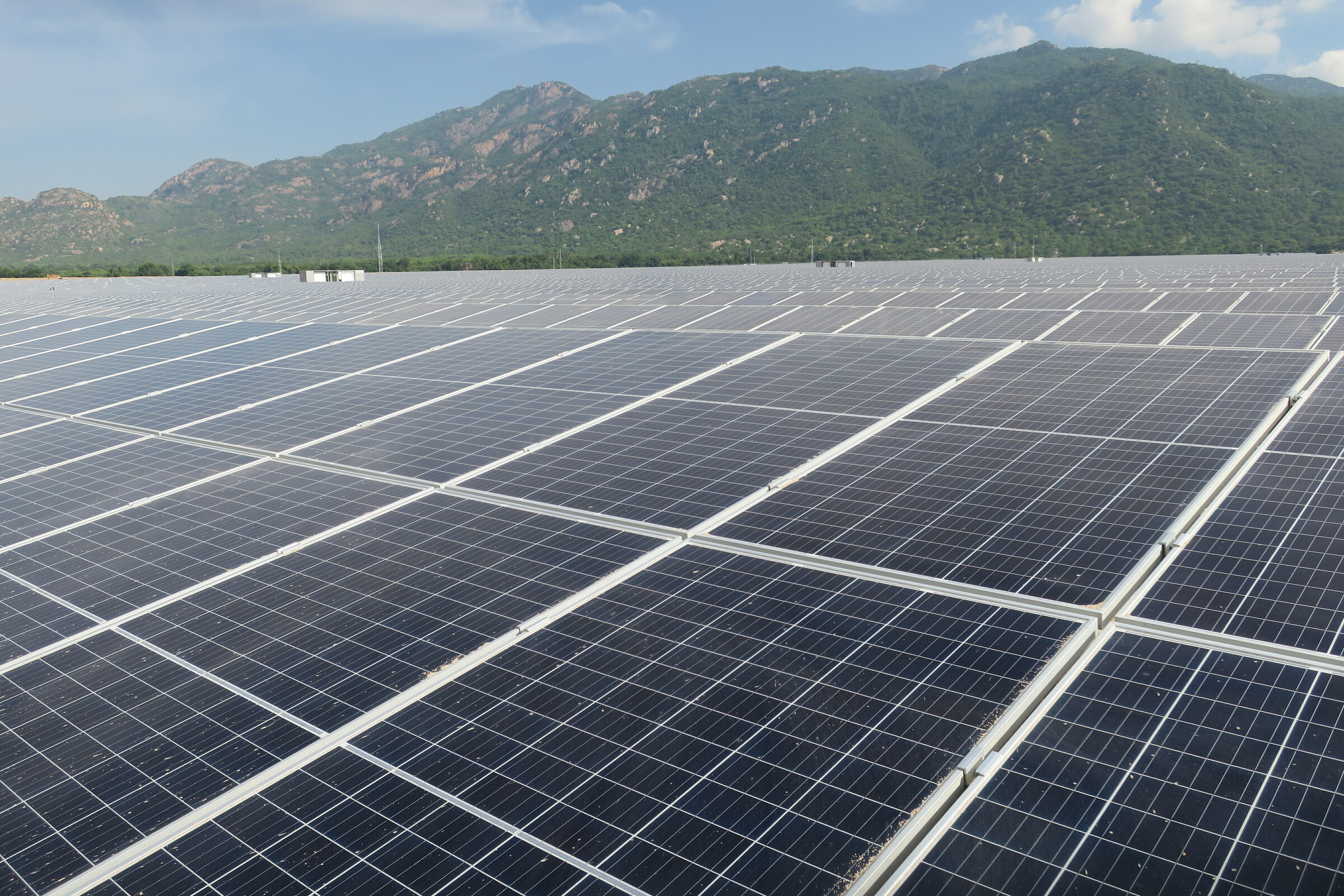 |
A solar power plant (clean, renewable energy) is operational in Binh Thuan. *Photo: Viet Quoc*
EVN's calculations indicate that the price framework for ground-mounted solar power with storage ranges from approximately 1,104-1,550 VND per kWh, varying by region and storage system investment assessment method. For floating solar power with BESS, prices fluctuate between 1,299-1,823 VND per kWh.
The highest price, nearly 1,830 VND per kWh, applies to floating solar power in the northern region. Conversely, the lowest price, over 1,100 VND per kWh, is for ground-mounted solar power in the southern region.
To establish this price framework, EVN assumes storage system capacity equals 10% of the solar power plant's capacity. The BESS investment rate draws from tender projects of domestic power companies, the Chinese market, and global averages.
Furthermore, EVN noted that some input parameters for calculations are currently for reference only. The group urged the Ministry of Industry and Trade to consult independent consulting firms and international organizations before officially approving the price framework.
With numerous localities undergoing mergers, EVN also recommended that the Ministry of Industry and Trade promptly provide guidance on categorizing provinces into the northern, central, and southern regions for applying regional electricity price frameworks, thereby preventing implementation issues.
Battery energy storage systems (BESS) store and discharge electricity to meet grid demands, balancing and ensuring stable power system operation. The revised Power Development Plan VIII targets developing 10,000-16,300 MW of storage systems by 2030 to support renewable energy integration.
Phuong Dung