This information was recently released by the Bureau of Labor Statistics, an agency of the US Department of Labor. It marks the first net decline in new jobs created in the economy in five months.
Most of the reduction was concentrated in the education sector. Hiring in the leisure and hospitality industry also fell for the second consecutive month, as the momentum from the FIFA World Cup faded.
Previously, economists surveyed by Reuters had expected the economy to add up to 80,000 jobs in July. Other forecasts were also optimistic, predicting job growth between 10,000 and 140,000.
Additionally, job gains in the world's largest economy for May and June were revised downwards, totaling 103,000 fewer than previous estimates.
Average job growth reached only 20,000 per month over the last three months, a significant drop from the 77,000 monthly average during the three months leading up to June. Heather Long, chief economist at Navy Federal Credit Union, stated, "No matter how you look at it, this number is very weak." She added, "This is a dismal report, indicating that the labor market is stagnating again."
Stephen Stanley, US chief economist at Santander U.S. Capital Markets, noted that this marks the third consecutive summer the country has seen unexpected weakening in its labor market. However, economists suggest these figures should not be interpreted as a sudden deterioration of the labor market, but rather a "slow hiring, slow firing" state.
"Overall, policymakers still assess the labor market as stable", Stephen Stanley said.
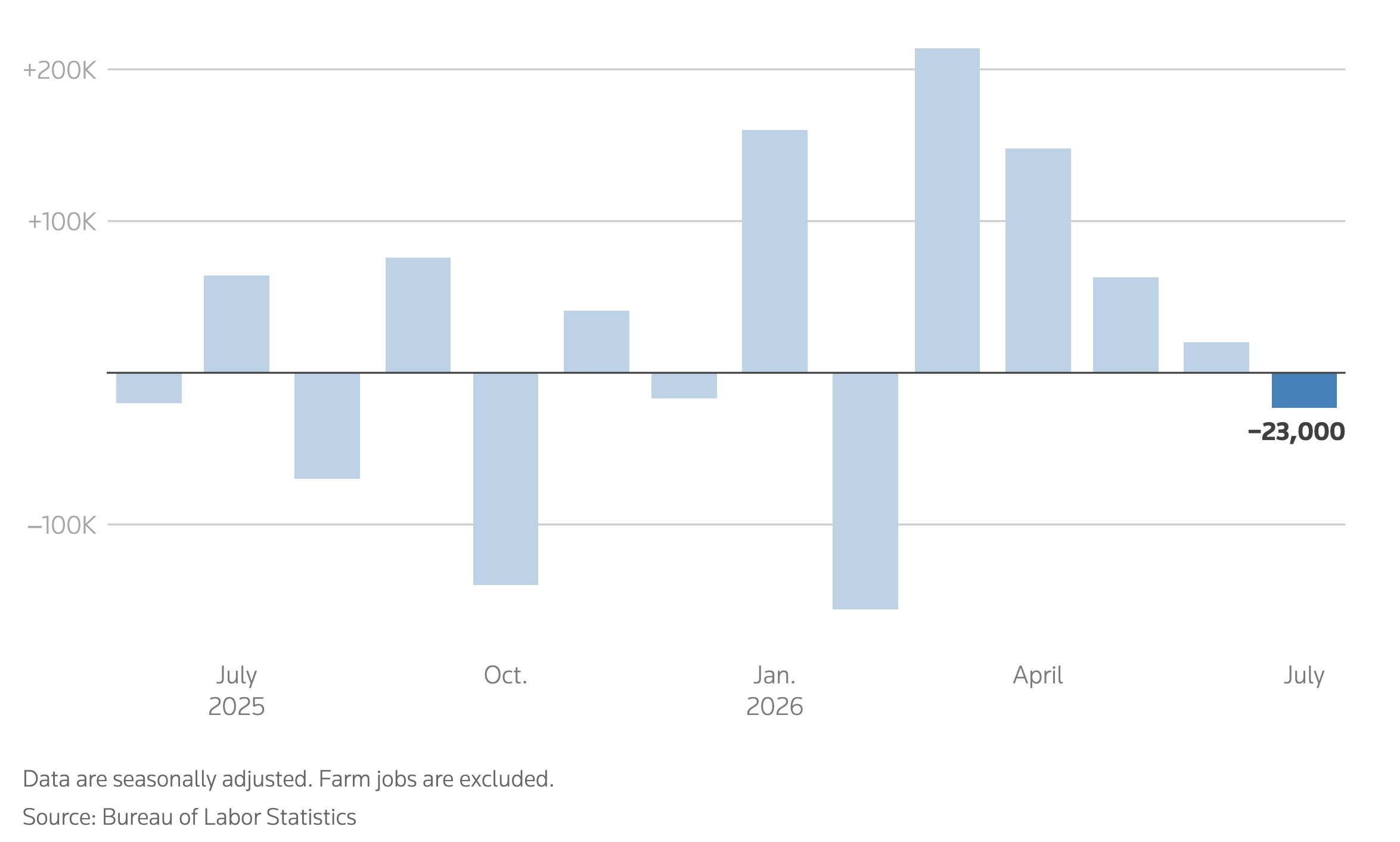 |
Monthly net non-farm jobs created in the US. Graphic: Reuters |
Economists estimate that the US economy needs to add between 20,000 and 50,000 jobs monthly to keep pace with the growth of its working-age population. This low job creation rate also reflects a shrinking workforce.
The labor force participation rate, which is the percentage of working-age Americans either employed or seeking employment, has decreased in six of the last seven months and is now at its lowest level since 2/2021.
According to LSEG, the market currently forecasts a 44% probability of the Federal Reserve (Fed) raising interest rates in September, down from 57% before the jobs report was released. Last week, the Fed maintained its benchmark interest rate in the range of 3.50-3.75%.
Aditya Bhave, an economist at Bank of America Securities, believes the Fed will raise interest rates by a total of 75 basis points this year, starting in September. He stated, "The Fed is likely to remain more focused on inflation than the labor market."
Phien An (according to Reuters, CNN)