The 30th International Symposium on Logistics (ISL 2026) took place from 5-8/7 at RMIT University Vietnam, Hanoi campus. Under the theme "Regenerative Supply Chain Intelligence", the event served as a forum for international experts to exchange ideas on operating efficient logistics systems while creating positive environmental, social, and economic value. The symposium featured keynote speeches, in-depth workshops for academics and businesses, and both in-person and online scientific research presentations.
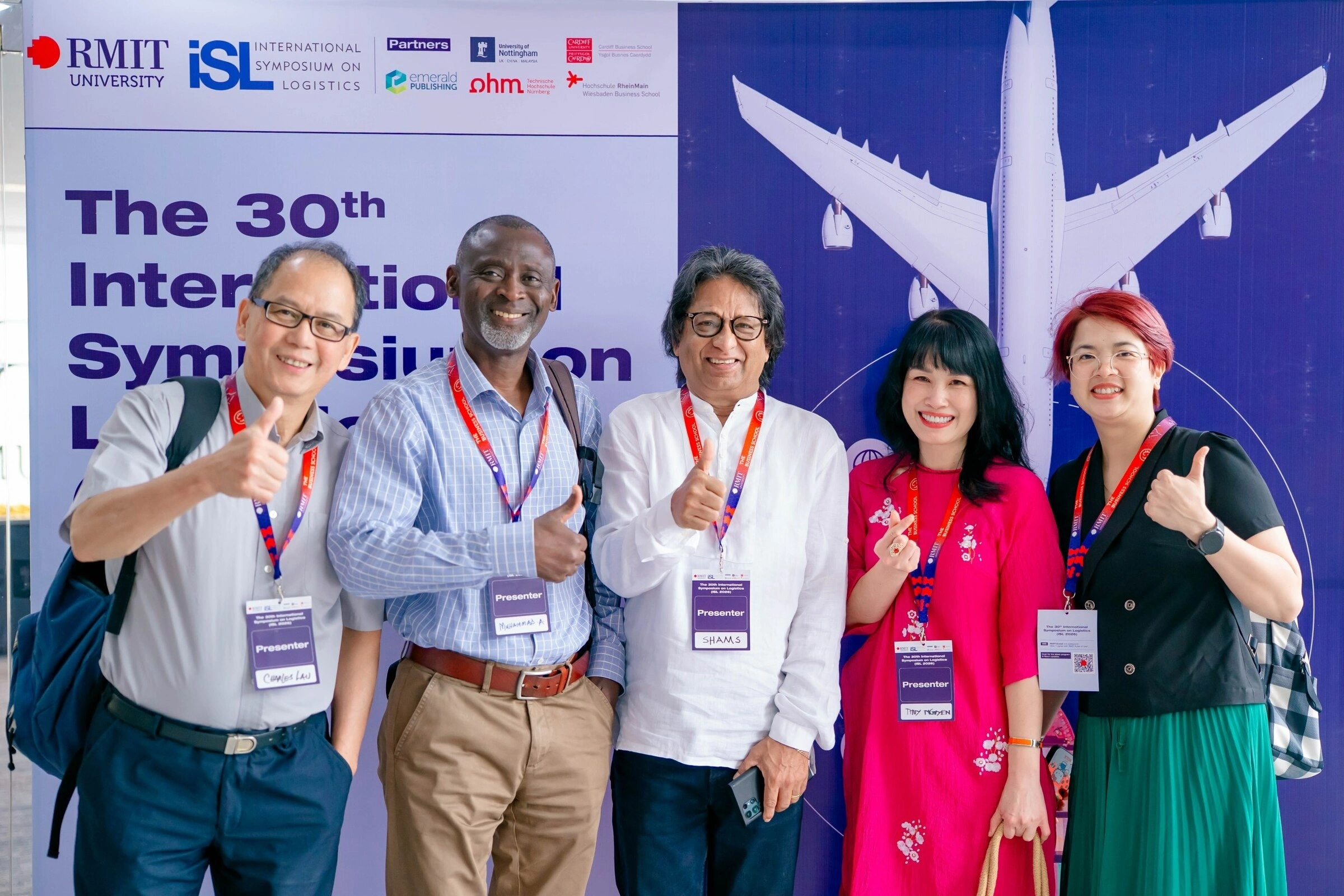 |
Scholars and experts attending the conference. Photo: RMIT |
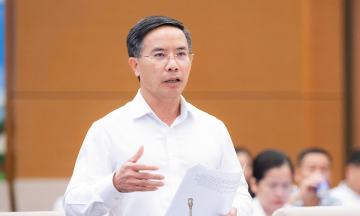
Speaking at the opening ceremony, Tran Thanh Hai, Deputy Director of the Import-Export Department, Ministry of Industry and Trade, noted the discussions were highly relevant given the unprecedented pressures on global supply chains. Hai stated that recent trade disruptions, caused by geopolitical tensions and climate change, demonstrate how weak supply chains can negatively impact entire economies.
According to the Import-Export Department leader, ensuring supply chain security now extends beyond protecting goods from loss or fraud. It also involves building resilience to ensure the continuous cross-border flow of essential goods and raw materials for production. To maintain effectiveness, Hai emphasized the need for stakeholders to change their mindset, enhance public-private cooperation, and prioritize investment in digital transformation and green logistics.
The conference theme reflects a new understanding that future supply chains must generate value for communities alongside their flexibility. Professor Kulwant Pawar from the University of Nottingham, ISL 2026 Chair, explained that while traditional models focus on cost optimization, regenerative supply chains actively contribute to the environment and society. "This process requires businesses to invest in digital capabilities, regulatory bodies to develop appropriate legal frameworks, and universities to fulfill their role in training high-quality human resources", Kulwant Pawar said.
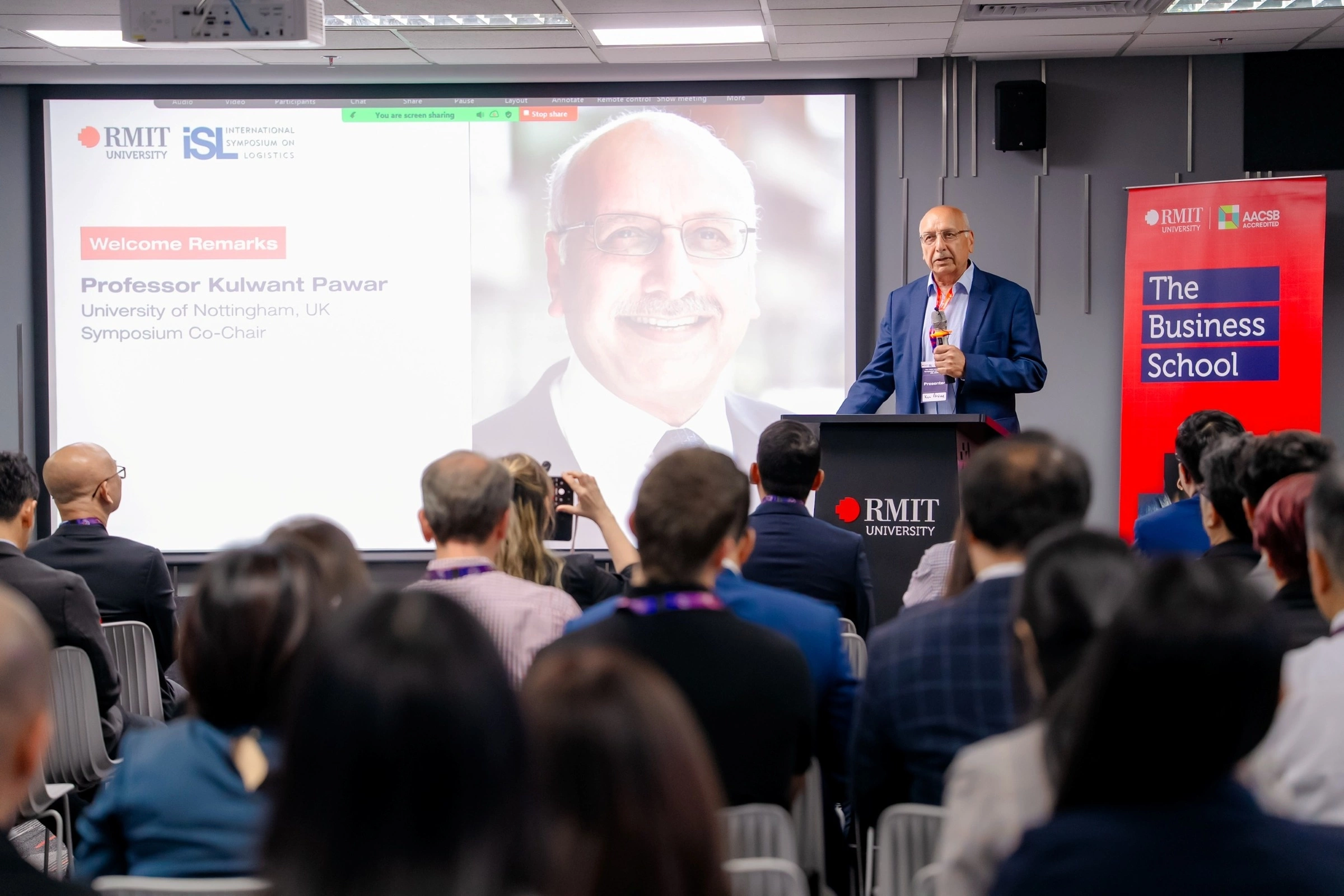 |
Professor Kulwant Pawar delivering his opening speech at the conference. Photo: RMIT |
From a technology perspective, Dr. Dinh Huu Thanh, Chairman of the Board of Directors and Chief Executive Officer of Bee Logistics, highlighted the role of AI and data in reshaping the logistics industry. Thanh argued that disruption has become the "new normal", compelling logistics to transform from a cost-optimization sector into one driven by data intelligence for competitive advantage. According to him, the competitive edge now belongs to businesses capable of converting data into accurate forecasts and making rapid decisions to adapt to market changes.
In Vietnam, the current challenge is to ensure sustainable supply chain development to create long-term value. Dr. Nguyen Manh Hung, Senior Lecturer in Supply Chain and Logistics Management at RMIT University Vietnam, noted that the nation is a significant regional hub within the network, thanks to the growth of its manufacturing sector. He believes this presents an opportunity for Vietnam to accelerate its transition towards regenerative models.
Hung stressed that success will depend on collaboration between businesses and regulatory bodies in integrating sustainability and digital intelligence into the ecosystem. Meeting adaptability standards will help Vietnam gain favor with global investors and customers in the future.
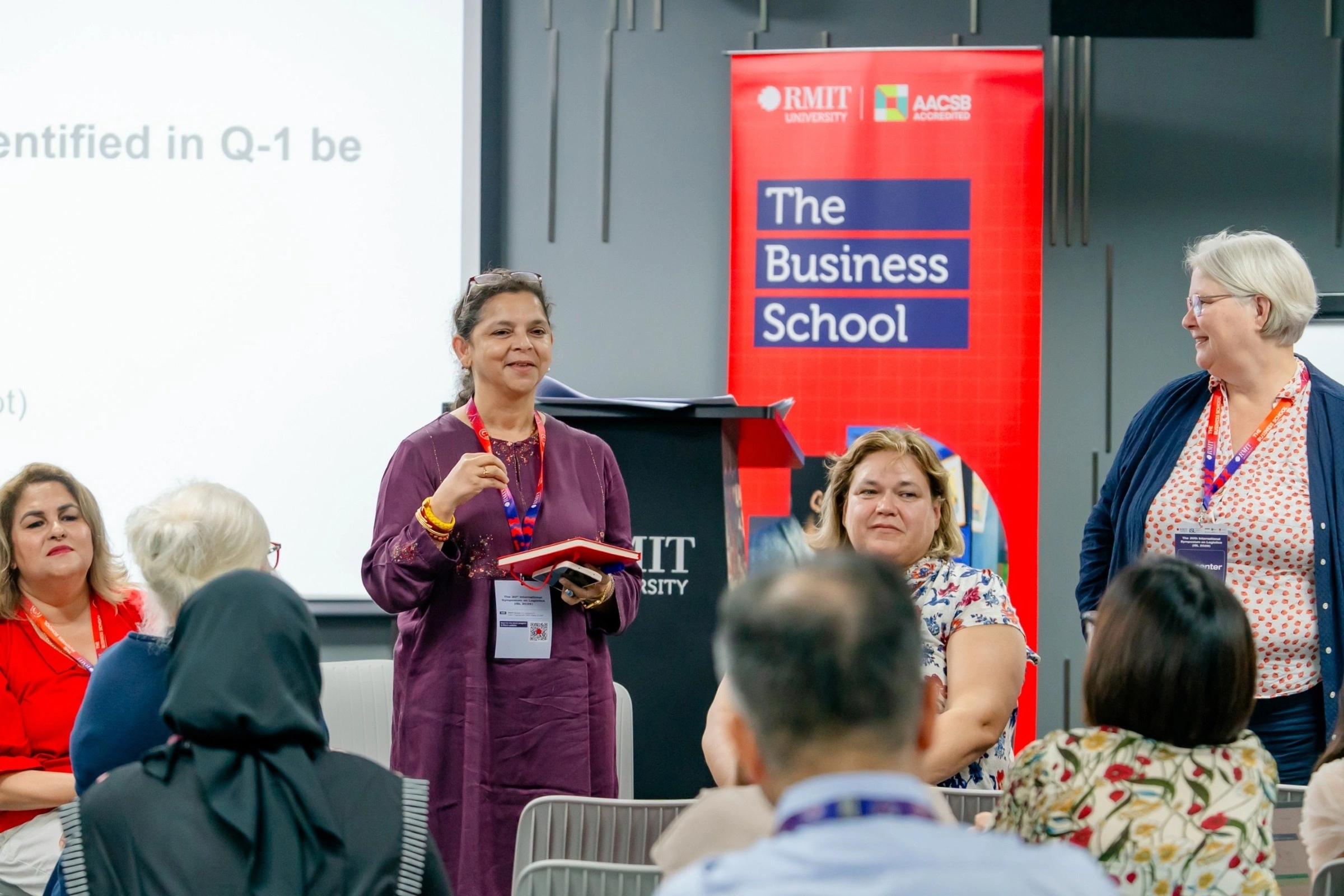 |
A workshop during the conference. Photo: RMIT |
ISL 2026 was organized by the School of Business, RMIT University Vietnam. As one of the leading educational institutions offering international-standard training in supply chain and logistics management, RMIT not only provides high-quality human resources but also focuses on research with practical impact on the economy. By connecting global intelligence, the university strives to integrate advanced technological trends into Vietnam's economic practices, helping local businesses enhance their adaptability and attract international investors.
Thanh Thu