A Masan representative stated that when the company acquired the WinMart and WinMart+ chains in late 2019, it was one of the most debated transactions in the market. At that time, the retail chain recorded losses of nearly 4,000 billion VND before 2020, while its continuous expansion model led many investors to question its profitability.
After nearly seven years of restructuring, Masan's retail segment has undergone a significant transformation. WinCommerce reached break-even in 2024, reported a profit of nearly 500 billion VND in 2025, and aims for approximately 1,000 billion VND this year. During the same period, its network size has nearly doubled compared to late 2019, surpassing the 5,000-store mark nationwide.
 |
WinCommerce products. Photo: Masan |
According to Masan, WinCommerce's growth in scale has not come at the expense of efficiency. In Q1/2026, the unit's revenue increased by 29% year-on-year, while like-for-like (LFL) revenue grew by approximately 14%.
The combination of growth and profitability has also changed analysts' perspectives on WinCommerce. UBS noted that WinCommerce is set to become a key profit growth driver for Masan between 2025 and 2028. The organization forecasts that WinCommerce's EBITDA contribution to Masan's consolidated EBITDA (excluding Techcombank) will rise from about 15% in 2025 to approximately 25% by 2028.
For Masan, WinCommerce is more than just a retail chain; it serves as a core distribution platform within the Consumer Operating System. As the network continues to expand and operational efficiency improves, the company not only generates its own growth but also shortens the time it takes for new Masan Consumer products to reach consumers, enhancing the overall efficiency of the consumer ecosystem.
Another notable change is the improved ability to generate cash flow. By the end of Q1/2026, WinCommerce's working capital cycle improved to negative seven days. This means the company can collect cash from sales activities before payments to suppliers are due, thereby forming a natural source of working capital to continue expanding the system. In the retail industry, this is a key indicator of sustainable cash flow generation, helping businesses reduce reliance on borrowed capital or support from the parent company.
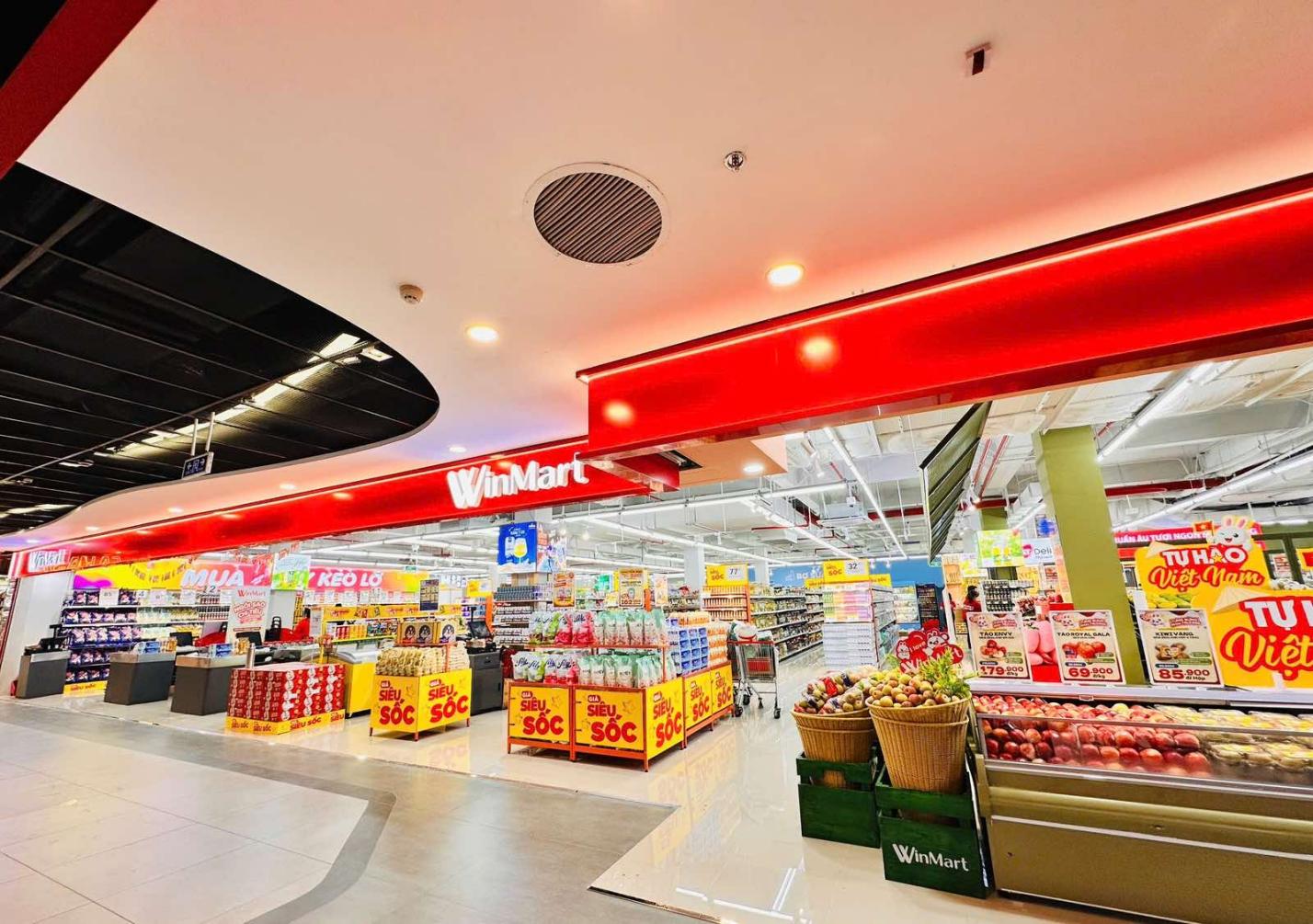 |
WinMart store. Photo: Masan |
Concurrently, capital utilization efficiency has also improved. According to UBS, the rural WinMart+ model requires only about 30,000 USD in investment per store and has a payback period of under two years. In the first five months of the year, this model contributed approximately 28% of the total system revenue and became WinCommerce's primary expansion driver.
This efficiency stems from optimizing the operating model. While the company previously applied a relatively uniform model nationwide, WinCommerce now develops distinct models for urban and rural areas to suit each market. Standardizing design and construction processes has helped reduce investment costs by approximately 30% per store.
Additionally, the unit has accelerated the application of digital platforms and artificial intelligence (AI) in demand forecasting, inventory management, and merchandise replenishment. The centralized distribution center system currently processes over 60% of the network's total goods volume, contributing to reduced logistics costs per product unit and improved operational efficiency.
These changes are directly reflected in the business results. In Q1/2026, WinCommerce reported profit after tax before non-controlling interests of approximately 204 billion VND, an increase of over 250% year-on-year, despite opening 225 new stores during the quarter. According to UBS, WinCommerce's story extends beyond merely shifting from losses to profits; it also lies in its long-term growth potential.
This outlook is supported by the significant room for growth in Vietnam's modern retail market. According to Euromonitor data cited by UBS, the five largest retailers currently account for only about 10% of the market share, significantly lower than in many ASEAN countries. This indicates that the transition from traditional markets to modern retail still holds substantial potential in the coming years.
From another perspective, SSI Research suggests that WinCommerce could also benefit from changes in tax policy for business households. According to the organization, the shift from a lump-sum tax mechanism to revenue-based declaration will help promote a more formalized retail market, thereby creating conditions for the modern retail channel to continue expanding its market share.
Hoang Dan