Developing cross-border transport infrastructure
On 10/7, in Laos, CC1 signed an MOU with State Enterprise Road Construction No. 8 (R8CE), an entity under the Ministry of Public Works and Transport of the Lao PDR, which is implementing many national infrastructure construction projects.
According to Phoupheuane Sengphachanh, Chief Executive Officer of R8CE, the signing is a result of exchanges, meetings, and goodwill cooperation from both sides, following working visits between the two entities.
The memorandum of understanding outlines cooperation in key areas, notably the development of transport infrastructure across Laos, including National Highway 8, National Highway 13, and other transport corridors connecting Laos and Vietnam. Concurrently, both parties aim to develop logistics facilities at border gates and inland dry ports (IDC), including warehouses, distribution centers, and related goods storage facilities along the transport corridors and road network assigned to R8CE by the Lao Government.
Another notable aspect is the plan to research and develop special economic zones according to the master plan assigned by the Government of the Lao PDR to R8CE, in cooperation with strategic partners. This also includes potential connectivity infrastructure projects between Vietnam - Laos, such as expressways and railways.
"We believe this MOU will be implemented effectively and practically, forming a solid foundation for deeper cooperation in the future", an R8CE representative emphasized.
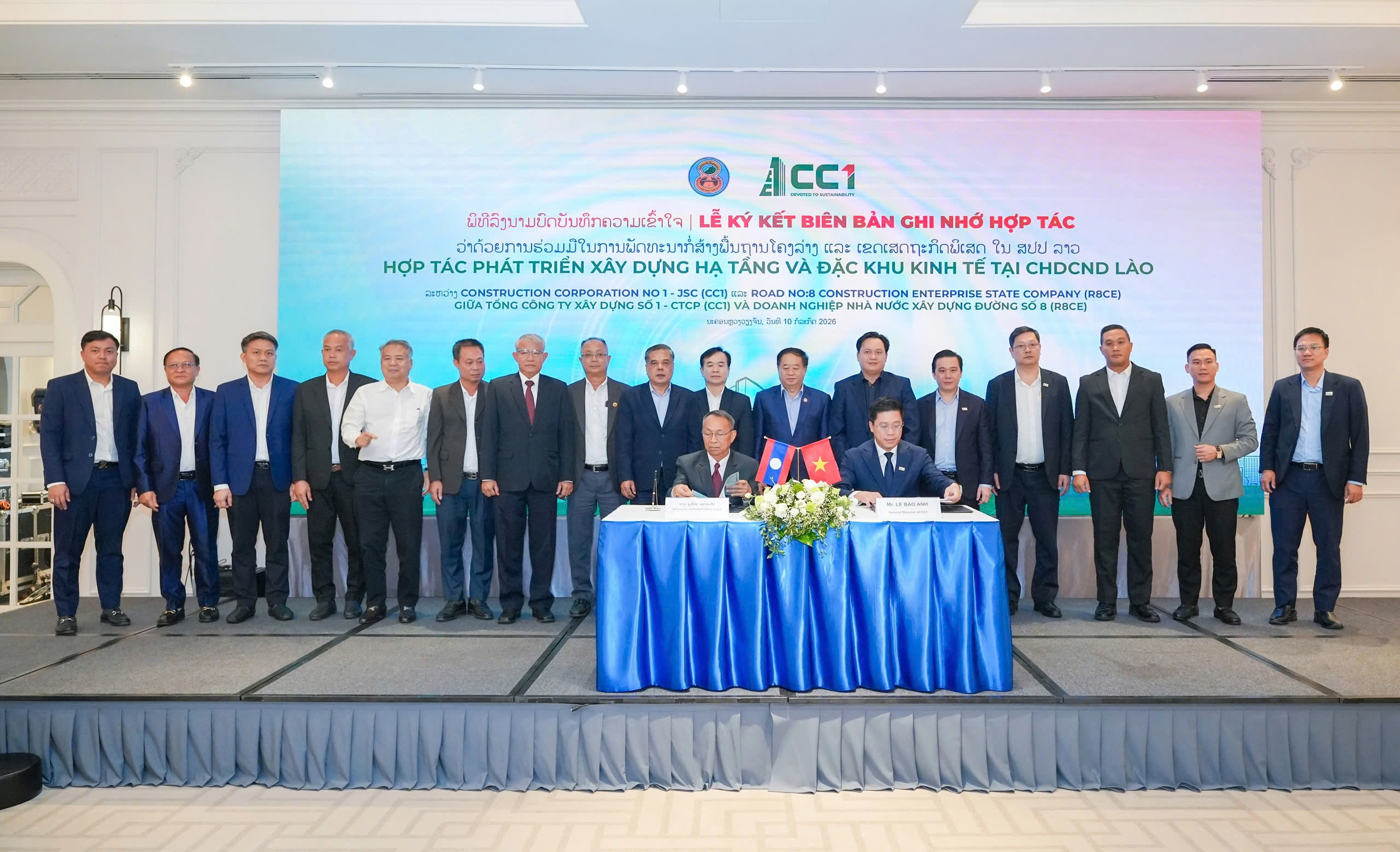 |
Signing ceremony of the MOU between CC1 and R8CE on 10/7, outlining cooperation in key areas, notably the development of transport infrastructure across Laos. *Photo: CC1*.
Expanding into seaports, logistics, and industrial value chains
Also in Laos, on 9/7, CC1 signed an MOU with CK Import-Export Trading One Member Company Limited (CK Group). CK Group is a multi-industry conglomerate in Laos, operating in investment, trade, construction, real estate, mining, construction materials, and industrial equipment.
As per the direction, both parties will jointly research, evaluate, and develop potential infrastructure projects in Laos or projects with equity contributions from the Lao Government, such as: the Laos - Vietnam International Port project in Vung Ang, logistics systems at border gates, inland container depots (ICD), warehouses, and distribution centers. Special economic zones and industrial parks are also key focuses of the cooperation plan. If implemented effectively, these components could form a complete value chain comprising: seaport - border gate - logistics - industrial park - trade - investment.
This cooperation occurs as pier 3 at the Laos - Vietnam International Port (Vung Ang) has become operational, enhancing the feasibility of connecting Lao goods to the East Sea via Vietnam.
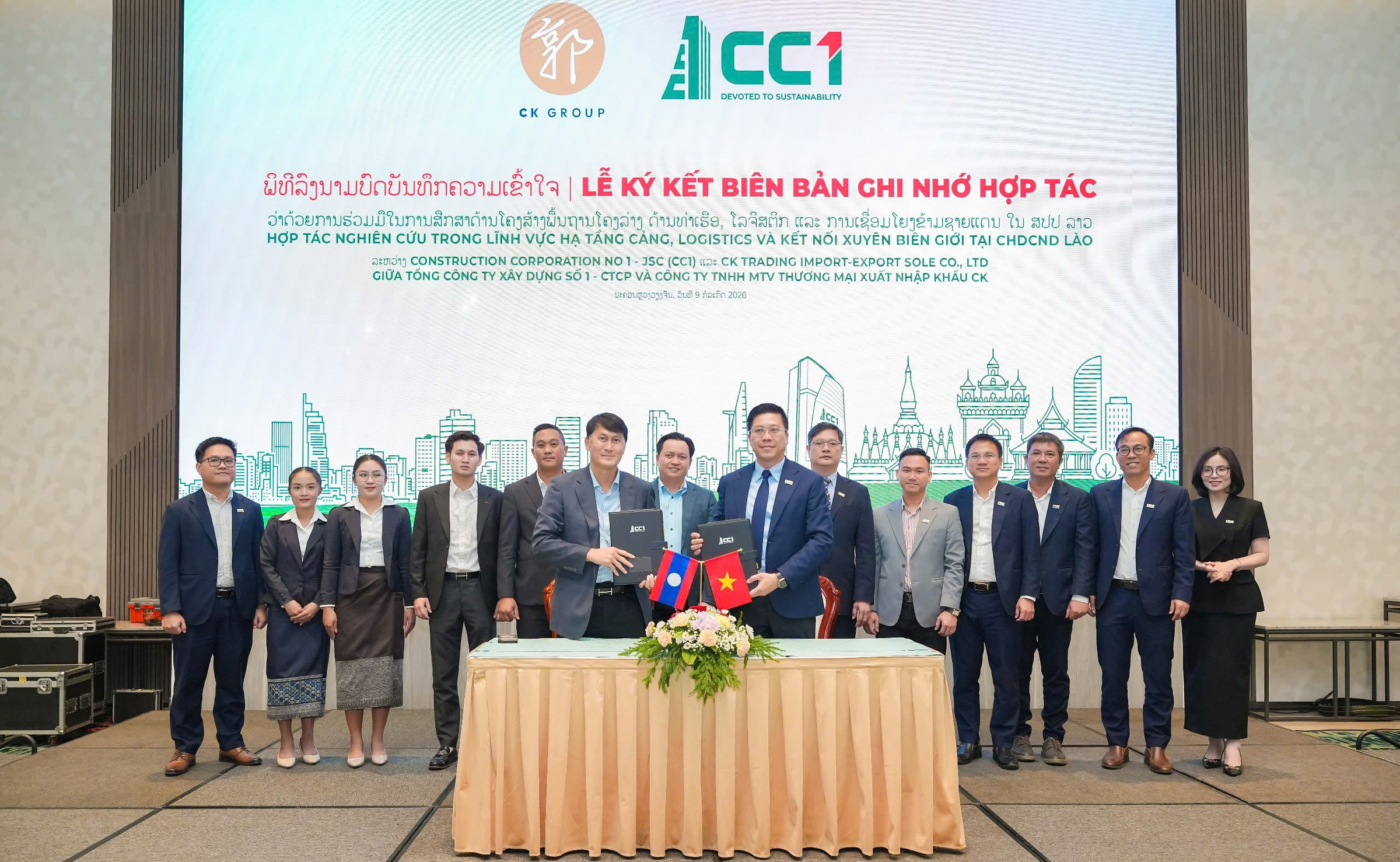 |
Signing ceremony of the MOU between CC1 and CK Group on 9/7. *Photo: CC1*.
According to Le Bao Anh, General Director of CC1, the cooperation agreements in Laos are significant not only for the businesses involved but also contribute to concretizing high-level cooperation directions between Vietnam and Laos in the new phase, where economic, trade, investment, and infrastructure cooperation are identified as strategic pillars.
In recent years, both governments have promoted transport cooperation for phase 2026-2035. The Vietnam - Laos Logistics Forum 2026 also emphasized the need to translate commitments into concrete actions, especially in reducing logistics costs, modernizing procedures, digitizing data, and developing multimodal transport.
In this context, CC1 positions itself not just as a construction contractor, but as a long-term project development partner. The company stated it can participate throughout the project lifecycle, from research, surveys, investment plan development, financial structuring, to acting as an EPC general contractor, construction management, and operation.
With over 46 years of experience in transport infrastructure, industrial, energy, seaport, and Public-Private Partnership (PPP) projects, CC1 expects to make substantial contributions to large-scale projects in Laos.
However, CC1's leadership also recognizes that cross-border infrastructure projects always come with challenges regarding legal aspects, capital sources, technical standards, and environmental - social requirements. Therefore, immediately after the signing ceremonies, CC1 proposed that the parties promptly establish a joint working group to review priority project lists, conduct field surveys, and perform comprehensive assessments within the initial 60 days before proceeding to formal agreements.
"CC1's spirit is to speak truthfully, act genuinely, and see things through to real results. Today's MOU must initiate a working process with a schedule, deliverables, accountability, and the potential to transform into concrete projects", Le Bao Anh emphasized.
Although still in the initial stage, these agreements are considered to play a significant role in helping Vietnamese enterprises gradually expand their presence and strengthen Vietnam's role as a connecting gateway for the Mekong sub-region.
Hoang Anh