The Domestic Market Management and Development Agency (DMS) of the Ministry of Industry and Trade announced on 24/7 the discovery of a factory in TP HCM suspected of producing nearly 50,000 pairs of counterfeit Nike shoes for export to the US. This significant case, involving an estimated 100 billion VND in goods, was initiated by intelligence from US Homeland Security Investigations (HSI).
After receiving the information, DMS collaborated with HSI to verify, collect intelligence, and develop an inspection plan. Initially, authorities suspected about 12,000 pairs of infringing shoes. However, the verification process revealed a much larger operation, involving nearly 50,000 pairs of shoes and related semi-finished products. On 16/7, DMS, in coordination with Department A05 of the Ministry of Public Security and local police, inspected MP Company in TP HCM.
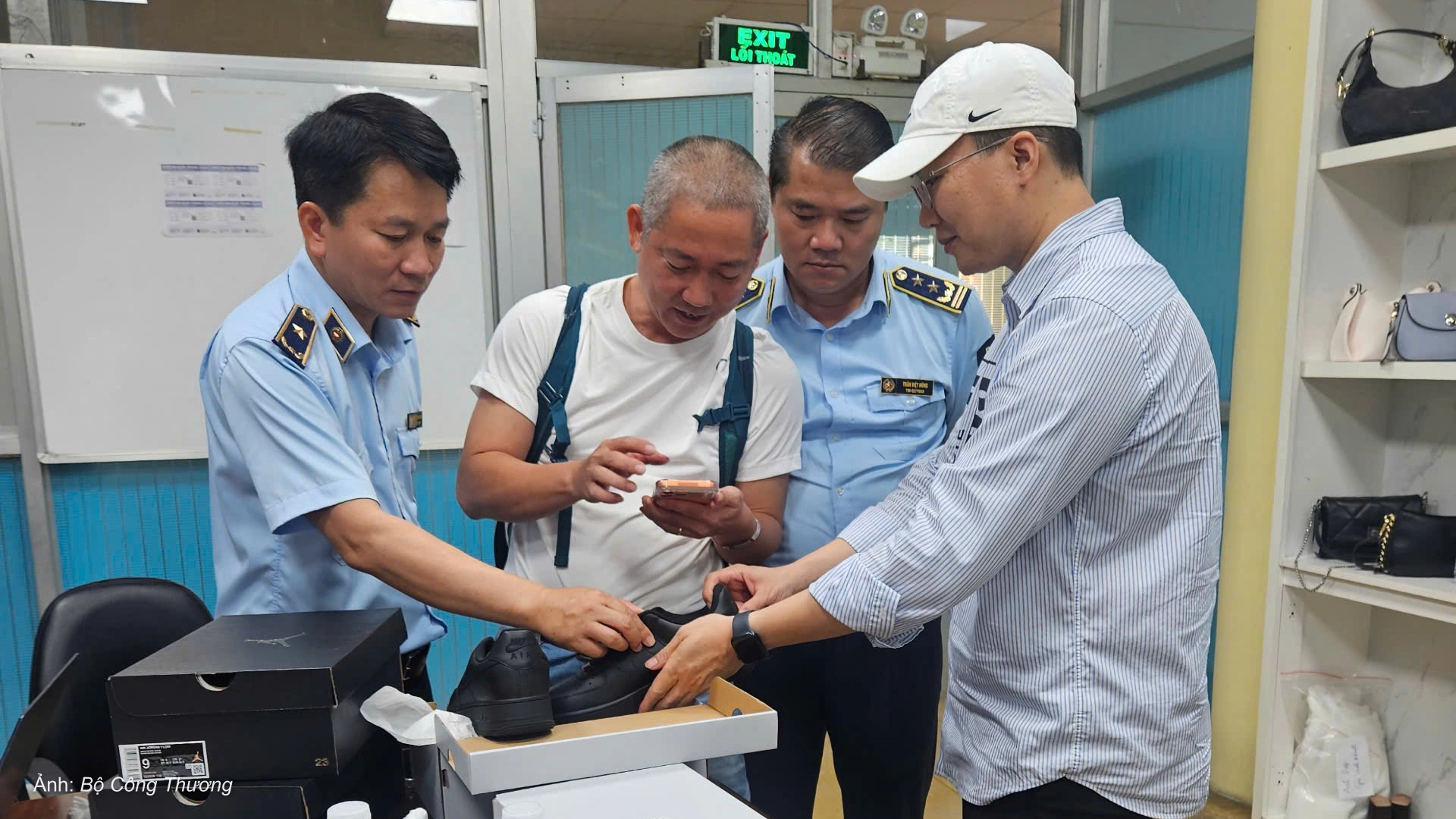 |
Officials from the Domestic Market Management and Development Agency, Ministry of Industry and Trade, inspecting the factory. *Photo: DMS* |
Authorities stated the counterfeit goods were sophisticated, making them difficult to distinguish from genuine products with the naked eye. Even authentication codes on each pair of shoes were replicated. Some of these goods had already been exported to the US market. During the inspection, the task force found MP Company producing and storing 25,396 pairs of finished Nike and Air Jordan shoes, valued at over 12.3 billion VND. Additionally, 20,875 pairs of shoe uppers and 10,800 pairs of shoe soles with Nike markings, valued at over 11.2 billion VND, were undergoing completion. If calculated at market prices, the total value of the consignment is estimated at over 100 billion VND.
A representative for MP Company stated that all goods were produced under a processing contract with F.C.T Company, using raw materials supplied by a foreign partner. The company claimed to perform processing based on orders and returned finished products. MP Company presented a processing contract, email exchanges with partners, documents alleged to be Nike brand authorization letters, and export records to explain the consignment's origin. Records showed that from the beginning of the year until the inspection, the company had exported 11 containers of finished Nike and Air Jordan shoes to the US, with a total declared value exceeding 25.46 billion VND.
However, DMS confirmed that a statement from Nike Vietnam and a letter from Nike Inc.'s Senior Director of Global Licensing affirmed that Nike had never granted any license, licensing contract, or authorization document to MP Company or L.L.C Company, nor permitted these organizations or individuals to represent or act on behalf of the brand in business activities.
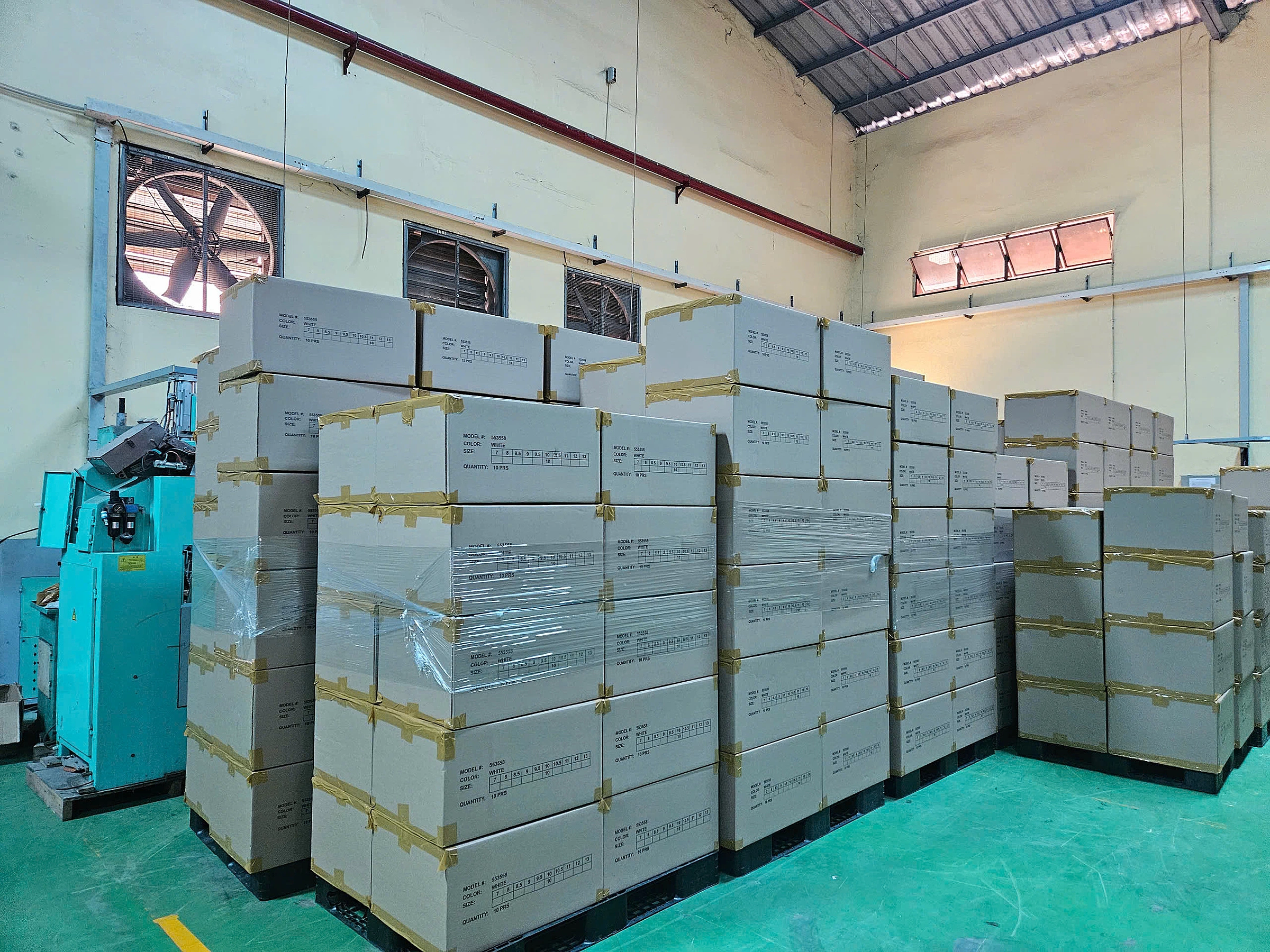 |
The seized infringing goods. *Photo: DMS* |
Based on the inspection results, documents provided by the business, confirmation from the rights holder, and information exchanged by HSI, DMS concluded that the goods showed signs of counterfeiting brands protected in Vietnam. The agency noted this as one of the largest and most complex intellectual property infringement cases detected in recent years, involving cross-border elements with organizations and businesses in the US, China, and Vietnam. It reflects a tactic of exploiting international processing activities and using allegedly legitimate but falsified documents to introduce counterfeit goods into the supply chain.
Tran Huu Linh, Director of the Domestic Market Management and Development Agency, highlighted that initial results demonstrate the effectiveness of international cooperation mechanisms in detecting and handling cross-border intellectual property infringement cases. "The discovery is significant not only for addressing a specific violation but also for revealing a potential method of infringement that may still exist in the market, involving multiple parties, and possibly even collusion", Linh said.
Currently, DMS has compiled an inspection report, applied preventive measures as regulated, and is continuing to consolidate the case file. The agency will verify the origin of raw materials and import partners, and expects to transfer the case to investigative authorities for handling according to regulations.
Thi Ha