On the afternoon of 19/11, Finance Minister Nguyen Van Thang explained the revised Personal Income Tax Law draft before the National Assembly.
The Minister stated that the draft continues to apply the current regulation of collecting a 2% tax on the transfer value for each real estate transaction. He noted that this method is simple, easy to implement, and inspect.
"Recently, the Ministry thoroughly studied the possibility of shifting to taxing based on the true nature — the difference in transfer value," Thang said. However, the Minister informed that there is currently no sufficient basis to collect tax on real estate buying and selling profits.
He indicated that a tax on the profits of individuals investing in and doing real estate business will be gradually implemented when sufficient digitized land data linked with VNeID data is available. According to him, when the real estate exchange, which the Government is piloting, is established, transparent real estate buying and selling prices will support the transition in tax collection methods.
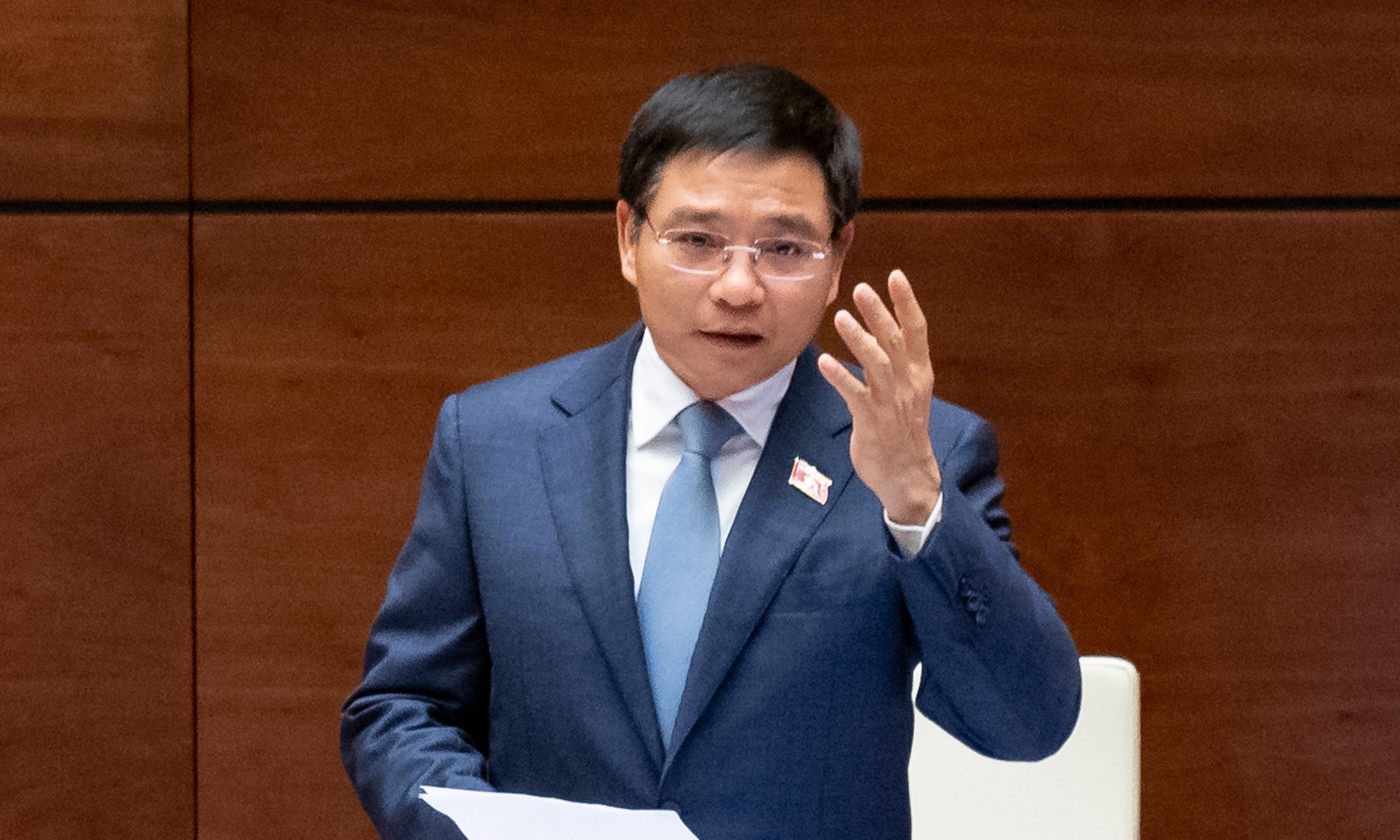 |
Finance Minister Nguyen Van Thang explained before the National Assembly on the afternoon of 19/11. Photo: Dai bieu Nhan dan
The online real estate transaction center is expected to be piloted in 2026-2027. This center will allow people to buy, sell, transfer, and value real estate, according to the Ministry of Construction's plan. Types of assets traded at the center include: existing homes, homes under construction, and land use rights with technical infrastructure within real estate projects. All transactions, including buying, selling, transferring, leasing, and lease-purchase, will be required to be conducted through this center once the draft resolution is approved by competent authorities and takes effect.
During earlier discussions in the hall, some delegates proposed taxing real estate buying and selling profits. Professor Hoang Van Cuong, a delegate from Ha Noi City, suggested researching the application of a tax on real estate bought and sold multiple times, calculated on the difference in transfer prices. This, he believes, would increase market transparency and prevent speculation.
The former Vice Rector of the National Economics University expressed confidence that switching to this form of real estate tax collection is entirely feasible amidst efforts to accelerate digital transformation and complete the land and housing information data system.
Additionally, he proposed taxing real estate inheritance. He noted that many countries worldwide apply this tax, considering it a form of unearned income. Therefore, he argued, countries tax real estate inheritance to ensure social equity and prevent intergenerational wealth accumulation. "It will make the rich perpetually richer, while the poor face difficulties," he said.
In July, the Ministry of Finance proposed applying a 20% tax on individual real estate transfers, calculated on taxable income per transaction. This taxable income would be determined by the selling price minus the buying price and reasonable costs related to generating income from the real estate transfer.
If the buying price and related costs cannot be determined, the personal income tax would be calculated by multiplying the selling price by a tax rate. In this case, the tax rate would depend on the ownership duration, with a maximum of 10%.
The National Assembly is expected to vote on the revised Personal Income Tax Law on the morning of 10/12.