Quality postlarvae are considered the foundation for successful aquaculture, according to a company representative. High-quality postlarvae must exhibit rapid growth and possess the ability to adapt to unpredictable weather, complex diseases, and increasing cost pressures.
For over 20 years, Viet Uc Group has pursued a strategic whiteleg shrimp breeding program, leveraging genetic research, multi-generational data, a breeding center, and modern biotechnology. Recently, the company applied genomics in its shrimp breeding program in Vietnam. A company representative stated that this technology is a key to new-generation breeding.
At the Vinafis aquaculture exhibition and conference, held from 28-30/4, the company shared in-depth details about its systematic whiteleg shrimp breeding program, along with applications of genetic science and genomics technology. This presentation clarified the solution known as "Four Super Squad VU-S26."
A fast-growing shrimp does not necessarily transmit good traits to its offspring, according to a company representative. To achieve sustainable improvement in breeding stock, it is essential to accurately determine the true genetic value of each individual. Therefore, Viet Uc implemented a Genetic Evaluation program. This system predicts Estimated Breeding Value (EBV), which represents the ability to transmit desirable traits such as growth, survival rate, and adaptability to future generations.
To ensure high accuracy, the model simultaneously integrates multiple layers of data. This includes multi-generational pedigrees of parent shrimp, actual growth and survival rate data, and environmental parameters such as salinity, temperature, weather, and pond conditions. All this information is processed using modern statistical models to differentiate genetic influences from environmental impacts. Consequently, selection is no longer based on subjective perception but on highly reliable scientific data.
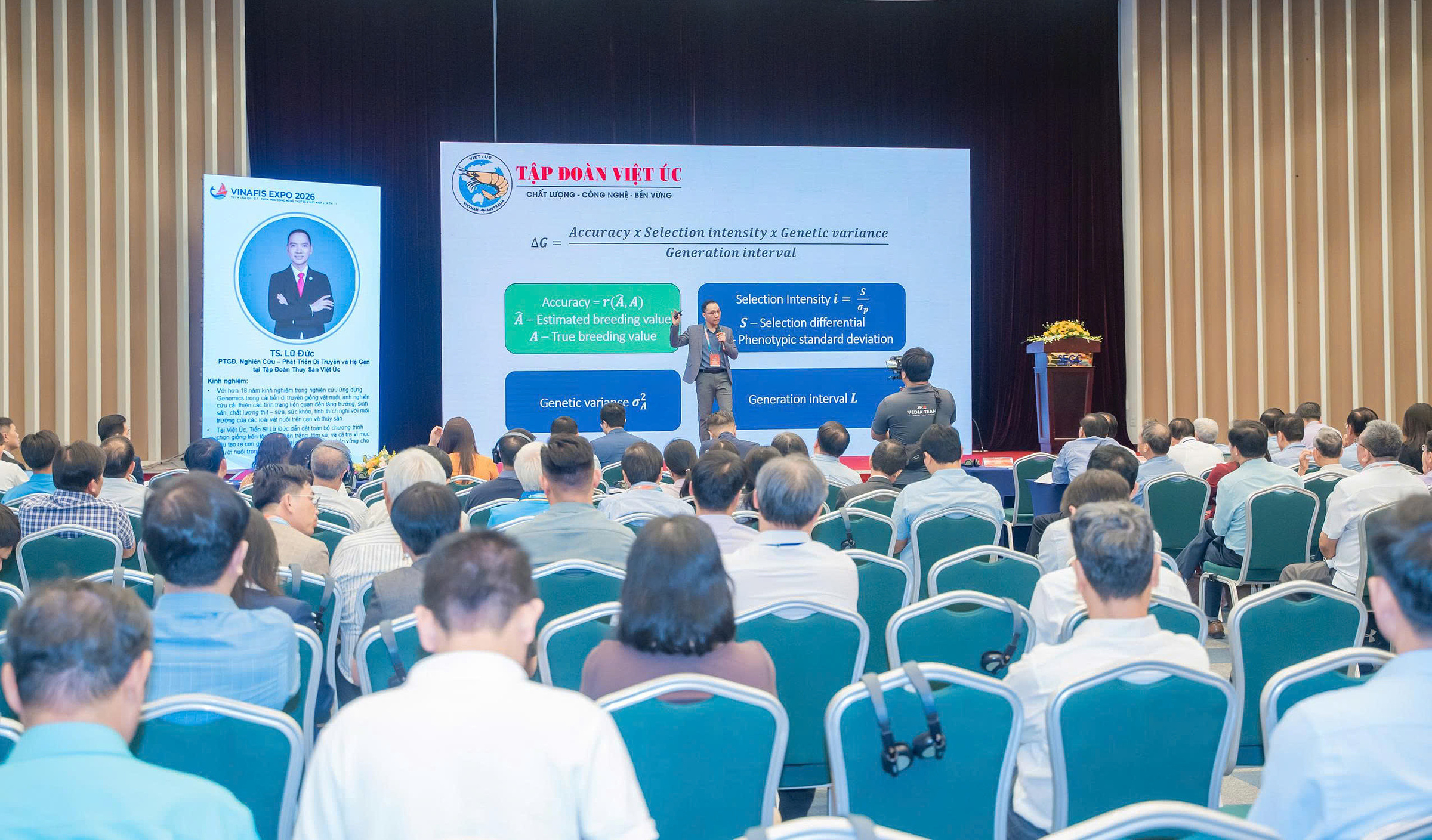 |
Doctor Lu Duc Bryce, deputy general director of Genetic Research and Development and Genomics at Viet Uc Group, presented a report on the genetic and breeding program at the scientific conference. Photo: Viet Uc Seafood
A crucial foundation that distinguishes Viet Uc is its data warehouse, accumulated over more than 15 years. This enables the company to enhance the accuracy of its breeding selection, thereby identifying individuals capable of producing superior generations year after year. In breeding science, the Genetic Gain method measures the genetic progress of breeding stock across generations, determining the improvement in growth, survival rate, and adaptability of postlarvae compared to previous generations.
To accelerate Genetic Gain, accuracy in predicting and selecting elite individuals for breeding is a key factor. Higher accuracy significantly increases the likelihood of selecting individuals with superior genetic value, shortening the improvement timeline and enhancing the quality of breeding stock with each generation.
To improve accuracy, three core platforms receive continuous investment, according to a company representative: large datasets accumulated over the past 20 years, deep multi-generational genetic pedigrees, and modern mathematical models capable of processing millions of data points under real farming conditions.
However, this was not enough. Viet Uc also invested in genomics technology, a method for molecular genetic decoding that precisely identifies differences in individual shrimp. Genomic information enhances the accuracy of EBV in two important ways. First, genomic data is used to correct errors in pedigree information. Second, genomic information increases the degree of relatedness between individuals within a population.
While traditional pedigree only identifies which lineage a shrimp belongs to, genomics delves into the genetic structure to identify individuals with superior potential. This allows for clear differentiation of survival, growth, and adaptability even among individuals within the same family.
When data, analytical models, and genomics are combined, the accuracy in breeding selection improves, thereby accelerating genetic gain. This means farmers can access progressively better generations of shrimp postlarvae. This approach is what the company aims for, creating a sustainable advantage for the domestic shrimp industry.
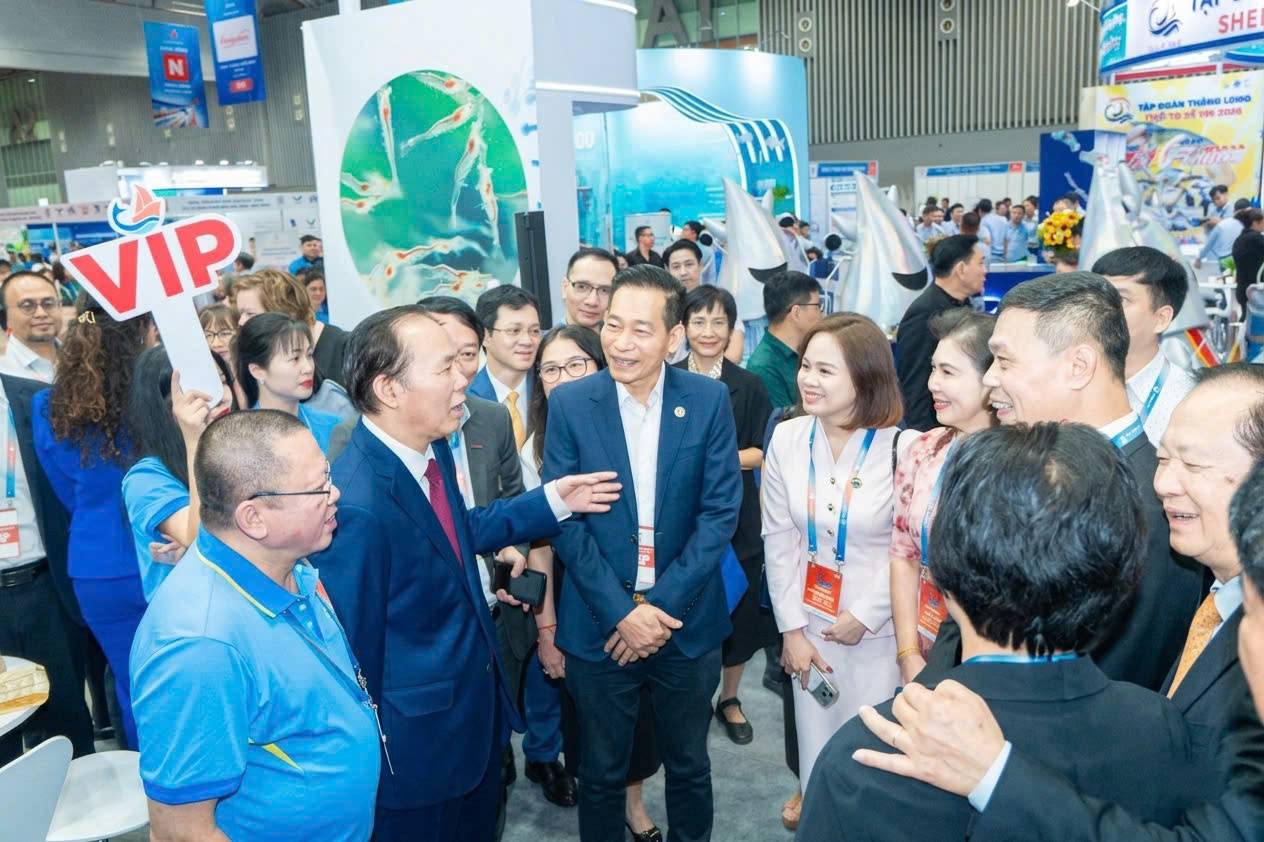 |
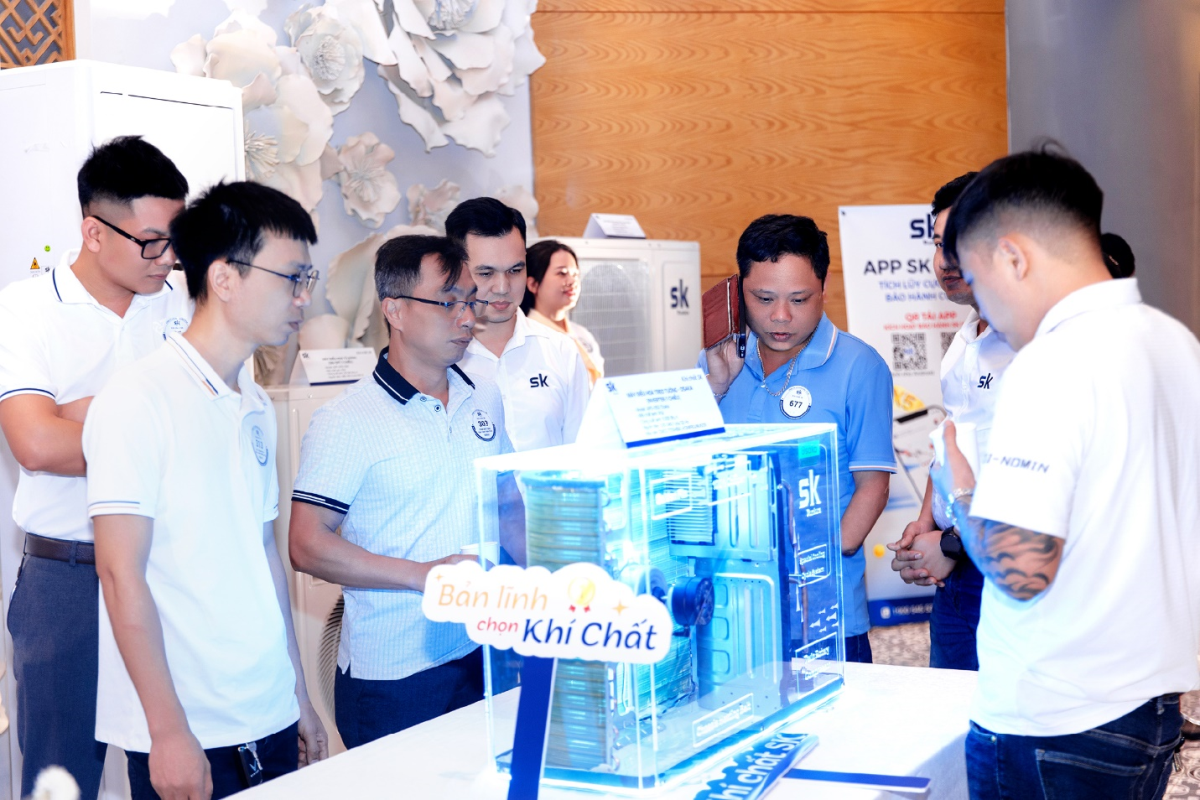
Viet Uc Group's booth garnered significant interest from visitors at Vinafis. Photo: Viet Uc Seafood
Based on this scientific foundation, Viet Uc developed the "Four Super Squad VU-S26" product line, with clear orientations for each shrimp strain. Super 60 focuses on growth rate, Super Resilient aims for adaptability and stable yield, Super Resistant enhances survival rate, while Super Low Salinity extends effective cultivation capabilities in low-salinity water.
According to the company, these traits are not random outcomes but the result of many years of selection based on data, mathematical models, and genomics. From the research laboratory to real farming ponds, the "Four Super Squad VU-S26" is expected to help farmers reduce risks, be more proactive in production, and improve economic efficiency.
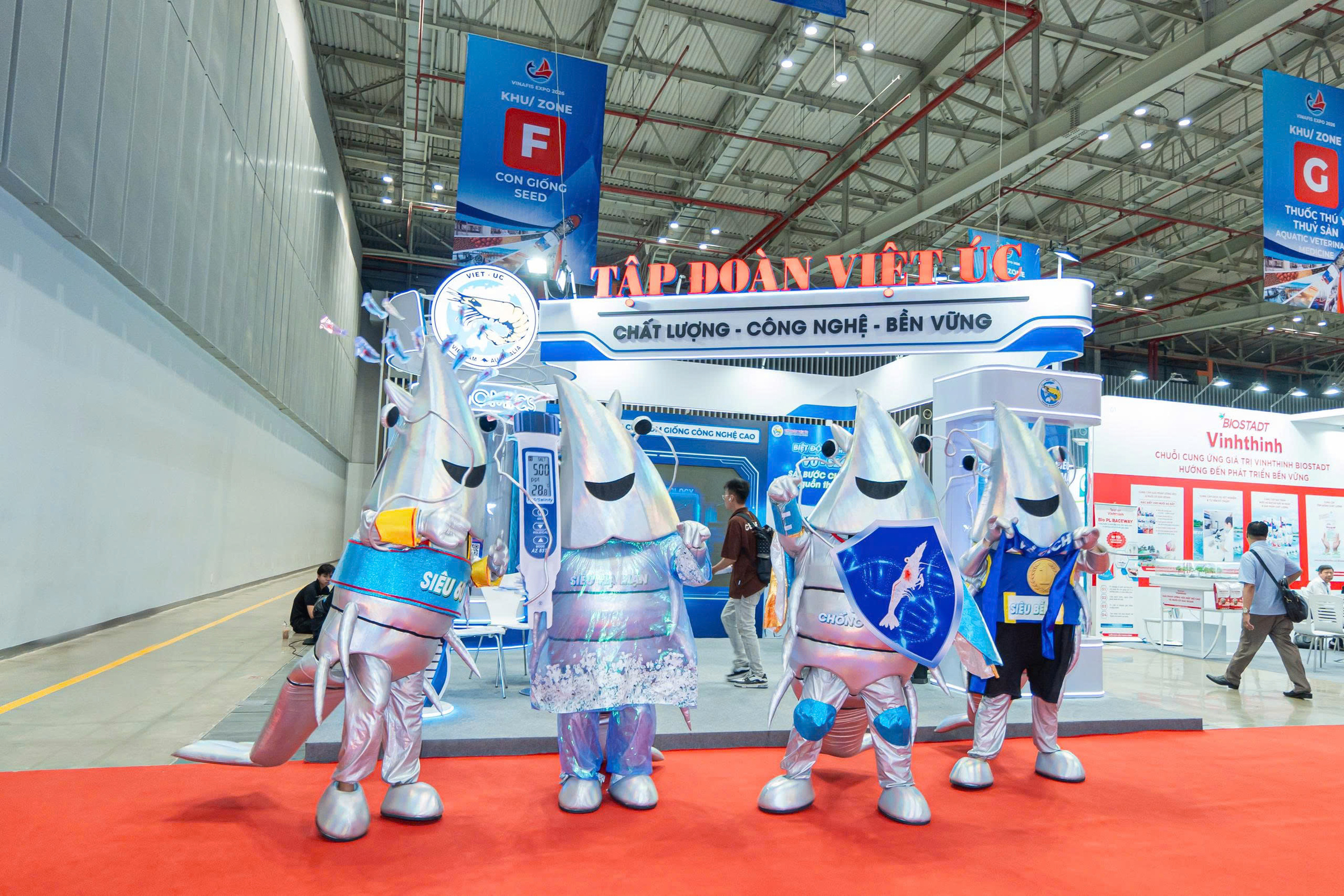 |
Viet Uc Group's "Four Super Squad VU-S26" model was introduced to the shrimp farming community nationwide through a series of events from the South to the Central and North regions. Photo: Viet Uc Seafood
As Vietnam's shrimp industry seeks advancements in productivity and sustainability, the company states that a science- and genetic technology-based approach is considered a crucial foundation for creating long-term advantages across the entire value chain.
(Source: Viet Uc Seafood)