OAPEC confirmed the UAE's withdrawal on 3/5. The OAPEC secretariat stated it was informed of the decision via a letter from UAE Energy Minister Mohammed Al Mazrouei to Khalifa Rajab Abdul Sadiq, Libya's Minister of Oil and Gas and the current chairman of OAPEC's Ministerial Council.
"The OAPEC secretariat expresses its appreciation for the UAE's role throughout its membership and its effective contributions to supporting joint Arab action in the oil, gas, and energy sectors," OAPEC stated.
The withdrawal from OAPEC became effective on 1/5.
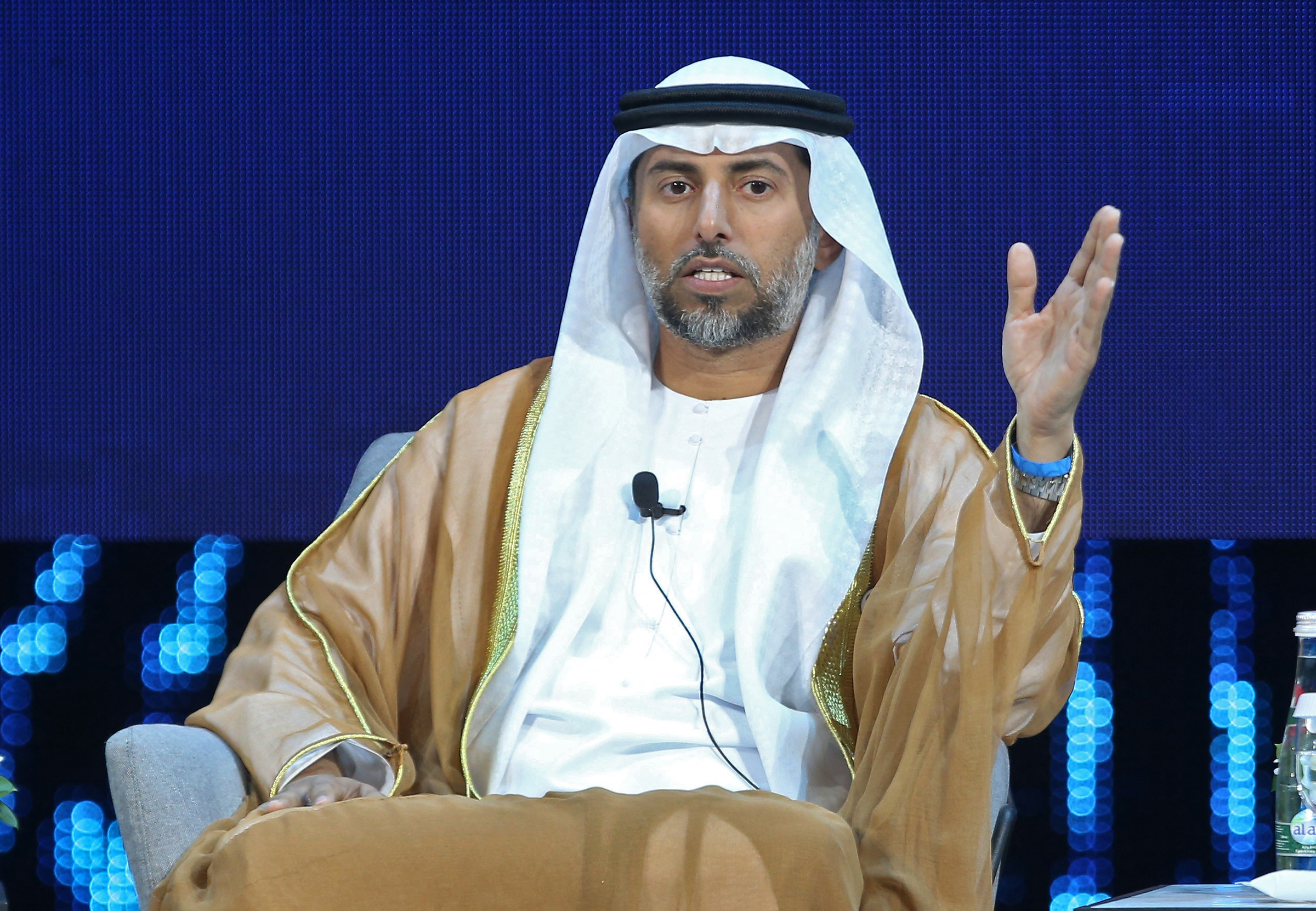 |
UAE Energy Minister Suhail Al Mazrouei speaks in Abu Dhabi in 11/2019. Photo: AFP |
This move follows the UAE's unexpected announcement on 28/4 that it would leave the Organization of the Petroleum Exporting Countries (OPEC), effective 1/5. The country's Energy Ministry stated this decision followed a comprehensive review of its production policies and current and future capabilities, aiming for greater flexibility in responding to market fluctuations.
On 4/5, Sultan al-Jaber, UAE Minister of Industry and Advanced Technology and CEO of the state-owned oil and gas group ADNOC, affirmed that withdrawing from OPEC and OPEC+ was "not against anyone."
He added: "Leaving OPEC serves our national interests and long-term strategic goals, aligning with our industrial, economic, and development ambitions. It provides more room to accelerate investment, expand operations, and create value."
With global oil demand projected to peak soon, the UAE aims to maximize its reserves rapidly before the world transitions to renewable energy. Abu Dhabi has set a target to increase oil production to 5 million barrels per day by 2027.
Freed from OPEC's production quota of approximately 3,4 million barrels per day, ADNOC announced on 3/5 a commitment to spend 55 billion USD on new projects over the next two years.
OAPEC was established in 1968 by Kuwait, Libya, and Saudi Arabia to foster cooperation among Arab oil-exporting countries. After the UAE's departure, the organization now has 10 members: Algeria, Egypt, Saudi Arabia, Bahrain, Iraq, Kuwait, Libya, Qatar, Syria, and Tunisia.
Unlike OPEC and OPEC+, this alliance does not directly regulate global crude oil supply and demand. Instead, it focuses on technical cooperation, sharing resources and expertise, coordinating joint projects, and creating a favorable environment for energy sector investment among Arab nations.