Global spot gold prices closed the 2/2 trading session down 230 USD to 4,658 USD per ounce. During the session, prices briefly fell to 4,404 USD. However, prices rebounded at the opening of the 3/2 session, ending three consecutive sessions of decline. Currently, each ounce is priced at 4,802 USD.
Silver prices followed a similar trend. After falling 6 USD in the 2/2 session, the price currently stands at 83 USD per ounce.
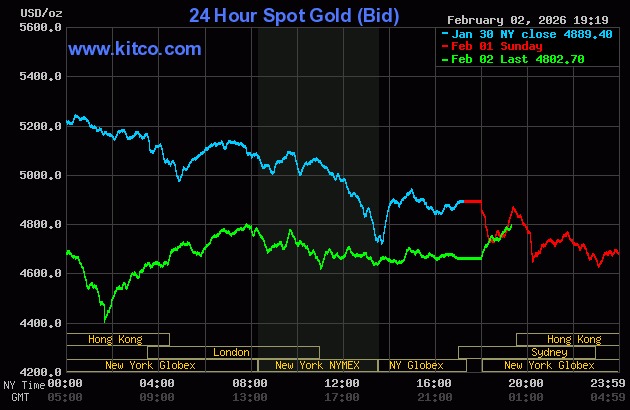 |
Global gold prices rebounded after the 3/2 session opening. Chart: Kitco. |
Analysts on FX Street attributed the market rebound to bargain hunting when prices were low. Previously, precious metals were sold off immediately after prices peaked in the 29/1 session. Overall, gold's decline over the past three days totaled over 900 USD per ounce. Silver prices also dropped 40 USD.
Several factors contributed to the sell-off in precious metals. These included: the US dollar stabilizing after US President Donald Trump announced his nominee for Federal Reserve (Fed) Chair, investors engaging in profit-taking after prices peaked, and geopolitical risks subsiding.
Despite this, gold's upward trend persists. Fundamental macroeconomic factors continue to support the price of this precious metal. Geopolitical risks and economic instability will continue to bolster safe-haven demand. Additionally, strong demand from institutions and investment funds remains a key support.
On 2/2, Deutsche Bank stated it maintains its forecast for gold prices to reach 6,000 USD per ounce this year. JPMorgan, the largest US bank, projects this figure to be 6,300 USD by the end of 2026.
This week, investors will receive several important economic reports likely to impact precious metal prices. These include: the december employment report and US consumer confidence survey results. The Bank of England, European Central Bank, and Reserve Bank of Australia will also announce interest rate decisions during their policy meetings this week.
By Ha Thu (according to Reuters, FX Street)