The United Nations presented this conclusion in a newly released report, published ahead of the upcoming Spring Meetings in Washington of the International Monetary Fund (IMF) and the World Bank – two key global financial institutions that promote growth.
Li Junhua, United Nations Under-Secretary-General for Economic and Social Affairs, stated that geopolitical tensions hinder developing countries' ability to attract financing. He noted, "This is a worrying time for international cooperation, as geopolitical factors increasingly dominate economic relations and financial policies."
Last year, 25 nations reduced development aid to low-income countries, leading to a record 23% decrease in total aid compared to 2024. The United States implemented the most significant cuts, reducing its aid by 59%. The United Nations projects a further 5,8% decrease in aid this year.
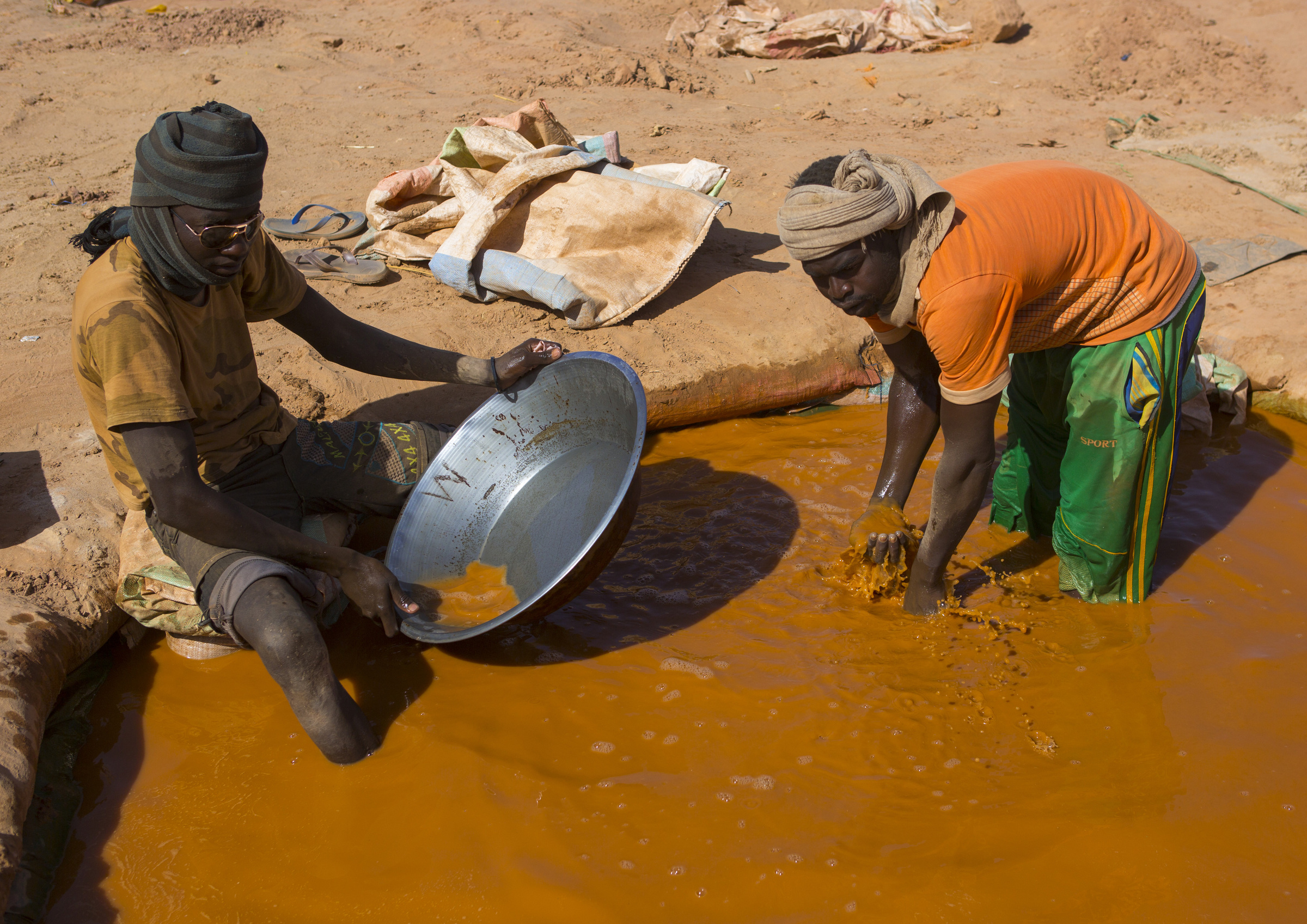 |
Two men panning for gold in Alkhanag, Sudan. *Photo: Reuters*
Concurrently, tariffs, including measures imposed by the United States, significantly affect developing nations. The average import tariff on goods from the poorest countries surged from 9% to 28% over the past year. For other developing countries (excluding China), the average tariff rose from 2% to 19%.
The United Nations report evaluates the Seville Commitment, adopted by leaders from many nations – excluding the United States – in Seville, Spain, in 6/2025. This commitment aims to bridge an annual development finance gap of 4 trillion USD, advocating for more investment in developing countries and reforms of the international financial architecture, including the World Bank and IMF.
United Nations Secretary-General Antonio Guterres has repeatedly urged comprehensive reforms for both institutions, asserting that the IMF primarily benefits wealthy nations over low-income ones. He also contends that the World Bank fell short of its mission, particularly during the pandemic, pushing dozens of countries into severe debt.
The United Nations report concludes that implementing the Seville Commitment offers the "best hope" for narrowing the growing financial divide.
Phien An (via AP)