On 10/4, the US Court of International Trade (CIT) heard arguments in lawsuits filed by 24 US states and small businesses. This group initiated legal action early last month concerning an additional 10% import tariff that former President Donald Trump imposed on all trading partners starting 24/2.
The plaintiffs argue that Trump’s action was an attempt to circumvent a previous US Supreme Court ruling. On 20/2, the Supreme Court rejected Trump’s import tariff policies based on the International Emergency Economic Powers Act (IEEPA), which included retaliatory tariffs and specific tariffs applied to Mexico, Canada, and Trung Quoc.
In response, on the same day, Trump signed an executive order imposing an additional 10% import tariff, citing authority under Section 122 of the Trade Act of 1974. The stated purpose was to address a "serious balance of payments deficit" or prevent the risk of rapid US dollar depreciation in the short term.
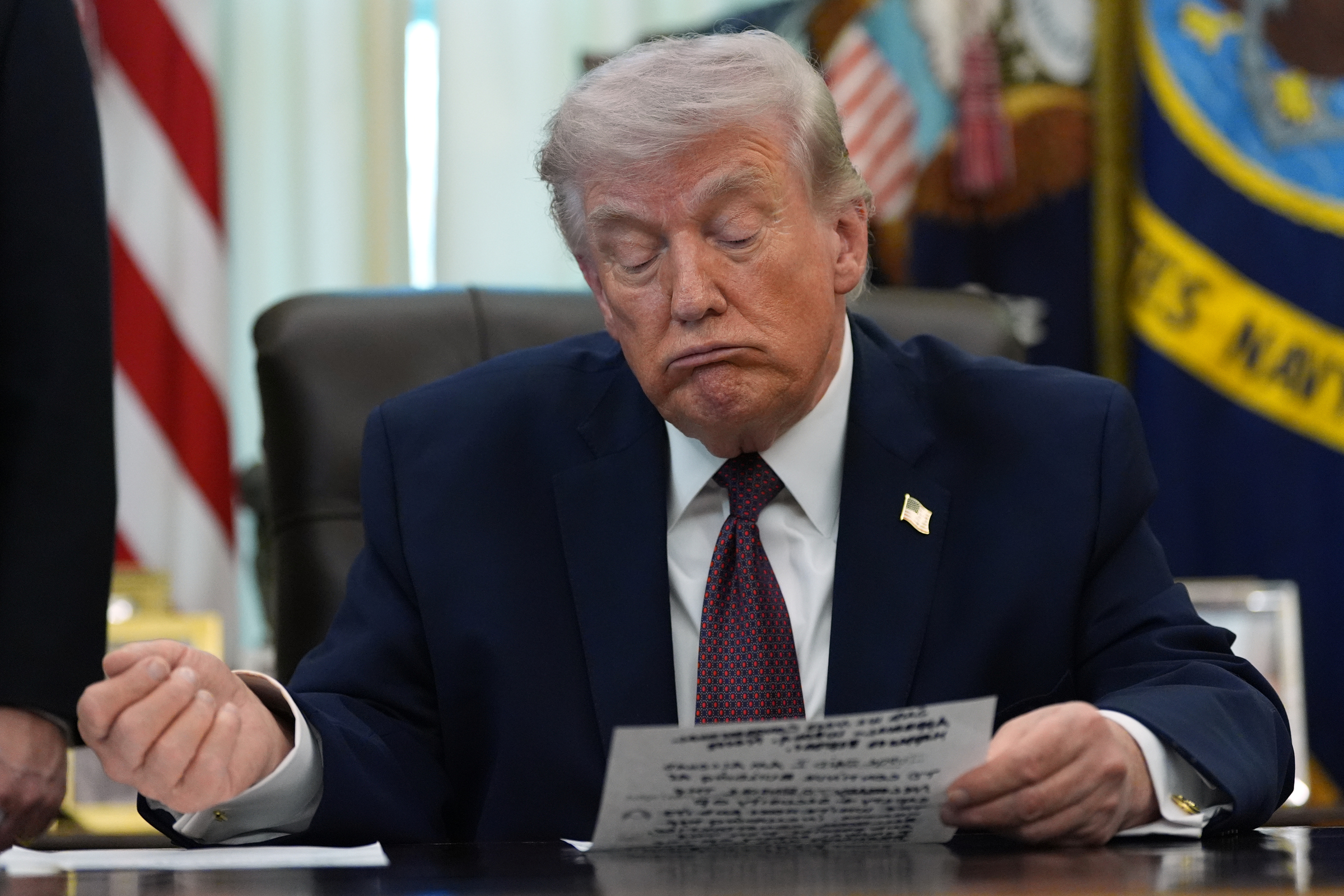 |
President Donald Trump speaks to reporters at the White House on 31/3. Photo: AP |
According to the lawsuit, the states and small businesses argue that the act Trump invoked was designed solely to address urgent, short-term monetary situations. A typical trade deficit does not align with the economic definition of a "balance of payments deficit".
During more than three hours of arguments, a panel of three judges examined the definition of a "balance of payments deficit". Judge Timothy Stanceu questioned the Trump administration's argument that a trade deficit could be the sole reason to invoke the 1974 act.
"We are unsure how to interpret the 1974 law in the 2026 context, but we know that ‘trade deficit’ is not synonymous with ‘balance of payments deficit’", Stanceu stated.
In response, Brett Shumate, a lawyer for the US Justice Department, stated that trade deficits contribute to widening the balance of payments deficit and create "large, serious" international payment problems for the country.
Brian Marshall, a lawyer representing Oregon, stated that the dollar is not currently at risk of rapid depreciation. He urged the court to block the 10% tariff rather than allowing it to expire automatically after 150 days. This would prevent Trump from using other legal bases to maintain tariffs indefinitely. "If new tariffs are continuously applied, that will be an issue", he said.
Furthermore, even with the previous tariffs, which were significantly higher than 10%, the US trade deficit in 2025 remained 901,5 billion USD—almost unchanged from the prior year.
The US Court of International Trade has not yet announced when it will issue a ruling. The outcome of this lawsuit will also not affect other import tariffs that Trump is currently applying, such as duties on aluminum, steel, and copper, as those are based on different acts.
Ha Thu (according to Reuters)