On 16/12, Saigon Jewelry Company (SJC) listed gold bar prices at 153.6 - 155.6 million dong per tael, a decrease of 1.6 million dong in both buying and selling prices compared to yesterday's close. Other brands similarly reduced their prices for this type of gold.
SJC's plain gold ring prices also decreased by 1.7 million dong per tael, reaching 149.9 - 152.7 million dong. Bao Tin Minh Chau reduced its plain gold ring buying and selling prices to 151.5 - 154.5 million dong. DOJI Gold & Gems Group quoted prices around 151 - 154 million dong.
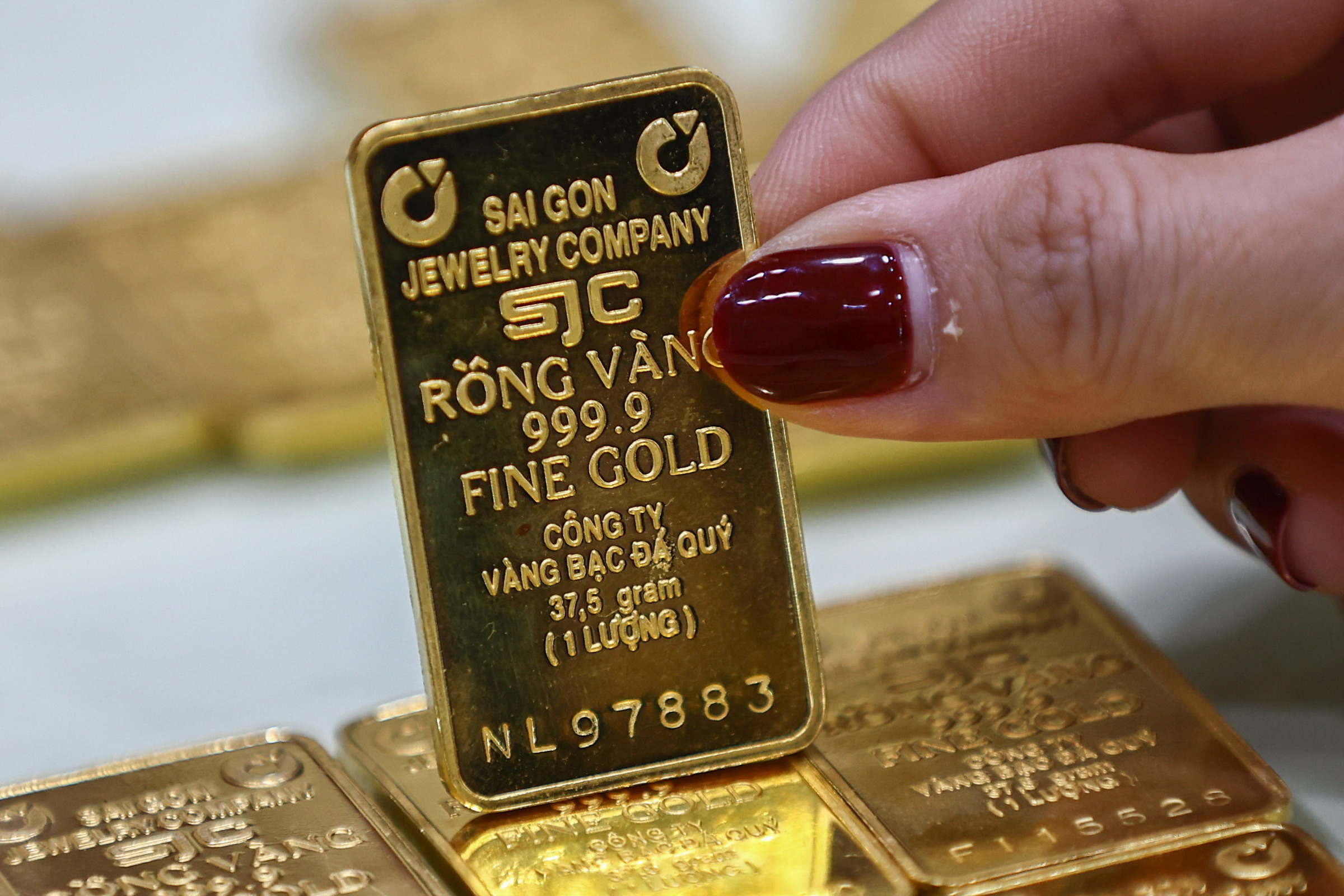 |
Gold bars at SJC headquarters (TP HCM), 3/2025. Photo: Quynh Tran. |
On the international market, at 1:30 p.m. (Hanoi time), spot gold also fell by 30 USD per ounce to 4,286 USD. Converted at Vietcombank's selling exchange rate, the world gold price is equivalent to 136.4 million dong per tael. The difference between domestic and world gold bar prices remained around 19 million dong per tael.
Domestic silver bar and ingot prices showed a similar trend, decreasing by 1.4% compared to yesterday. Phu Quy Gold Investment Joint Stock Company listed silver bars at 2.37 - 2.44 million dong. Sacombank - SBJ traded at 2.36 - 2.42 million dong. This precious metal often moves similarly to gold prices, but with greater volatility.
This year, world gold set 50 new peaks, yielding over 60% profit. The price surge was driven by escalating geopolitical instability and a weakening USD. Investors and central banks increased their gold holdings to diversify portfolios and reduce dependence on the USD.
The World Gold Council (WGC) forecasts that next year's market will continue to be affected by persistent geo-economic uncertainties. Current gold prices closely reflect consensus macroeconomic expectations and may fluctuate within a narrow range if present conditions remain unchanged. However, given this year's unexpected developments, 2026 is likely to still hold unpredictable factors.
In a scenario of slowing economic growth and continued interest rate reductions, gold prices could see a moderate increase. If a more severe recession occurs, accompanied by rising global risks, gold could demonstrate its safe-haven role clearly and rise sharply.
Conversely, if President Trump's policies yield positive results, boosting economic growth and easing geopolitical risks, interest rates could rise again alongside a strengthening USD. This factor would exert downward pressure on gold prices.
Factors such as central bank gold demand and the trend of precious metal recycling could also significantly affect the market. According to the WGC, gold's role as a portfolio diversification tool and a source of value stability remains key amid continued high volatility in financial markets.
Quynh Trang