In early September, Heineken Vietnam and its partners launched phase two (2026-2030) of their public-private water conservation program. This expansion extends operations to the Cu De river basin in Da Nang and the Ray - Da Den river basin in Ho Chi Minh City.
With a total investment exceeding 70 billion VND over nine years (2022-2030), the initiative aims to restore ecosystems, improve natural water regulation capacity, and support local communities. The company targets achieving a 100% water balance for all water used in production at its five breweries by 2030.
Heineken Vietnam's initiative, launched in 2022, focuses on water conservation at the river basin level, moving beyond just implementing water-saving solutions within its factories. The program collaborates with regulatory agencies, WWF-Vietnam, and local authorities to restore upstream forests and wetlands, and enhance flow regulation capacity.
During phase one, the program planted, restored, and improved the management of over 1,132 hectares of forests and wetlands. This included 710 hectares within the Dong Nai Nature and Cultural Reserve, 410 hectares in Xuan Son National Park, and 12,3 hectares in Dong Thap Muoi, combined with hydrological management activities.
According to Heineken Vietnam, by the end of 2025, the program helped the company achieve its goal of balancing 100% of the water used in production across three river basins: the Red River, Dong Nai River, and Tien River, corresponding to its breweries in Hanoi, Ho Chi Minh City, and Tien Giang. The company reported replenishing 2.2 billion liters of water to nature annually.
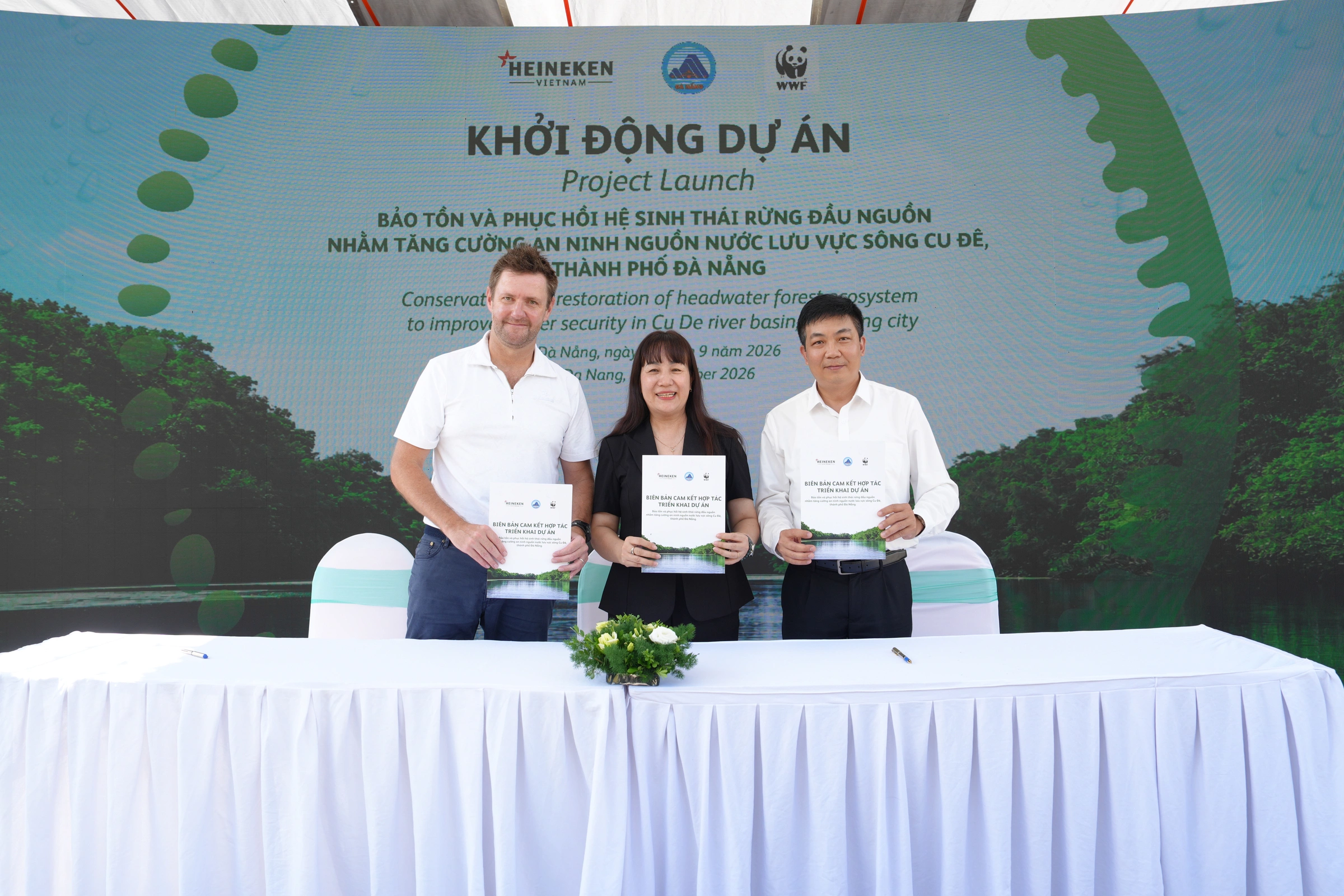 |
Representatives from Heineken Vietnam and partners at the signing ceremony for phase two of the program. Photo: Heineken Vietnam. |
Based on these results, phase two expands conservation activities to two new river basins, increasing the total number of participating basins to five. This expansion aims to link the company's water balance goals with ecosystem restoration and local water resource protection efforts.
Beyond ecosystem restoration, the initiative also supports residents in areas affected by natural disasters and water scarcity.
In Ta Lang - Gian Bi, the program helped restore a disrupted water supply system and provided water tanks, enabling households to proactively store water before the storm season.
Mr. Tho, the head of Ta Lang village, stated that after each storm and flood, the water supply system often breaks down, forcing residents to fetch water from rivers and streams. Thanks to the support for system repairs and the provision of water tanks, residents can manage their domestic water supply more effectively, reducing hardships during adverse weather.
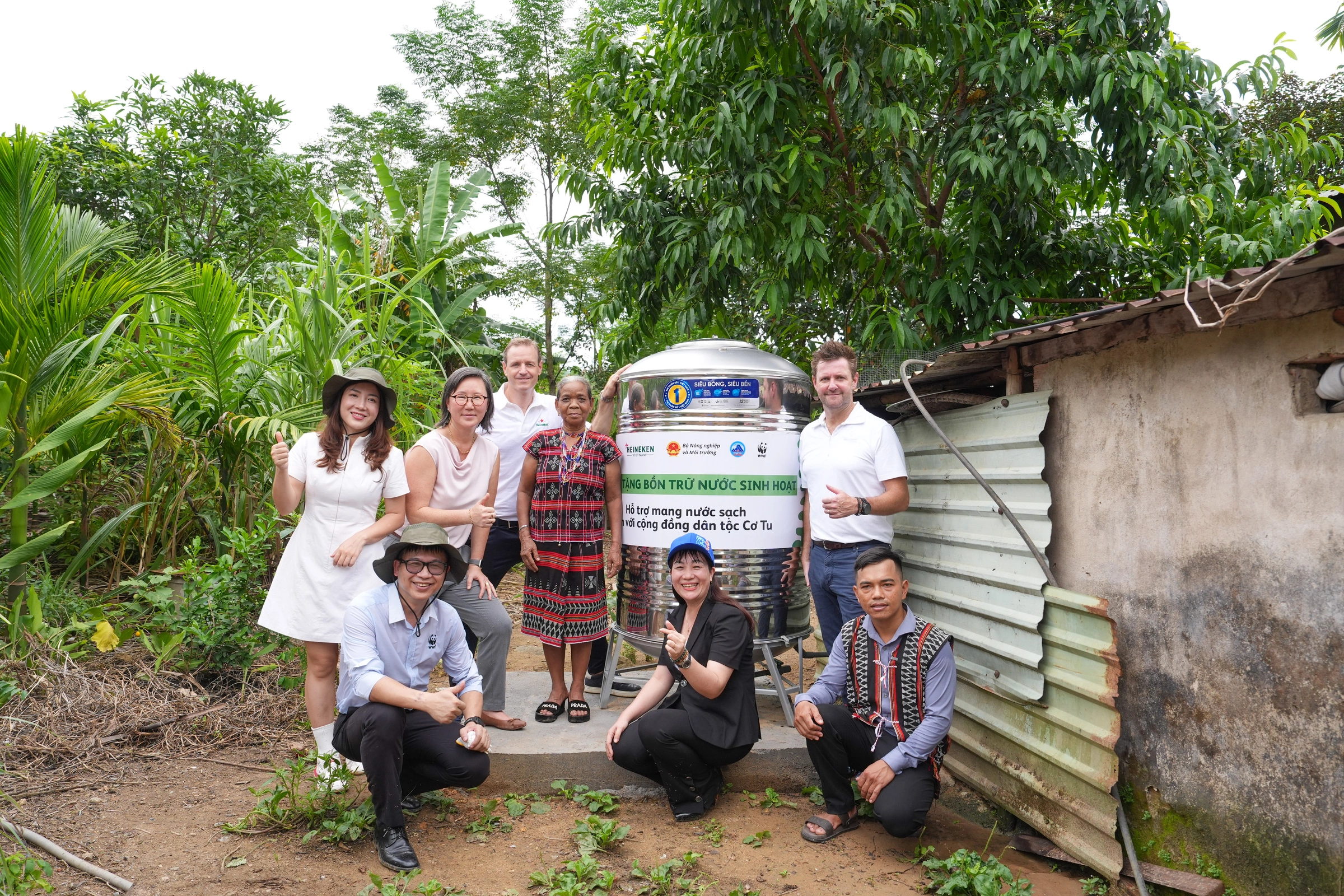 |
The program provides water tanks to residents in Ta Lang - Gian Bi. Photo: Heineken Vietnam. |
According to representatives of the organizing committee, the results from phase one have demonstrated the effectiveness of the public-private partnership model in water conservation. Connecting resources and expertise from multiple parties ensures that solutions are implemented synchronously, from planning to execution, thereby creating a sustainable impact on the environment and communities.
Nguyen Do Anh Tuan, Director of the International Cooperation Department, Ministry of Agriculture and Environment, assessed that the cooperation model between Heineken Vietnam, the Ministry, and WWF-Vietnam has yielded practical results. As water security increasingly becomes a challenge, this collaboration contributes to linking economic growth with sustainable development goals.
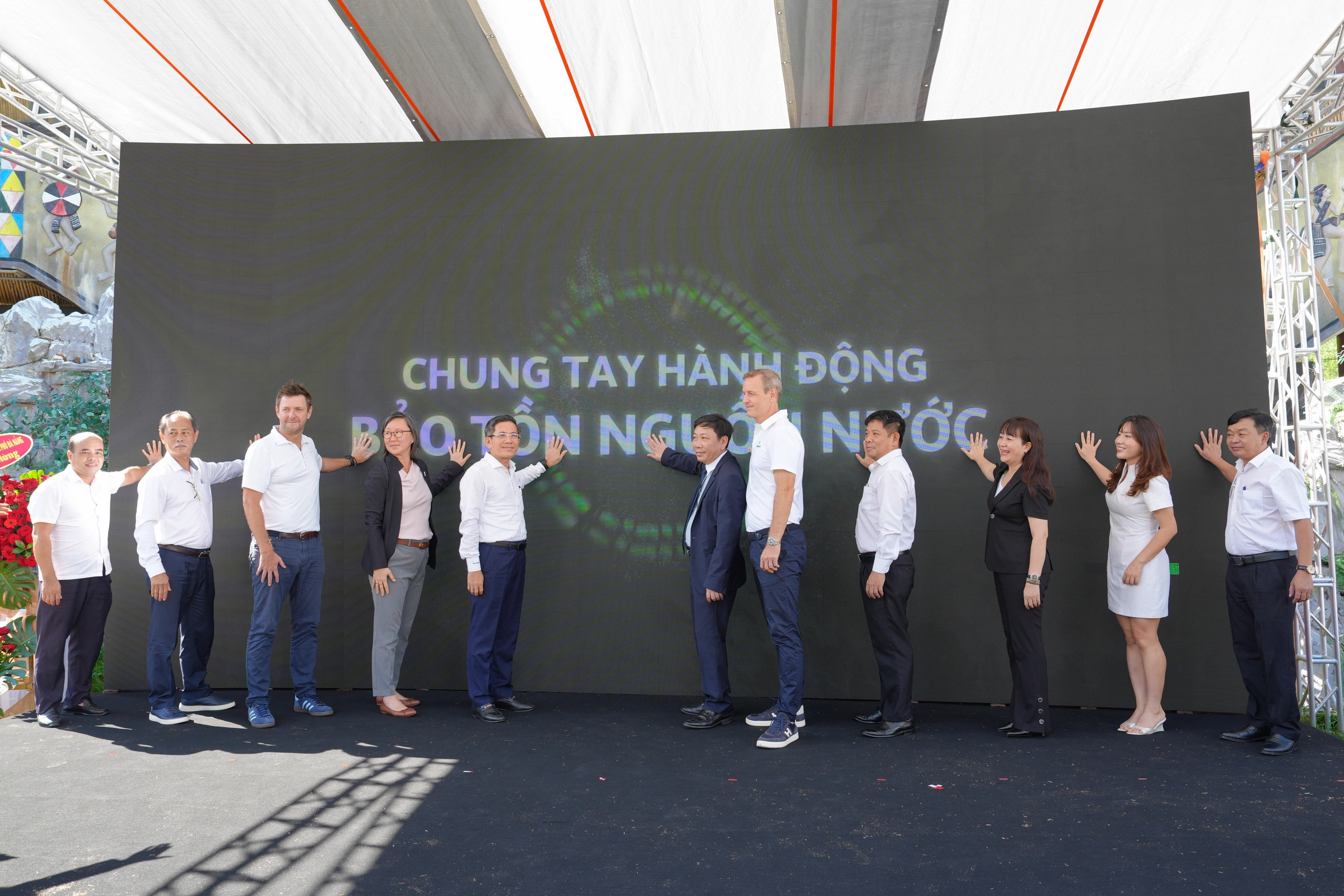 |
Representatives of the parties involved in the water conservation program. Photo: Heineken Vietnam |
Through phase two, Heineken Vietnam continues to expand the initiative from three to five river basins, integrating its water usage goals in production with ecosystem restoration and improving community living conditions. This is one of the company's activities to achieve its sustainable development goals by 2030.
Yen Chi