This goal is outlined in the "Plan to Promote Digital Economy Development 2026", recently issued by the Ho Chi Minh City People's Committee. The city, an economic engine, expects the digital economy to gradually become the main growth driver in the coming period.
The target of a 30% GRDP contribution for 2026 is also higher than the locality's previously set goal of 18,5% of GRDP last year. Furthermore, it is more than double the 13,43% achieved in 2025.
The General Statistics Office measures the digital economy's contribution using the "proportion of added value of the digital economy" in national GDP or local GRDP. This includes contributions from core digital economic sectors and the digitalization of other sectors.
Core digital economic sectors comprise 7 industries: manufacturing of electronics, computers, and optical products; wholesale of computers, equipment, and software; wholesale of electronic components, telecommunications equipment; software publishing; telecommunications; programming; data processing, information portals; computer repair and communication equipment repair.
According to the General Statistics Office, Ho Chi Minh City's proportion of added value from the digital economy has gradually improved, from 11,07% of GRDP in 2021 to 13,42% in 2025. However, it remains lower than Hanoi (17,34%) and Hai Phong (22,28%) among centrally-governed cities.
Among 34 provinces and cities nationwide, 4 localities had a digital economy share in their GRDP exceeding 20% last year: Bac Ninh (46,30%), Thai Nguyen (29,53%), Hai Phong (22,28%), and Phu Tho (22,71%). These provinces are major electronics manufacturing hubs.
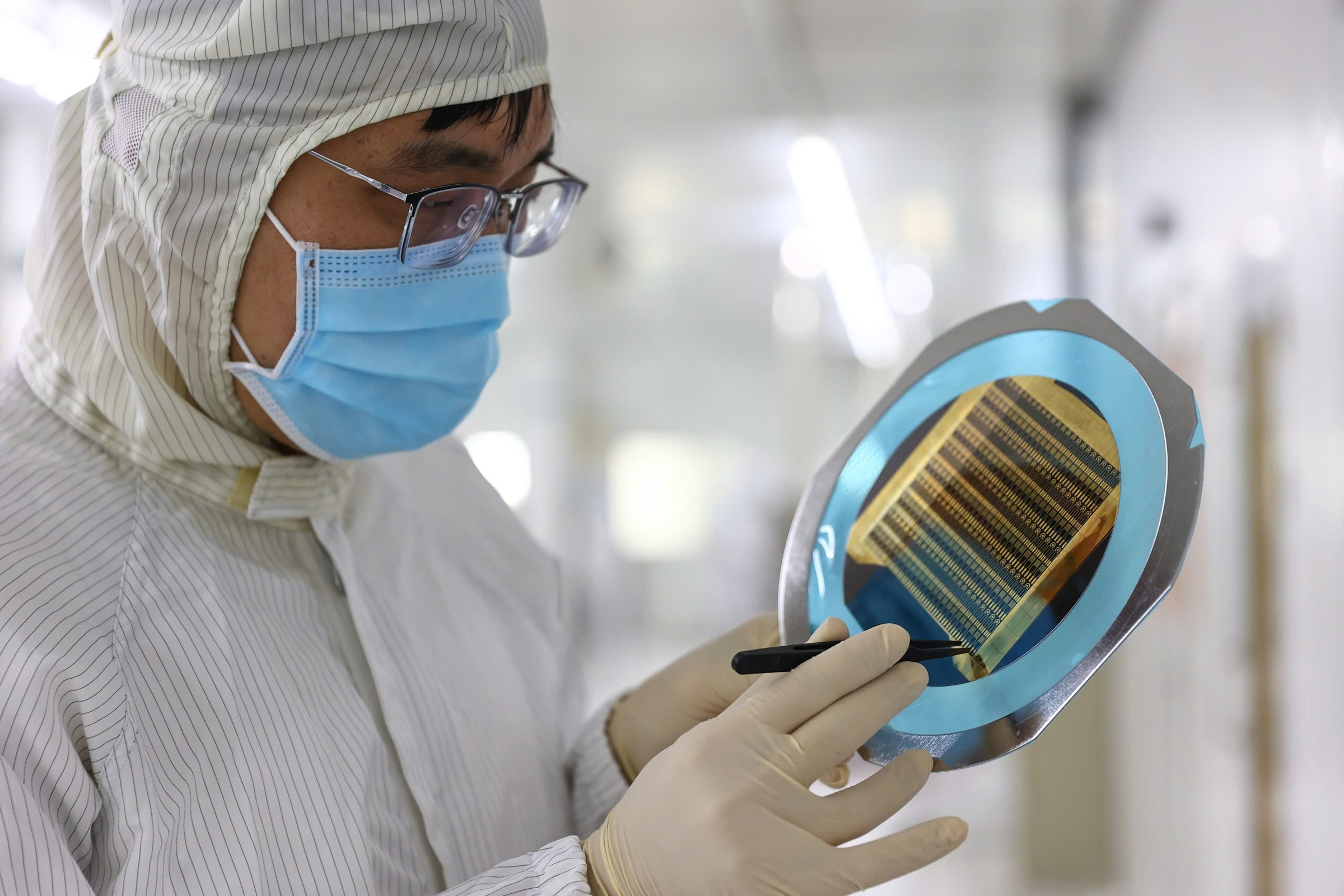 |
Semiconductor laboratory at the Research and Development Center, Ho Chi Minh City Hi-Tech Park, 12/2024. Photo: Quynh Tran. |
To achieve its digital economy development goals, the Ho Chi Minh City People's Committee plans to boost the application of science and technology, innovation, and digital transformation in key economic sectors such as high-tech industries, logistics, and e-commerce.
Specifically, the city aims for 5G coverage to reach 95%, e-commerce to account for at least 13,4% of total retail sales, 93% of seaports to utilize digital platforms, and an increased proportion of businesses and factories adopting smart manufacturing systems.
The city administration will focus on improving institutions, developing digital infrastructure, promoting multi-sector digital economy, training high-quality human resources, and building an innovation ecosystem. Ho Chi Minh City also encourages public-private partnerships, attracts investment, and strengthens domestic and international linkages.
Vien Thong