At its annual meeting on 21/4, the first since its listing, many shareholders questioned Hoa Phat Agriculture's decision to set lower business targets for 2026. The company projects 7,200 billion VND in revenue and 1,005 billion VND in after-tax profit, representing decreases of 11% and 37% respectively from the previous year.
Reporting to the general assembly, General Director Pham Thi Hong Van acknowledged that shareholders might be "stunned" by this news. However, she affirmed that the business plan was developed based on careful assessments of market conditions. Ms. Van highlighted that geopolitical tensions in the Middle East have significantly impacted the livestock industry.
Following recent conflicts, volatile oil prices in March led to increased logistics costs and higher prices for imported production raw materials. Additionally, fertilizer prices climbed in line with energy costs, severely affecting corn and soybean cultivation, which are primary ingredients for animal feed.
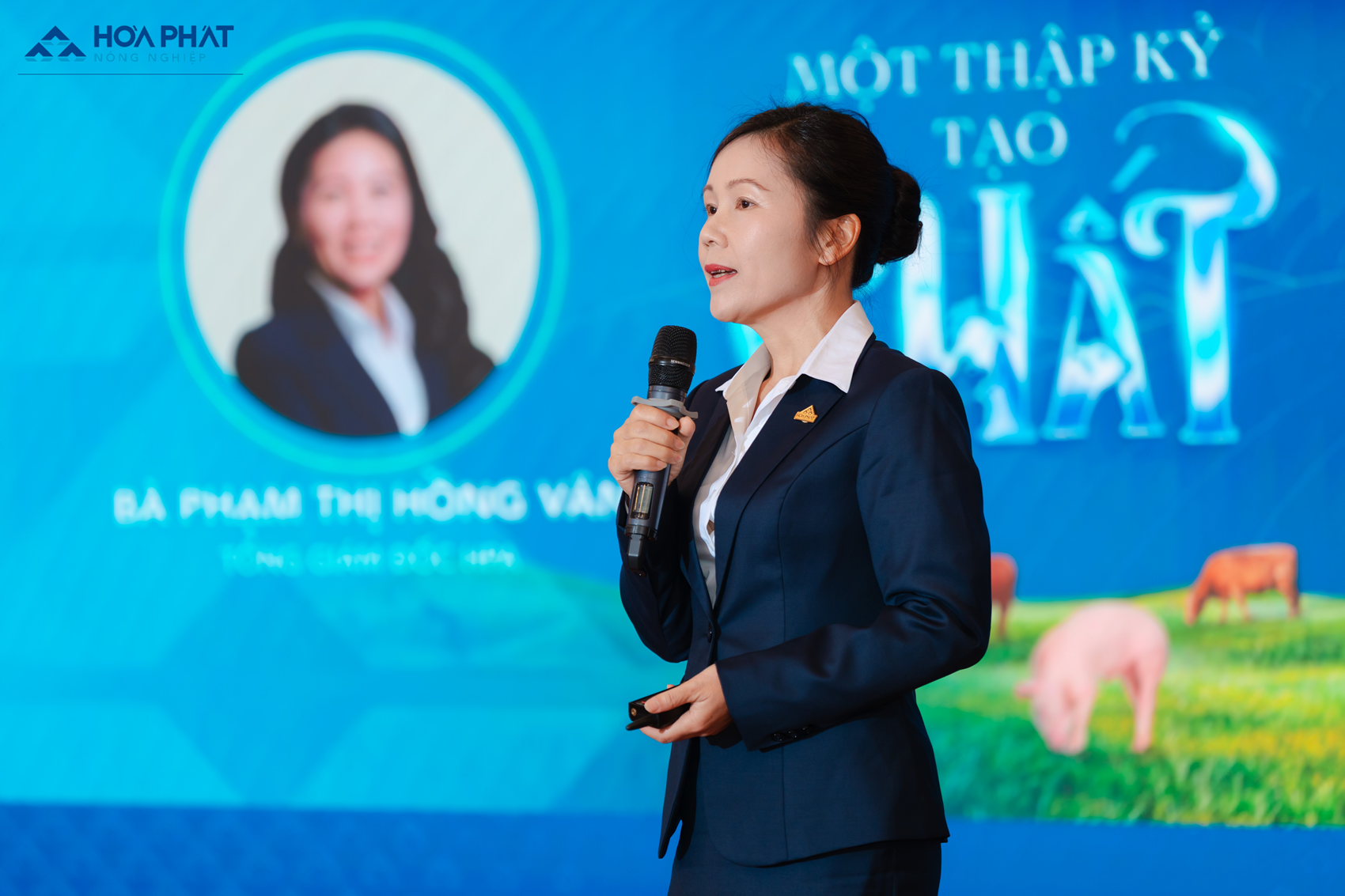 |
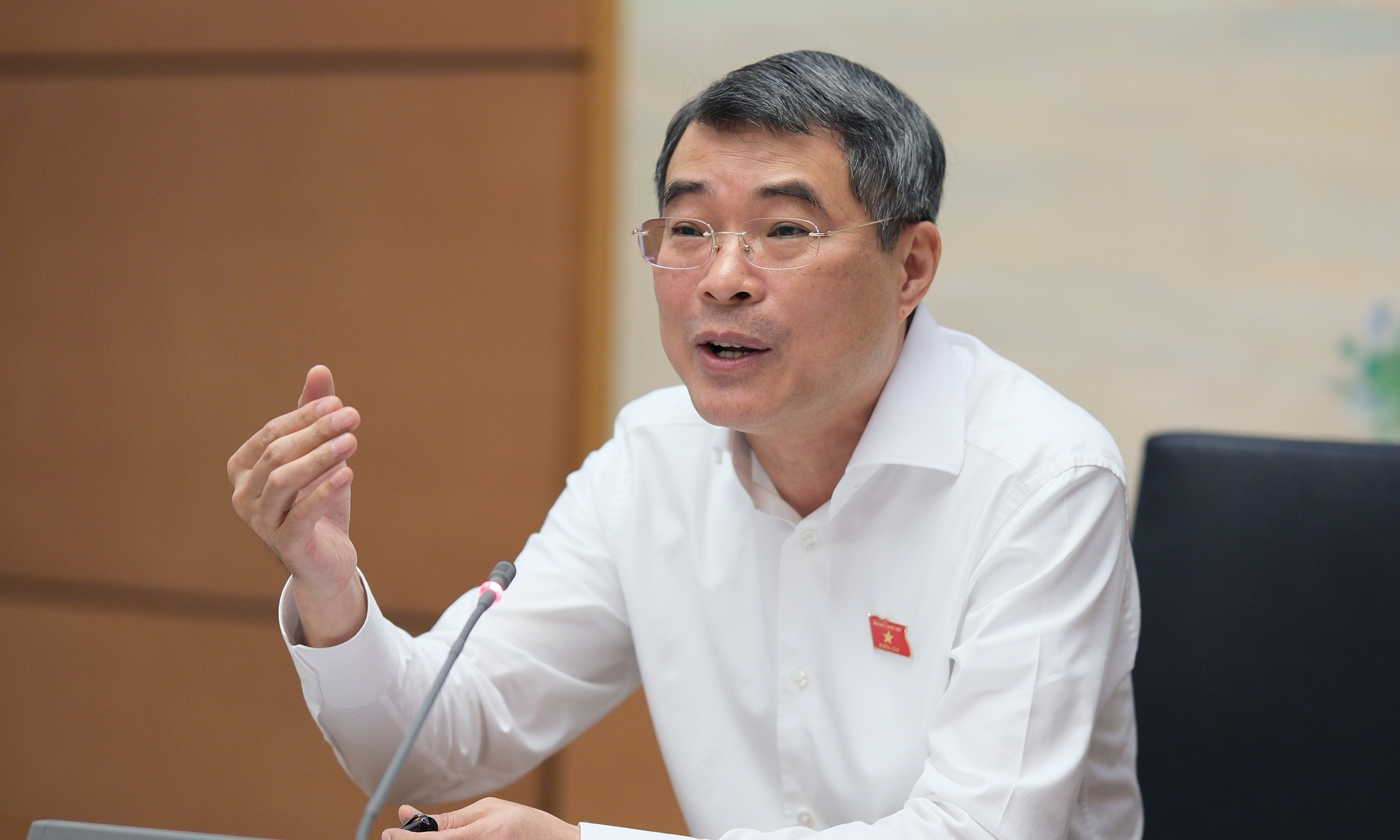
Pham Thi Hong Van, General Director of Hoa Phat Agriculture, speaks at the annual meeting on 21/4. Photo: HPA. |
Elaborating on the 2026 business outlook, Nguyen Viet Thang, Chairman of Hoa Phat Agriculture, noted that recent energy price increases had not been fully reflected in the economy during Q1. "These risks persist with a delay due to remaining inventory, particularly for petroleum products," Mr. Thang explained.
Mr. Thang predicts that the impact from fuel prices will become clearer in Q2 and Q3, creating inflationary pressure. In this environment, production costs are likely to rise, which could lead to a 7-8% improvement in pig prices.
Therefore, the company may increase pig selling prices, but this remains dependent on market supply and demand. Mr. Thang also pointed out that the pig industry typically sees its lowest prices in Q3, with Q4 and Q1 being more favorable. The 2026 plan incorporates these seasonal factors.
Beyond market dynamics, the risk of disease outbreaks continues to be a major challenge in 2026, according to Hoa Phat Agriculture's General Director. African swine fever (ASF) remains uncontrolled. In Vietnam, the disease's progression is more complex than in some regional countries due to the emergence of a recombinant strain between type 1 and type 2, which possesses high virulence and prolonged duration. This remains a significant concern for the industry.
Additionally, Hoa Phat Agriculture's leadership emphasized the distinct cyclical nature of the livestock industry, with peak periods occurring in 2015, 2020, and 2025. The 2026 plan accounts for this characteristic.
Despite facing numerous challenges, Pham Thi Hong Van stated that Hoa Phat Agriculture retains certain advantages. The company has established a biosecure, closed-loop livestock farming chain. Consequently, if new disease outbreaks occur, their impact on the company's operations is expected to be minimal.
Sharing Q1 business results with shareholders, Hoa Phat Agriculture's leadership reported 1,813 billion VND in revenue, a 10,8% decrease compared to last year's performance. Gross profit also declined by 1,2% compared to Q1 2025. After deducting expenses, the company recorded an after-tax profit of 345 billion VND, equivalent to 34,3% of its annual plan.
According to the General Director, the Q1 2026 business results decreased year-on-year primarily due to two factors: pig prices and production volume. The average pig price in Q1 2025 was approximately 67,000-70,000 VND, whereas in Q1 2026, it was only 66,000 VND. Furthermore, the company's production volume decreased because the My Duc farm had just completed renovations.
Trong Hieu