On 21/4, during a National Assembly discussion on the mid-term public investment plan, Quang Tri Vice Chairman Hoang Xuan Tan highlighted a critical issue: while bidding policies are designed to reduce costs and save the budget, the reality shows that "projects with lower bids tend to be of low quality, experience slow progress, and result in prolonged unfinished work".
This discussion comes as the Government proposes a total public investment capital of 8.22 million billion VND from now until 2030 – 2.7 times the amount implemented in the previous five years. Of this, the central budget accounts for 3.8 million billion VND and local budgets for 4.22 million billion VND.
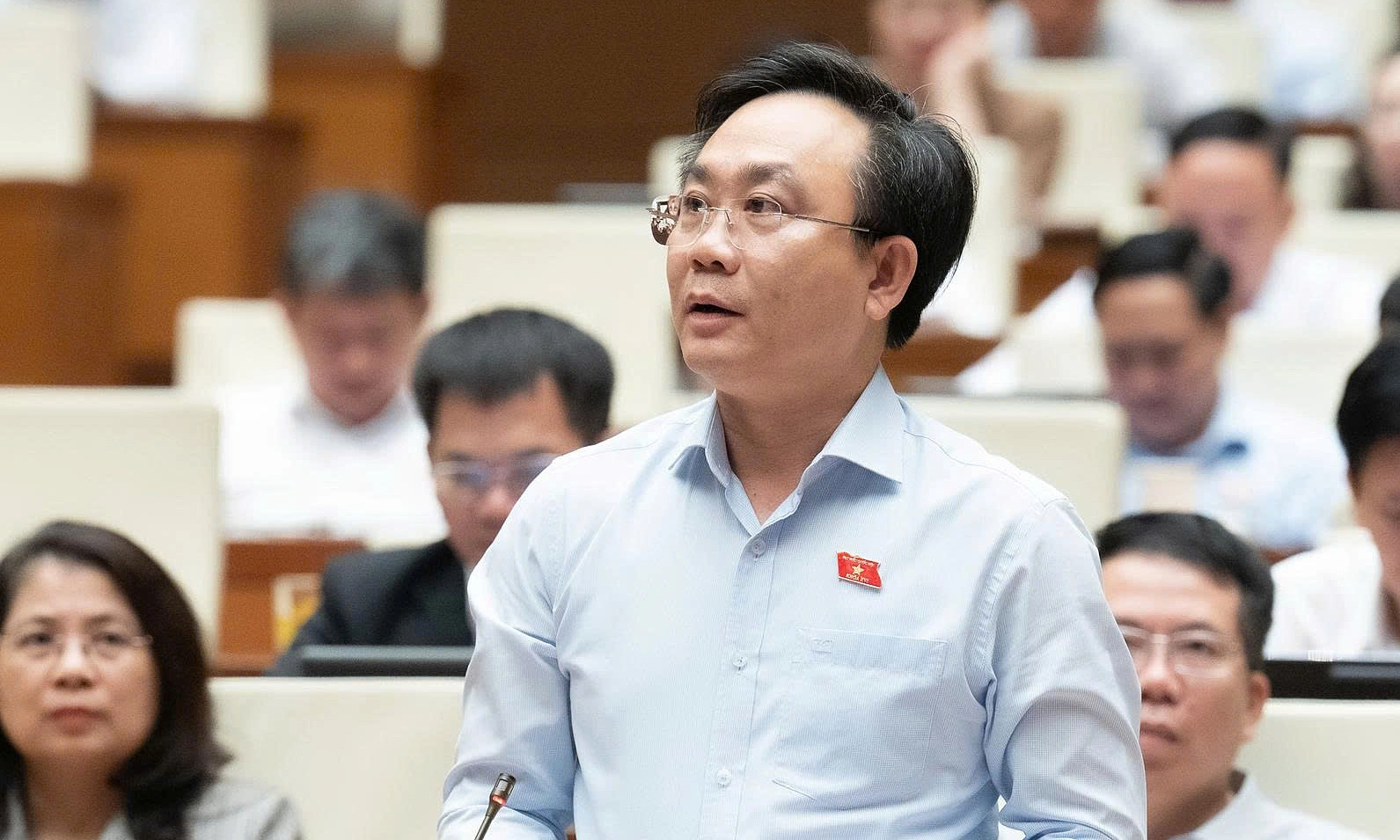 |
Quang Tri Vice Chairman Hoang Xuan Tan speaking at the discussion session on the afternoon of 21/4. Photo: National Assembly Media
Mr. Tan cited an example of a 1,000 billion VND ODA-funded drainage project where the average construction bid reduction was about 24%, with some packages seeing a 40% reduction, saving the budget 200 billion VND. However, during implementation, these low-bid packages faced prolonged delays, causing the project to be three years behind schedule and resulting in significant losses. "The reason is that low prices mean contractors either make no profit or incur losses, leading them to prioritize other projects. Difficult investment conditions also cause projects to generate numerous procedures", the representative stated.
Similarly, a project to build six classrooms with an investment of 8 billion VND was also undertaken by a low-bid contractor. According to Mr. Tan, the contractor's limited capacity meant it took nearly four years to complete, causing significant inconvenience for the school.
Given this reality, the Quang Tri Vice Chairman proposed amending related laws, including increasing the direct appointment threshold for projects with consistent standards, such as classrooms, from 2 billion VND to 10 billion VND. He also suggested increasing the responsibility of investors in selecting capable contractors.
Ms. Pham Thuy Chinh, Vice Chairwoman of the Economic and Finance Committee, argued for a strong shift from a "disbursement-focused mindset to high efficiency". She noted that in recent years, capital has not been the primary issue; rather, slow investment preparation, delayed site clearance, and limited project implementation capacity have led to wasted resources. Concurrently, she proposed implementing an output-based disbursement mechanism, establishing the principle that if previous stage objectives are not met, no capital will be allocated for the subsequent stage. Disbursement rates and project effectiveness should be publicized to prevent scattered investment. "The evaluation of public investment projects must be mandatory according to financial indicators such as return on investment, break-even point, and socio-economic efficiency", Ms. Chinh stated.
For localities, especially large urban centers like Hanoi, TP HCM, Hai Phong, and Da Nang, representatives suggested flexibly applying financial tools such as transit-oriented development (TOD) models and local government bonds. This aims to efficiently leverage local resources and foster sustainable development.
Explaining afterwards, Minister of Finance Ngo Van Tuan stated that the efficient use of public investment capital is a "mandatory requirement". With the current bidding process often lasting six months to one year, Minister Tuan said he would instruct units to review the implementation phase, including issues related to site clearance, technical standards, and construction material prices. He announced that this week, Prime Minister Le Minh Hung will chair a national conference to review all public investment disbursement. The review will cover procedural processes, including administrative procedures for investment preparation.
The National Assembly is expected to vote on the mid-term public investment plan on 24/4.
Anh Tu