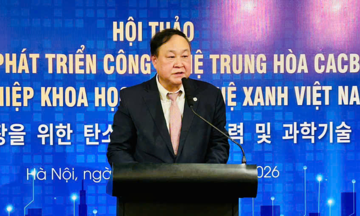
During a seminar on the afternoon of 5/1 organized by Tuoi Tre newspaper, Mr. Johan Nyvene, Chairman of the Board of Directors of Ho Chi Minh City Securities Corporation (HSC), proposed a mechanism allowing some companies, even if not yet profitable, to be listed and traded on the Ho Chi Minh Stock Exchange (HoSE).
Responding to this issue, Ms. Pham Thi Thuy Linh, Head of the Securities Market Development Department at the State Securities Commission (SSC), announced that the government has assigned the Ministry of Finance to draft a separate decree guiding transactions for innovative startups. She explained that companies in science, technology, and innovation sectors often incur substantial initial project investment costs, making it difficult for them to meet the profit criteria under standard listing regulations.
Therefore, regulatory authorities plan to research and establish a separate trading board with more relaxed listing conditions for these businesses. Instead of focusing on current profitability, this group would be assessed based on their future revenue potential and profitability.
According to Mr. Nyvene, this approach would create an environment that meets the needs of investors interested in specific types of businesses, rather than forcing them to delist when they violate profit requirements or have accumulated losses. This initiative is particularly meaningful as Vietnam develops its International Financial Centers (IFC).
From a market participant's perspective, Mr. Nguyen Thanh Trung, General Director of FinSuccess Investment Joint Stock Company, stated that current regulations pose a barrier for companies in the investment formation stage. Currently, capital support channels for these businesses in Vietnam, such as venture capital funds, are limited, so not being able to list significantly restricts their access to capital.
Therefore, allowing these companies to list is expected to provide them with an additional channel for capital mobilization. Concurrently, investors would also be offered a diverse selection of products in the stock market.
Currently, in principle, HoSE does not accept new listings from unprofitable businesses. Listing conditions require a company to be profitable for two consecutive years prior to the registration year and to have no accumulated losses. For already listed companies, if they incur losses, they can still be traded; however, their shares may be placed under warning or control. In cases of prolonged poor business results, such as three consecutive years of losses, negative equity, or accumulated losses exceeding charter capital, shares may face mandatory delisting.
Mr. Johan cited the US market as an example, where technology companies or those in new sectors are often listed based on their potential, even without immediate profitability. Nasdaq, in fact, does not prohibit unprofitable companies from listing. It does not impose a mandatory profit condition, but rather focuses on other quantitative criteria such as minimum equity, market capitalization, minimum share price (typically 4 USD at listing or lower if other criteria are met), number of shareholders, liquidity, and governance-information disclosure standards.
Consequently, many rapidly growing technology companies or startups can still list on Nasdaq even without profits. However, after listing, if the share price falls below the regulated threshold, equity declines, or information disclosure obligations are violated, the shares may be warned and delisted.
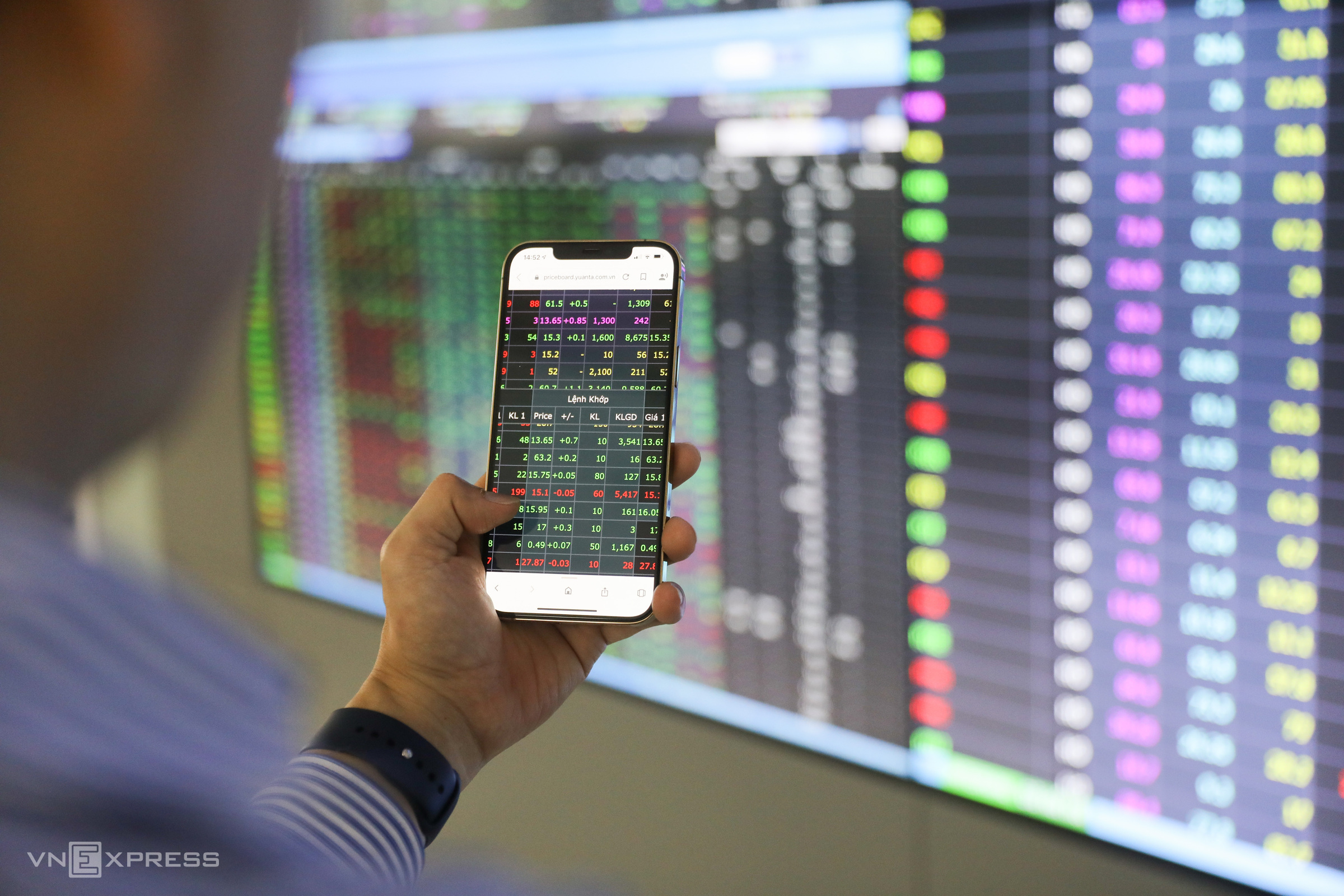 |
Investors monitor an electronic board at a securities company in Ho Chi Minh City. Photo: Quynh Tran
Beyond clarifying listing regulations for certain specific groups, Ms. Thuy Linh also stated that in the securities market development strategy until 2030, regulators have set a goal of parallel development in both market size and product quality. The SSC has determined the need for high-quality products and services for investors to choose from when participating in the stock market, focusing on enhancing the quality of public companies and the level of information transparency.
In the market development orientation following the upgrade, an SSC representative also added that the agency is accelerating the implementation of the central counterparty (CCP) mechanism. Currently, the legal framework for this mechanism has been established; however, its practical implementation still requires significant technical and operational efforts, as well as coordination among stakeholders.
According to the roadmap, after the CCP is stably implemented, regulators will proceed with implementing securities lending and borrowing for sales and intraday trading (T0). This would allow Vietnam to gradually align with practices in developed markets while ensuring the safety and transparency of the system.
Tat Dat