The pressure for sustainable development is reshaping the aviation industry's strategy, according to a representative from the airline. Over the past 5 years, Vietnam Airlines has progressively built its ESG foundation through environmental initiatives, community activities, and multi-party cooperation. The airline launched the "Contributing Leaves to the Forests" campaign to restore forests and raise environmental awareness. It also participates in initiatives to reduce single-use plastics on flights.
As part of the SkyTeam The Aviation Challenge program, Vietnam Airlines' test flights saved approximately 0,77 tons of fuel, equivalent to a 2,43-ton reduction in CO2 emissions. This demonstrates an ESG approach that links operational efficiency with environmental responsibility. Additionally, Vietnam Airlines has increased its community activities, medical transportation, and participation in the sustainable aviation fuel (SAF) roadmap, gradually completing a comprehensive ESG foundation that integrates environmental, social, and governance factors.
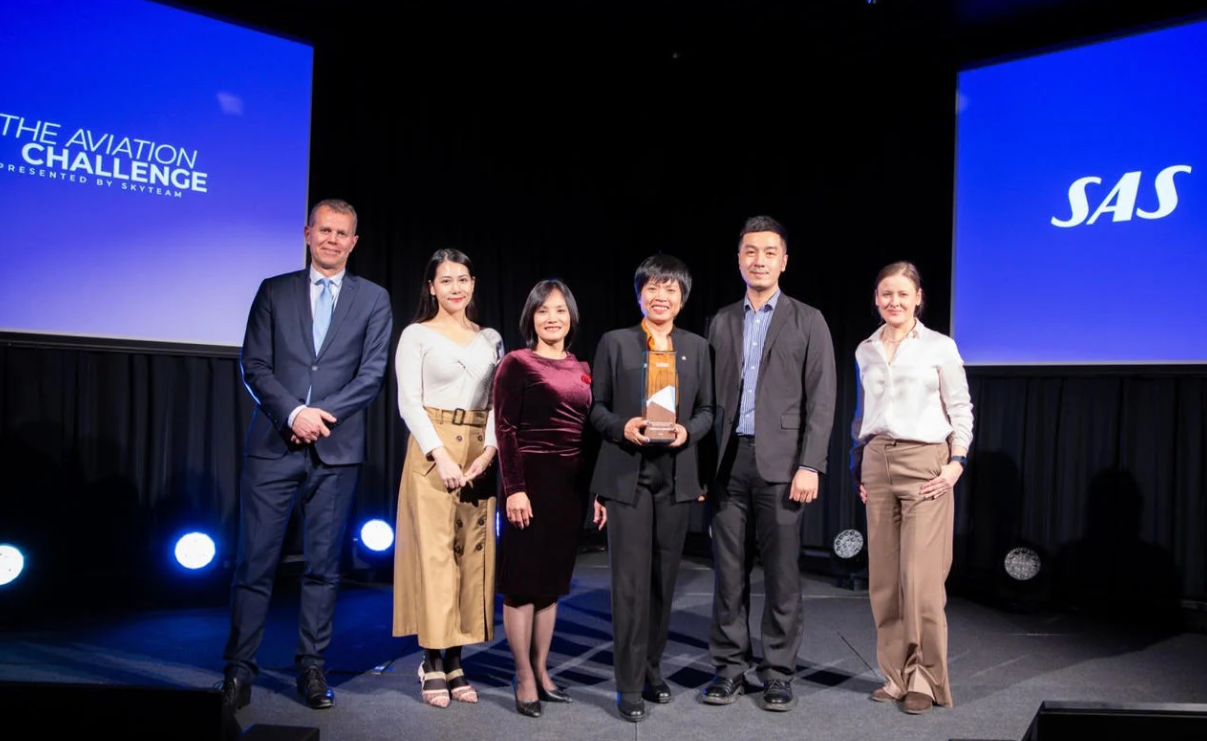 |
Vietnam Airlines received the SkyTeam Sustainable Flight Challenge 2025 award. *Photo: Vietnam Airlines*
Under the environmental pillar, the airline has implemented numerous initiatives for reforestation and ecosystem conservation. The program "Gop la va rung - Vi mot Viet Nam xanh va phat trien ben vung" (Contributing Leaves to Restore Forests - For a Green and Sustainable Vietnam), a collaboration between Vietnam Airlines and its partners, has planted over 60.000 native trees. This effort restored more than 80 ha of forest in the Hoa Binh - Son La region and created sustainable livelihoods for hundreds of local households.
In another campaign, the "Mot la - Mot cay" (One Leaf - One Tree) program recorded over 60.000 participants with 75.000 contributions within 5 months. This initiative aims to restore 50 ha of forest in the Northwest region. These figures indicate that the airline's environmental initiatives are implemented through community mobilization and multi-party cooperation, rather than isolated internal operations.
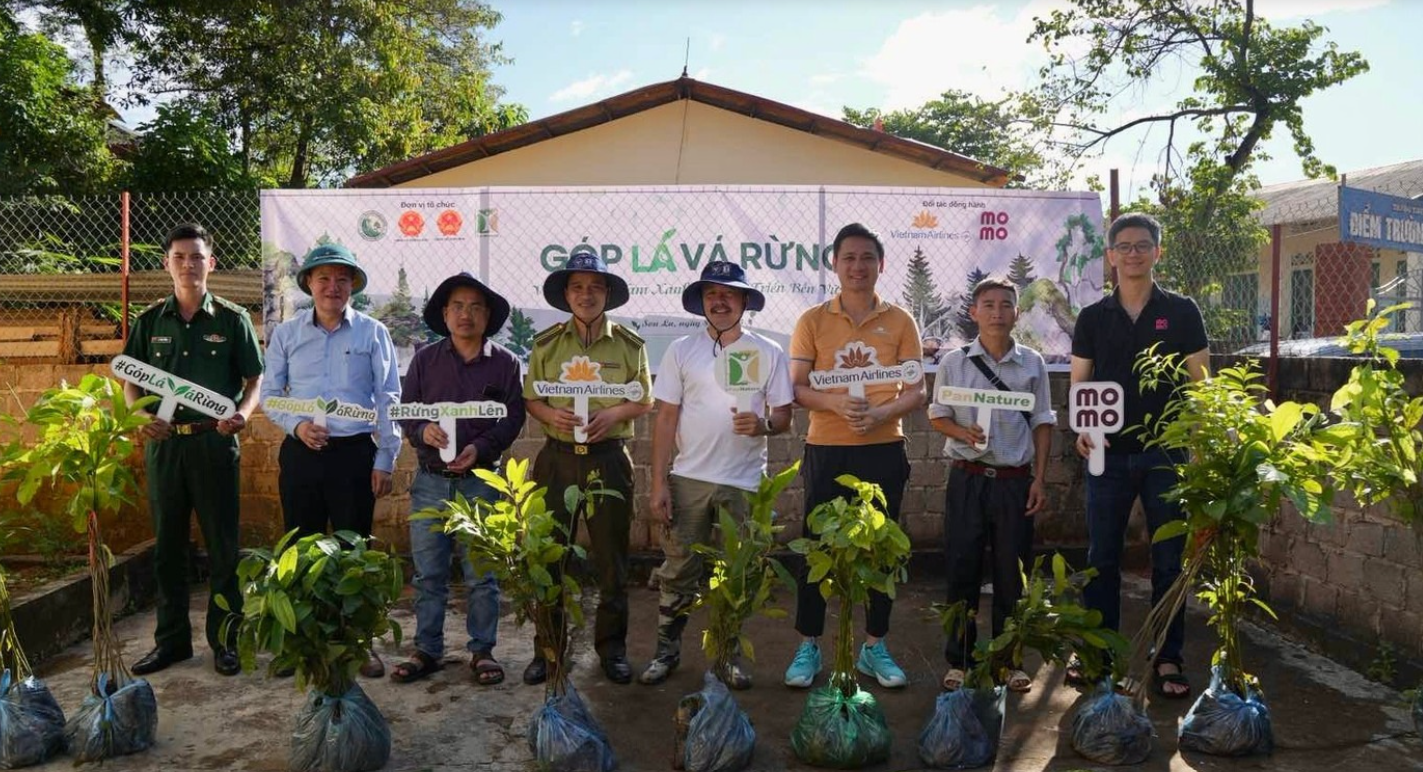 |
The airline collaborates with various entities to implement reforestation programs. *Photo: Vietnam Airlines*
Beyond reforestation, Vietnam Airlines also implements programs to reduce plastic waste and optimize operations. According to AirlineRatings, the airline has replaced single-use plastic materials with wood, paper, and bamboo. It also reuses valuable items, saving approximately 1 billion VND annually. Concurrently, the airline has increased its use of ground power sources instead of auxiliary engines, contributing to reduced fuel consumption and emissions during operations.
Social activities also form a crucial part of the ESG strategy. Vietnam Airlines participates in numerous humanitarian and community support programs, collaborating with social organizations to implement volunteer activities, healthcare initiatives, and connect resources to assist the public. The airline considers these initiatives a core component of its sustainable development strategy, creating economic value while also contributing to the community.
Furthermore, the airline participates in international cooperation programs to promote ESG. Within the framework of SkyTeam's "The Aviation Challenge" program, Vietnam Airlines implements carbon offsetting and plastic waste reduction campaigns, viewing these as important steps in its sustainable development roadmap. Participation in joint initiatives helps the airline expand its implementation scale and share experiences with international partners.
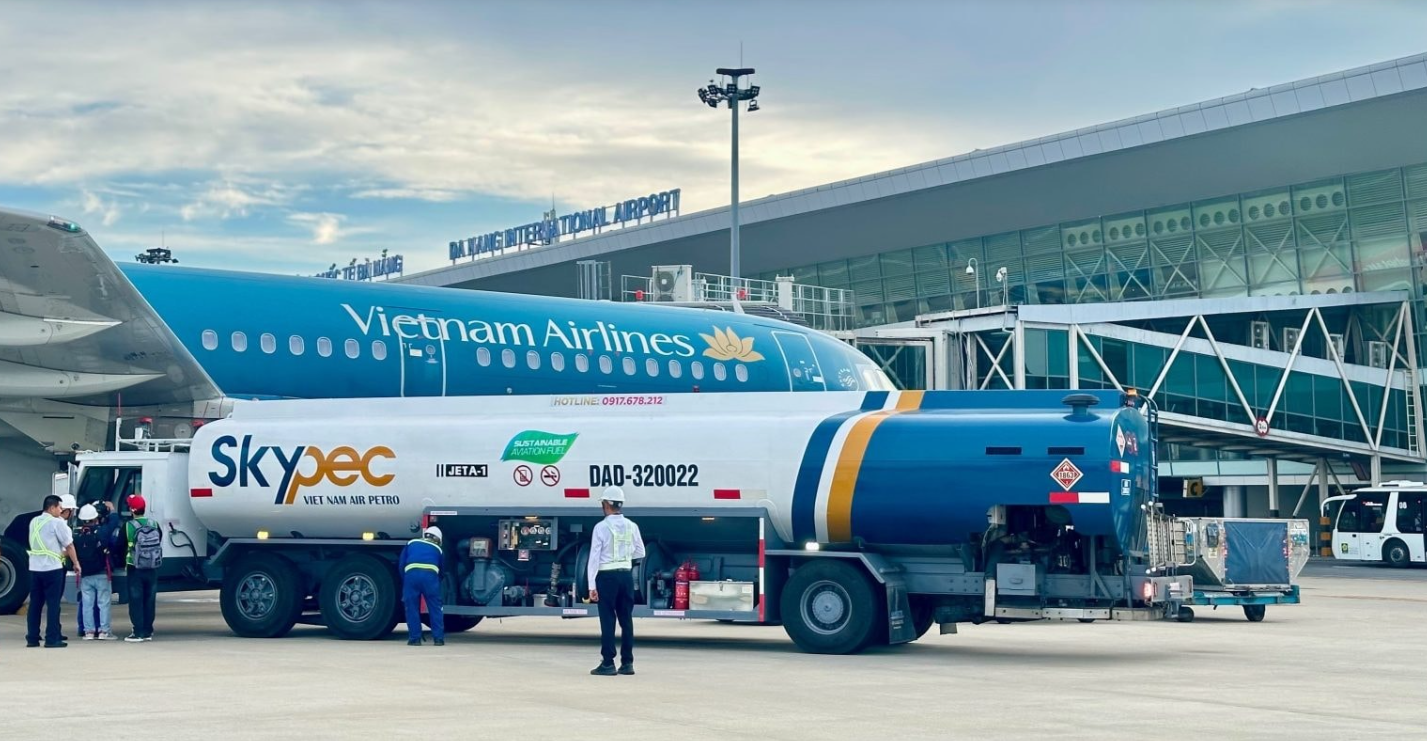 |
A tanker truck containing SAF refuels a Vietnam Airlines aircraft. *Photo: Vietnam Airlines*
However, ESG objectives in aviation are difficult to achieve through isolated efforts. Reforestation activities require environmental organizations and local communities, plastic reduction needs suppliers, and social programs necessitate coordination with healthcare organizations and regulatory bodies. Therefore, the industry trend is to build a foundation of multi-party cooperation to link these initiatives.
Against this backdrop, Vietnam Airlines is preparing to announce a green alliance cooperation model designed to connect technology, environmental, medical, and social partners. This model aims to systematize the ESG programs already implemented, while enhancing their effectiveness through multi-sector coordination. Linking resources is expected to help initiatives extend beyond pilot scale and expand into long-term programs.
This direction also aligns with the aviation industry's net-zero emissions goal. Beyond technical solutions, connecting partners in technology, environment, and community helps the airline build a comprehensive ESG ecosystem. Building on its foundation of reforestation, plastic reduction programs, and humanitarian activities, Vietnam Airlines is progressively transitioning to a cooperative alliance model to enhance implementation efficiency, consistent with the ESG trends of major global enterprises.
Thai Anh