On 14/4, the International Monetary Fund (IMF) released its World Economic Outlook report, lowering its global growth forecast to 3,1% this year. This represents a 0,2 percentage point reduction from its January report and is considered the IMF’s most optimistic scenario, assuming the Middle East conflict does not prolong. Under this outlook, the average oil price this year is projected to reach 82 USD per barrel, a slight decrease from current levels.
The IMF stated that without the conflict, it would have raised its forecast to 3,4%. This upward revision would have been driven by a wave of technology investment, low interest rates, reduced US import tariffs, and fiscal support policies in many nations. Pierre-Olivier Gourinchas, the IMF’s chief economist, highlighted that the ongoing conflict poses a much greater risk to the global economy than the tariffs imposed by US President Donald Trump last year.
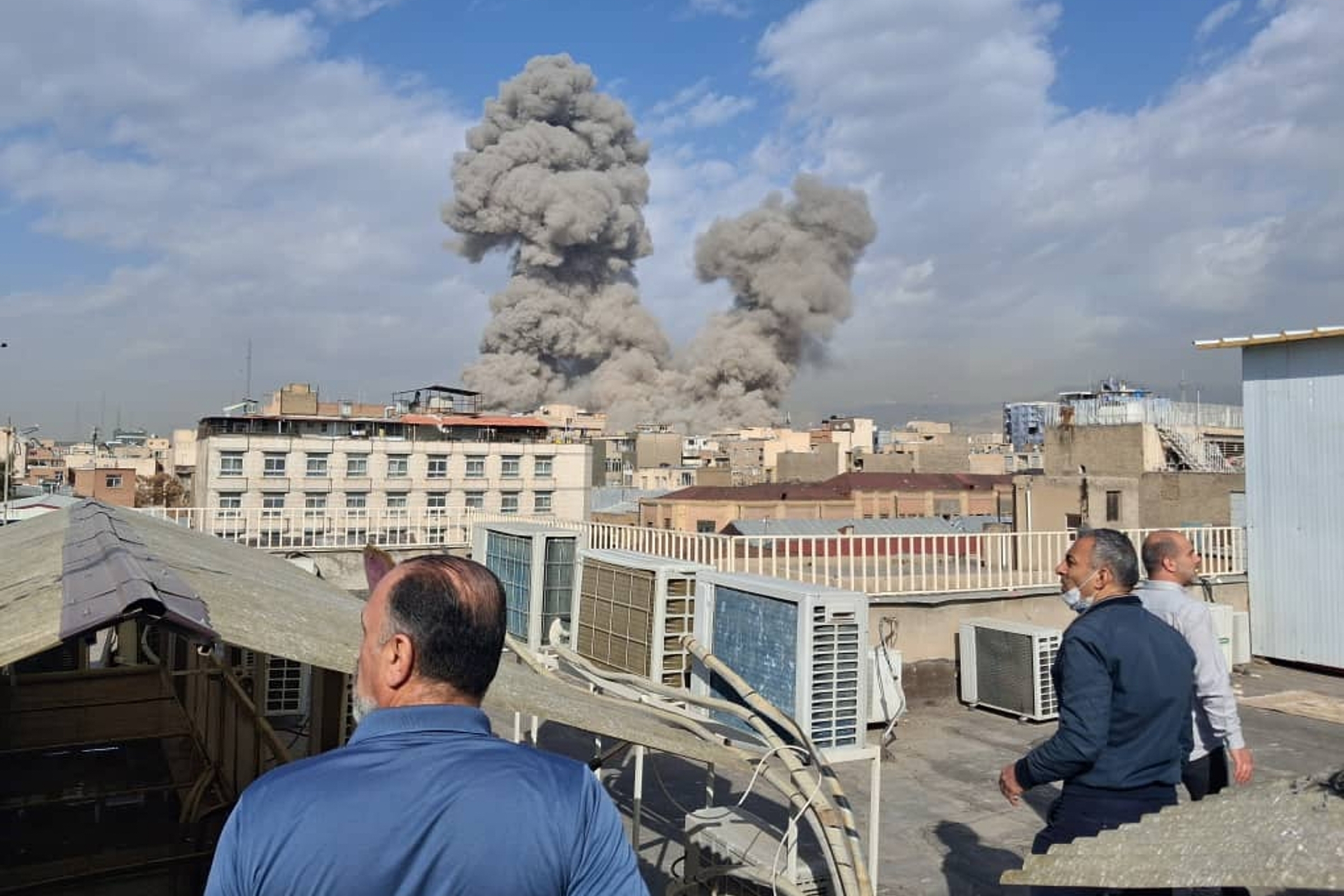 |
Residents watch smoke rise after an explosion in Tehran, Iran, on 28/2. *Photo: AP*
The report outlines an "adverse scenario" where the conflict extends, causing oil prices to remain around 100 USD per barrel this year and 75 USD next year. In this situation, global growth for the current year would fall to just 2,5%.
Under the "worst-case scenario," if the conflict further escalates and oil prices rise significantly, causing major financial market disruptions, global growth would drop to 2%. "This level is near a global recession," the IMF stated. Growth below this threshold has occurred only 4 times since 1980, most recently in 2009 after the financial crisis and in 2020 during the pandemic's outbreak.
This severe scenario would see many countries fall into recession, with average oil prices reaching 110 USD this year and 125 USD next year. Such prices would accelerate inflation and wage increases, compelling central banks to intervene to curb them. Gourinchas warned that this could cause greater losses than those experienced in 2022. Global inflation in 2026 would hit 6% in this worst-case scenario, compared to just 4,4% in the optimistic forecast.
Major economies, including the US, eurozone, and China, all saw their growth forecasts for this year lowered due to the Middle East conflict, though the reductions were only 0,1-0,2 percentage points. Emerging and developing economies are expected to be more severely impacted. Growth in the Middle East and Central Asia, for example, was lowered by up to 2 percentage points, to 1,9%, due to damaged infrastructure and a sharp decline in commodity and energy exports.
The only bright spot in this group is India, where growth was raised by 0,1% to 6,5% for both this year and next. This positive outlook is attributed to strong momentum from late 2025 and the country's recent tariff reduction agreement with the US.
The IMF suggested that governments might be compelled to implement measures such as fuel subsidies, price caps, or tax reductions to mitigate the impact of rising energy prices. However, the organization cautioned against such actions, given persistent high budget deficits and increasing public debt globally.
Ha Thu (according to Reuters)