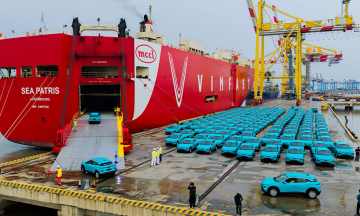
On 30/5, the Industry Department, under the Ministry of Industry and Trade, requested the Vietnam Automobile Manufacturers' Association (VAMA), the Vietnam Association of Motorcycle Manufacturers (VAMM), and other automobile and motorcycle manufacturing and assembly businesses to assess vehicle compatibility with E10 bio-gasoline.
This directive comes as E10 RON 95-III gasoline is set to be widely available, replacing RON 95-III mineral gasoline on the market from early june. E10 is a bio-gasoline blend containing 10% fuel ethanol (bio-alcohol) and 90% mineral gasoline. This fuel type has been piloted at stations of Vietnam National Petroleum Group (Petrolimex) and PetroVietnam Oil Corporation (PVOIL) in several provinces and cities since 8/2025.
The Ministry of Industry and Trade asked businesses to compile and disclose a list of vehicles categorized into three groups, including: fully compatible with E10 gasoline; conditionally compatible or requiring technical considerations during use; and not recommended for E10 gasoline, if applicable. For vehicles not recommended, businesses must clearly state the technical reasons and proposed solutions.
This marks the first time a regulatory body has required manufacturers to provide an official assessment for each vehicle model currently on the market. The requirement aims to address public concerns about vehicle compatibility when switching to fuel with a higher ethanol content.
Businesses must review, evaluate, and determine the compatibility of automobile and motorcycle models currently manufactured, assembled, imported, distributed, and circulating in Vietnam with E10 gasoline. The assessment should focus on the compatibility of engines, fuel injection systems, fuel supply systems, and materials in direct contact with the fuel. Businesses must also evaluate E10 gasoline's impact on operational performance, fuel consumption, engine durability, and emissions.
Additionally, the regulatory body requested car manufacturers to review technical requirements, perform maintenance, or replace parts if necessary to ensure safe and stable vehicle operation when using the new fuel. In addition to technical assessments, businesses are also required to proactively provide specific guidelines for vehicles that have been in use for many years or have undergone technical modifications; they must also instruct users on when to inspect and maintain vehicles before switching fuels.
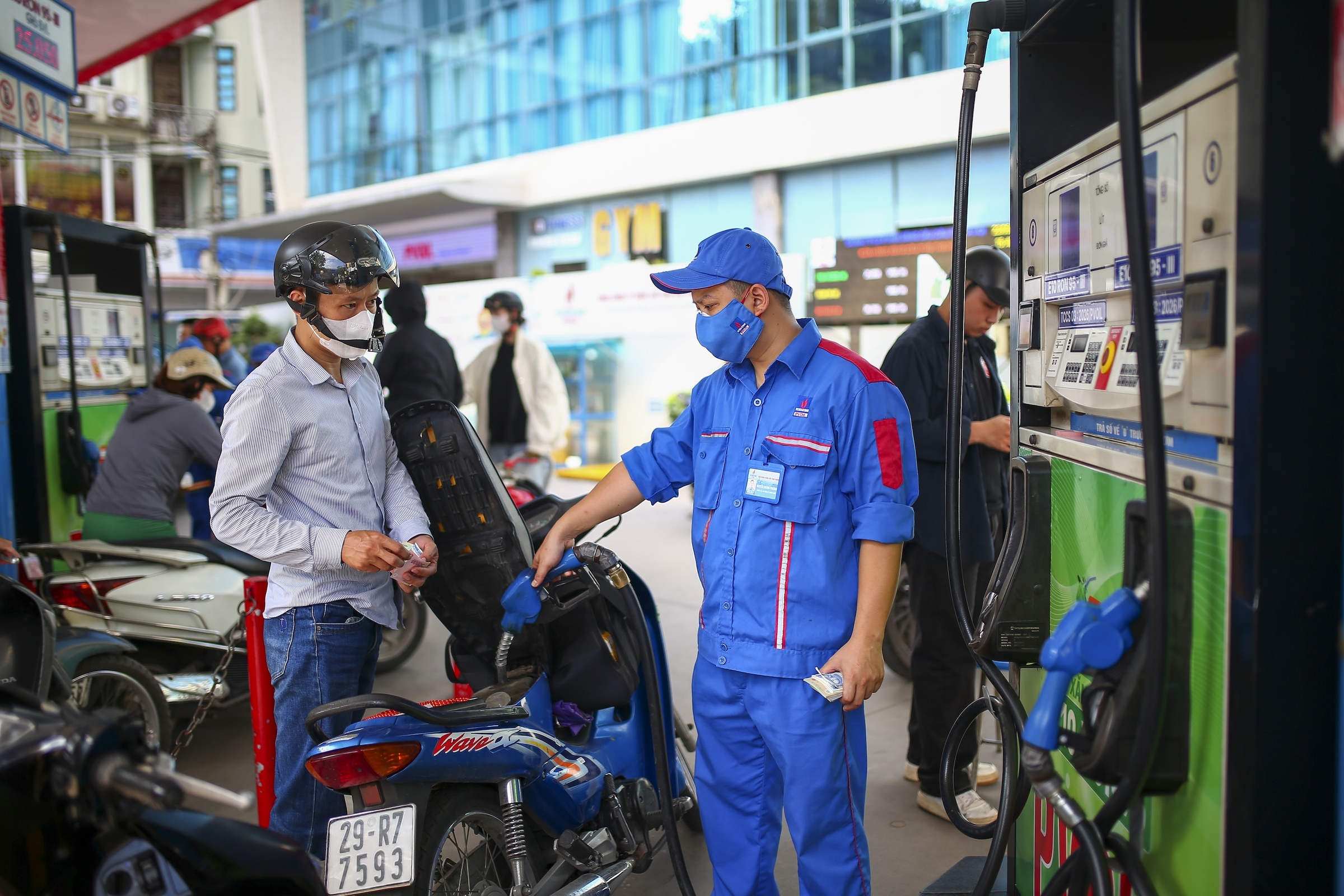 |
Residents fueling with E10 gasoline on Thai Thinh Street in Hanoi, 5/2026. *Photo: Pham Chieu* |
Concurrently, car manufacturers must establish procedures for receiving, inspecting, and addressing consumer feedback related to the new fuel. Specific guidance is also needed on: potential technical issues during the initial transition phase, fuel system cleaning measures, fuel filter replacement, and routine maintenance. Dealerships and warranty centers are required to fully prepare personnel, supplies, and technical support plans to assist consumers during the implementation process.
According to experts, most modern automobiles and motorcycles are designed to use fuel blended with 10% ethanol or more. However, some consumers remain concerned that E10 could increase fuel consumption, affect engine durability, or impact rubber and plastic components in older vehicle models. Previously, the Ministry of Industry and Trade repeatedly stated that E10 gasoline is widely used in many countries worldwide and meets current technical standards. Major petroleum businesses also piloted E10 sales in various localities before expanding nationwide.
As per the Industry Department's request, VAMA, VAMM, and businesses must compile implementation results and report them to the department by 5/6 for consolidation and submission to the Ministry of Industry and Trade.
Phuong Dung