The global race to build artificial intelligence (AI) data centers has intensified demand for Indium Phosphide (InP), a critical material with no substitutes in light-based data transmission technology via optical fiber (photonics). This surge in demand coincides with China's decision to restrict InP exports from 2/2025, creating a significant obstacle for companies developing the fastest, most energy-efficient components for AI data centers.
InP's importance is underscored by recent investments from major US semiconductor companies. In 2025, chip designer Marvell acquired Celestial AI to leverage its photonic technologies. By March, Nvidia announced a USD 2 billion investment in each of two optical equipment manufacturers, Coherent and Lumentum.
China is the world's largest indium producer, accounting for about 70% of global output in 2024, according to the US Geological Survey. This dominance gives Beijing leverage over the InP supply. Konrad Wang, a research analyst at SemiAnalysis, stated, "InP is one of the supply chain bottlenecks holding back the construction of AI data centers."
The impact of these restrictions is already being felt. In early May, Coherent warned of an InP shortage. Its supplier, AXT, the world's second-largest InP substrate manufacturer, admitted that "InP export licenses are the biggest challenge" it faces. AXT produces most of its InP substrates in China but only received its first export license in 6/2025, despite a large backlog of orders. Less than one week later, Coherent CEO Jim Anderson, along with a delegation of US businesses, accompanied President Donald Trump on a visit to China. According to Reuters, part of Anderson's trip aimed to address the slow issuance of InP export licenses from China.
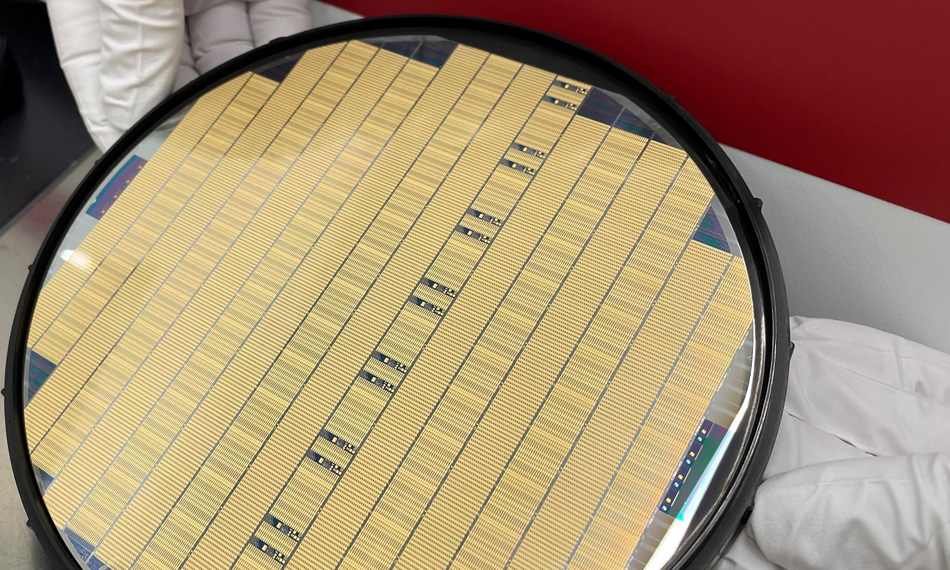 |
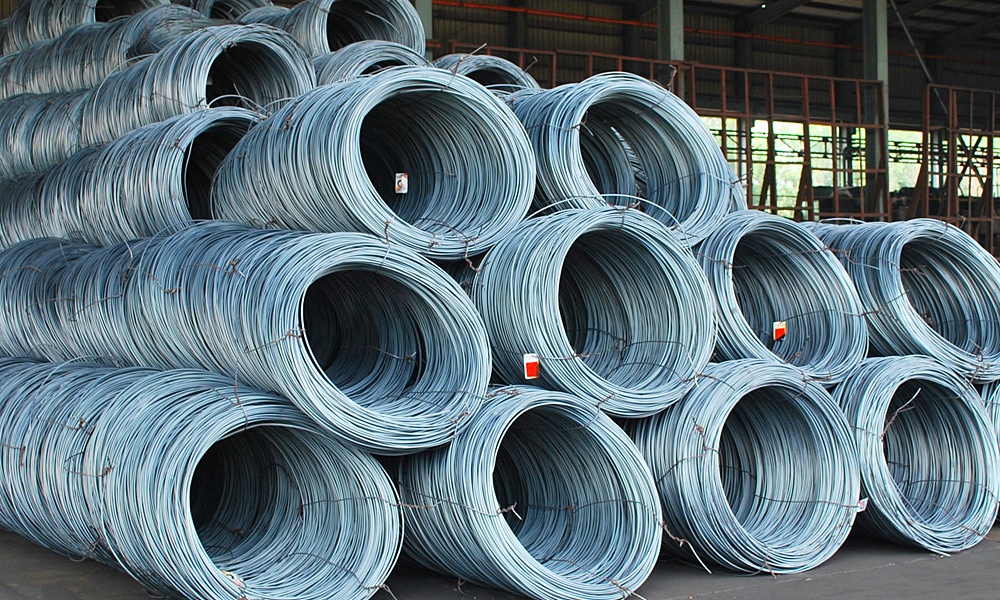
Coherent's 6-inch InP wafer. *Photo: Coherent*
The restrictions are creating a ripple effect across the entire optical supply chain. Lumentum is fully booked until 2028, even after quadrupling its output. Taiwanese optical equipment manufacturers like VPEC and LandMark Optoelectronics are also experiencing disruptions in InP substrate supply. Since the InP export restrictions, the average price of a 6-inch InP wafer has surged 250%, reaching approximately USD 5,000. Experts suggest Beijing's control over InP indicates its readiness to expand the strategy previously applied to rare earths, which disrupted automotive, semiconductor, and aerospace supply chains during trade competition with Washington.
Paul Triolo, an expert at the consulting firm Albright Stonebridge, stated that China is developing a more sophisticated set of control tools based on "material choke points". He pointed out, "Instead of directly banning finished products, Beijing can slow down or attach conditions to the export of upstream compounds, semiconductor substrates, metals, and so on."
Facing escalating costs and prolonged disruptions, at least two major US photonic chip manufacturers have sought assistance from organizations for export licenses. These companies are also working to produce InP substrates themselves and find sources outside China. For example, LandMark signed a long-term InP supply contract with Sumitomo Electric Industries (Japan) in April. However, switching to a new supplier typically requires a lengthy process of evaluation, testing, and quality certification, making it difficult for companies to quickly alter their supply chains.
Coherent plans to double its InP wafer production capacity at its Texas factory this year and more than double it again by the end of 2027. However, overall industry production capacity is increasing slowly, as a new factory typically takes two to three years to become operational.
In China, many domestic businesses are rapidly expanding production. In April, Yunnan Germanium announced a 189 million yuan (USD 28 million) investment to increase its capacity to 450,000 single-crystal InP wafers annually. The company's 2025 annual report indicated a 74% increase in InP wafers shipped. Guangdong Xiandao also launched a new project this year, with an anticipated capacity of 40 tons of InP crystal annually, which is raw material for producing InP semiconductor substrates. Both Yunnan Germanium and Guangdong Xiandao are applying for export licenses, but there is no indication that Beijing will prioritize approvals for domestic businesses. Consequently, some industry players are currently focusing on supplying the local market.
Phien An (according to Reuters)