This policy tightening comes as Japan grapples with a weak yen and accelerating inflation, partly due to the conflict in the Middle East. It is the central bank's first rate hike since 12/2025.
Before the BOJ meeting, Frederic Neumann, HSBC's chief economist for Asia, noted that BOJ Governor Kazuo Ueda had signaled a rate increase earlier this month. Ueda stated that "spillover effects from rising crude oil prices are likely to push core inflation above expectations." Despite this, Japan's inflation in April was 1,4%, the 4th consecutive month below the BOJ's 2% target. Analysts attribute this to various price-curbing policies, such as gasoline tax exemptions and free high school tuition for all students.
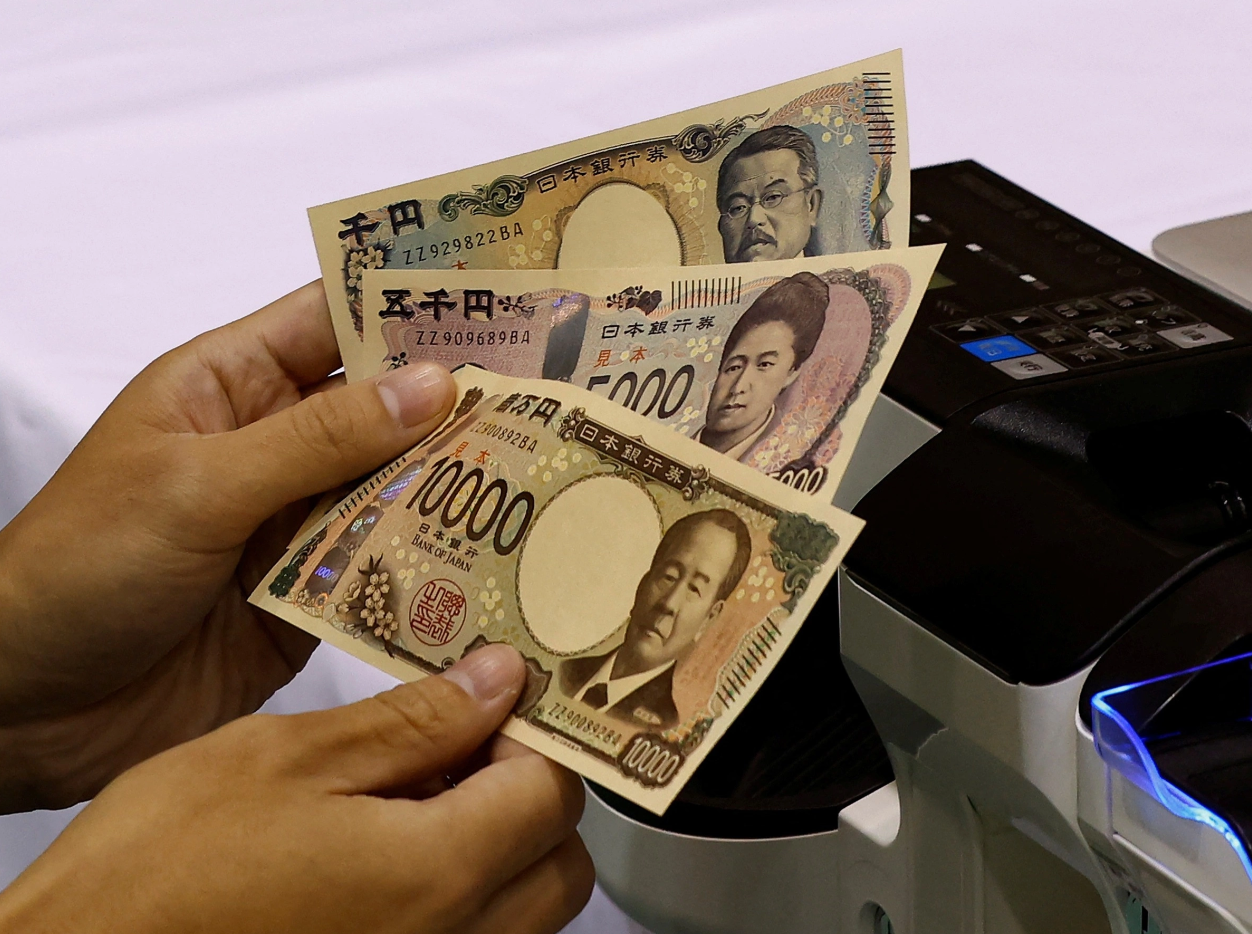 |
An employee holds sample banknotes at Japan's National Printing Bureau. *Photo: Reuters*
The weak yen is another primary reason for the BOJ's rate increase. In May, the BOJ reportedly spent 11.700 billion yen (73,5 billion USD) to intervene in the market, aiming to support the yen's value. However, the currency recently weakened again, reaching 160 JPY per USD.
"Intervening in exchange rates without changing monetary policy is like hitting the brake while still pressing the accelerator," Jesper Koll, CEO of financial services firm Monex Group, told CNBC.
While a weak yen supports Japanese exports, it makes imports more expensive, putting pressure on the government budget. The government, led by Prime Minister Sanae Takaichi, recently approved a supplementary budget worth 3.000 billion yen to help households cope with increased energy costs.
Ha Thu (according to CNBC, Reuters)