Amazon chairman Jeff Bezos recently sparked debate by suggesting that the bottom 50% of US taxpayers should be exempt from federal income tax. Speaking on May 20 in an interview with CNBC, Bezos argued that the federal income tax contributions from this group are "a small sum for the government" and should be eliminated.
Bezos highlighted current tax distribution, noting that the top 1% of earners in the United States contribute approximately 40% of the government's total tax revenue. In contrast, the bottom 50% of earners account for only 3% of this total. "I don't think this percentage should be 3%. 0% would be more reasonable," he stated.
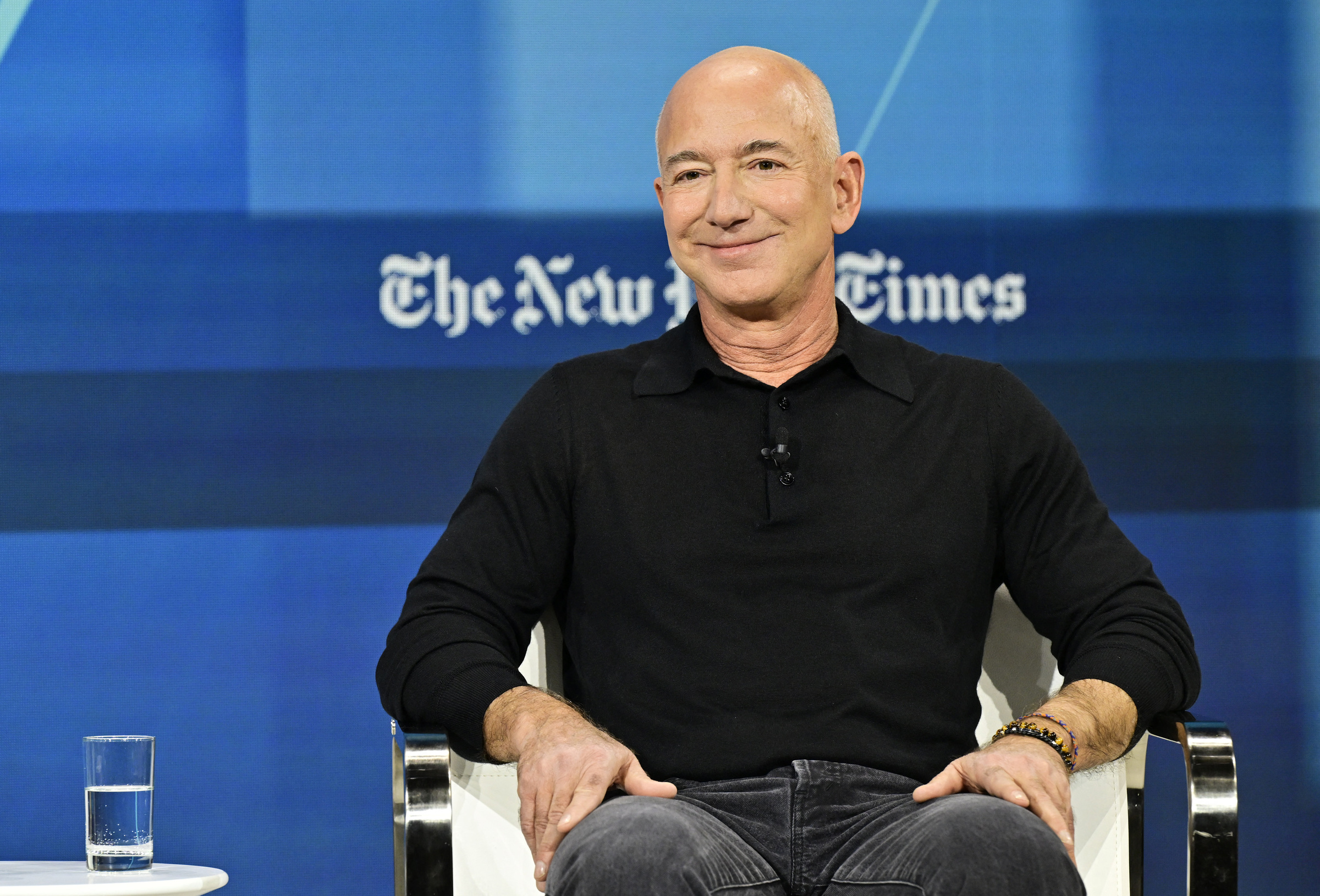 |
Amazon chairman Jeff Bezos at a New York Times event in 2024. Photo: AFP
Data from the Tax Foundation, citing the latest Internal Revenue Service (IRS) figures, illustrates this disparity. In 2023, the bottom 50% of US earners had an average pre-tax income of nearly USD 54,000. During the same year, the richest 1% earned at least USD 676,000.
To emphasize his point, Bezos cited the example of a healthcare worker earning USD 75,000 annually. "We shouldn't ask a nurse living in Queens to send money to Washington. We should be offering her an apology instead. Because that's truly unreasonable," he asserted.
While Bezos expressed his support for this change, he did not provide specific details on how lawmakers could implement such a reform. According to Forbes, Bezos is currently the fourth richest person globally, with an estimated net worth of USD 269 billion.
Further illustrating the tax burden, the Tax Foundation reported that the average income tax rate in the US was 14.1% in 2023. The top 1% of taxpayers faced an average rate of 26.3%, which was seven times higher than the rate for the bottom 50% of earners. In 2023, over 76 million households fell into this bottom 50% group, with each paying an average of USD 913 in federal income tax that year.
Bezos's remarks come amidst ongoing discussions regarding taxation. Some Democratic-controlled states are exploring tax increases for the wealthy, while federal lawmakers have proposed tax cuts for low-income individuals. Senator Cory Booker, for instance, suggested exempting the first USD 75,000 of income for joint filers, with corresponding reductions for single filers and heads of household.
Despite bearing a lower overall tax burden, low-income groups face significant challenges due to high inflation and rising living costs. Research from the Federal Reserve in New York indicates that the cessation of Pandemic-era support programs for low and middle-income households led to a noticeable economic divergence starting in 2023.
The situation has been exacerbated in recent months by soaring gas prices, driven by conflict in the Middle East. Studies consistently show that low-income individuals allocate a larger proportion of their total income to fuel compared to wealthier individuals. Bezos concluded, "I think what's happening now is like a tale of two economies. There's a group of people in this country living very well, but there are also many people struggling."
Ha Thu (sourced from CNBC, Forbes)