The government has issued Decree 147, outlining special policies to address long-standing and stalled projects, in line with National Assembly Resolution 29. This decree establishes a mechanism for handling projects that received land use right certificates (so do or so hong) in violation of regulations prior to 1/8/2024.
Under the new decree, the Department of Construction will assess each project's alignment with general planning, encompassing both urban and rural areas. Subsequently, the department will submit its findings to the provincial People's Committee, which will consider adjusting the land use purpose or term specified in the previously issued certificates. Significantly, the adjusted land areas will not require re-processing of land allocation or lease procedures.
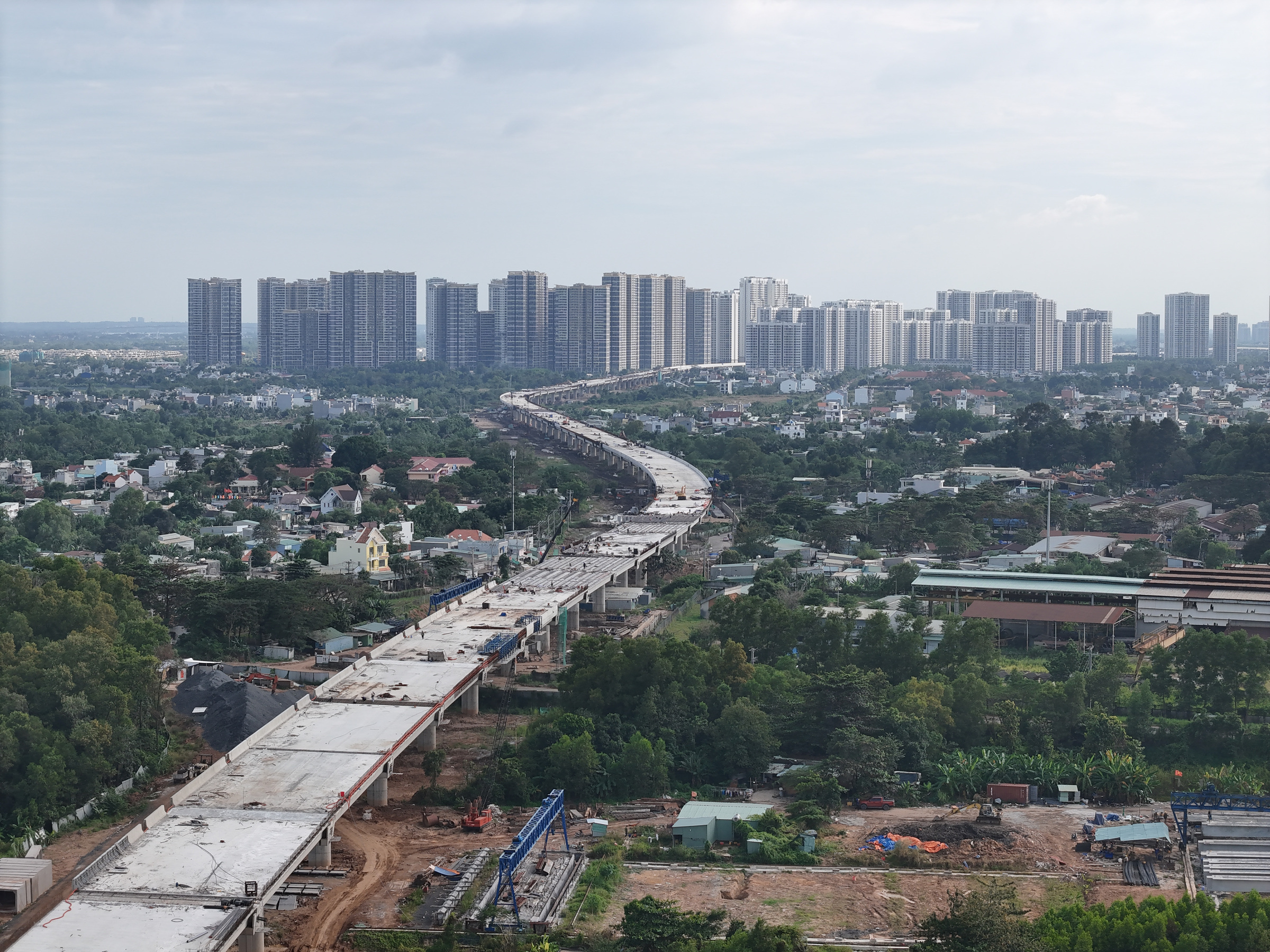 |
Real estate in the eastern area of TP HCM. *Quynh Tran* |
Regarding financial obligations, the Department of Agriculture and Environment will re-evaluate land prices at the time the state agency issues a decision to adjust the certificate. Following this, the tax authority will calculate any supplementary land use or lease fees.
Businesses will be required to pay the difference between the land use fees for the new and old purposes. However, no refunds will be issued if the amount previously paid exceeds the newly determined rate.
To ensure transparency, the list of projects undergoing this process will be publicly announced three times, with 30-day intervals, via mass media. The Land Registration Office will then update this information in cadastral records and land databases.
For projects where land use certificates are currently mortgaged with banks, the re-issuance or exchange will require supervised participation from three parties: the Land Registration Office, the land user, and the bank, to safeguard all rights.
This mechanism, designed to resolve issues for projects with incorrectly issued land use certificates, will be effective for five years, extending until 5/2031. Projects still undergoing processing before 1/5/2031 will continue to benefit from this framework.
The government's introduction of this special mechanism comes as numerous real estate, urban, and tourism projects have been stalled for years. These delays stem from land violations that occurred before 1/8/2024, the effective date of the 2024 Land Law. Many such projects had already been constructed, sold to residents, or mortgaged to banks, with violations concerning land allocation, investor selection, or certificate issuance only coming to light after inspections.
In early May, the National Assembly enacted Resolution 29/2026, marking the first time a special mechanism has been established to address past land violations. This policy distinguishes between corruption-related offenses and procedural impediments to facilitate appropriate resolutions.
According to the Ministry of Agriculture and Environment, as of the end of 3/2025, there were 4,489 projects and land funds nationwide facing legal complications. This resolution is expected to boost real estate supply, improve cash flow for businesses, alleviate debt pressure, and support the market, particularly within the tourism and resort sector.
By Phuong Dung