This information was presented by representatives of departments, agencies, and experts at a socio-economic meeting in Ho Chi Minh City on the morning of 4/9.
According to Ho Chi Minh City Statistics, after the first eight months of the year, the city saw more than 51,800 businesses enter the market, a 4.9% increase compared to the same period last year. Meanwhile, over 43,000 businesses withdrew, a 24.4% increase.
The current ratio of businesses entering versus withdrawing is approximately 10 to eight. This means for every 10 businesses joining the market, eight leave. While this ratio has improved, it remains higher than the national average, which is about 10 new entrants for every six withdrawals.
Pham Binh An, Deputy Director of the Ho Chi Minh City Institute for Development Studies, stated that the sharp increase in business withdrawals should not solely be interpreted as a worsening business environment or widespread difficulties for companies.
According to An, a part of the recent rise in market withdrawals stems from a campaign by authorities to clean up tax codes and business data. Many businesses had ceased operations long ago but failed to complete formal dissolution procedures. Some entities were no longer active at their registered addresses or generating transactions but remained on the system for years.
When authorities reviewed and required the processing of these backlogged files, these businesses finally underwent dissolution, leading to a significant increase in withdrawal numbers.
"Previously, businesses had stopped operating but had not completed the procedures. As data is cleaned, the number of businesses moved into dissolution increases," An explained, adding that this is mainly a technical adjustment resulting from processing years of accumulated dormant files, not entirely reflecting new difficulties faced by businesses.
 |
Pham Binh An, Deputy Director of the Ho Chi Minh City Institute for Development Studies. Photo: An Phuong |
Pham Binh An, Deputy Director of the Ho Chi Minh City Institute for Development Studies. Photo: An Phuong
Giang Van Hien, Deputy Head of the Ho Chi Minh City Tax Department, also confirmed that the tax code cleanup is a process addressing issues accumulated over many years. Some businesses ceased operations due to difficulties, no longer had business needs, or for other reasons, but did not complete the procedures to close their tax codes. These entities continued to exist in management data despite being inactive in reality.
The review aims to enhance business environment transparency, clearly identify genuinely active businesses, and address entities that are inactive or show signs of being established without a real business purpose.
The Tax Department is intensifying this campaign and expects to clear long-standing backlogs this year. Therefore, according to the tax authority, the current increase in business withdrawals is partly a result of this cumulative processing, and should not be entirely viewed as new businesses facing difficulties and having to close.
Regarding the perception that "entering the market is easy, leaving is difficult," An noted that many businesses ceased operations for extended periods but did not complete dissolution procedures because they had to settle outstanding obligations, including fees and fines.
With over 600,000 businesses requiring a 'tax code cleanup', An proposed reviewing procedures and implementing suitable solutions for long-standing backlogged cases to reduce compliance costs for businesses, while still ensuring management requirements.
"The business environment needs to be streamlined not only for entry but also for withdrawal, requiring clear, convenient procedures and reasonable costs," he said.
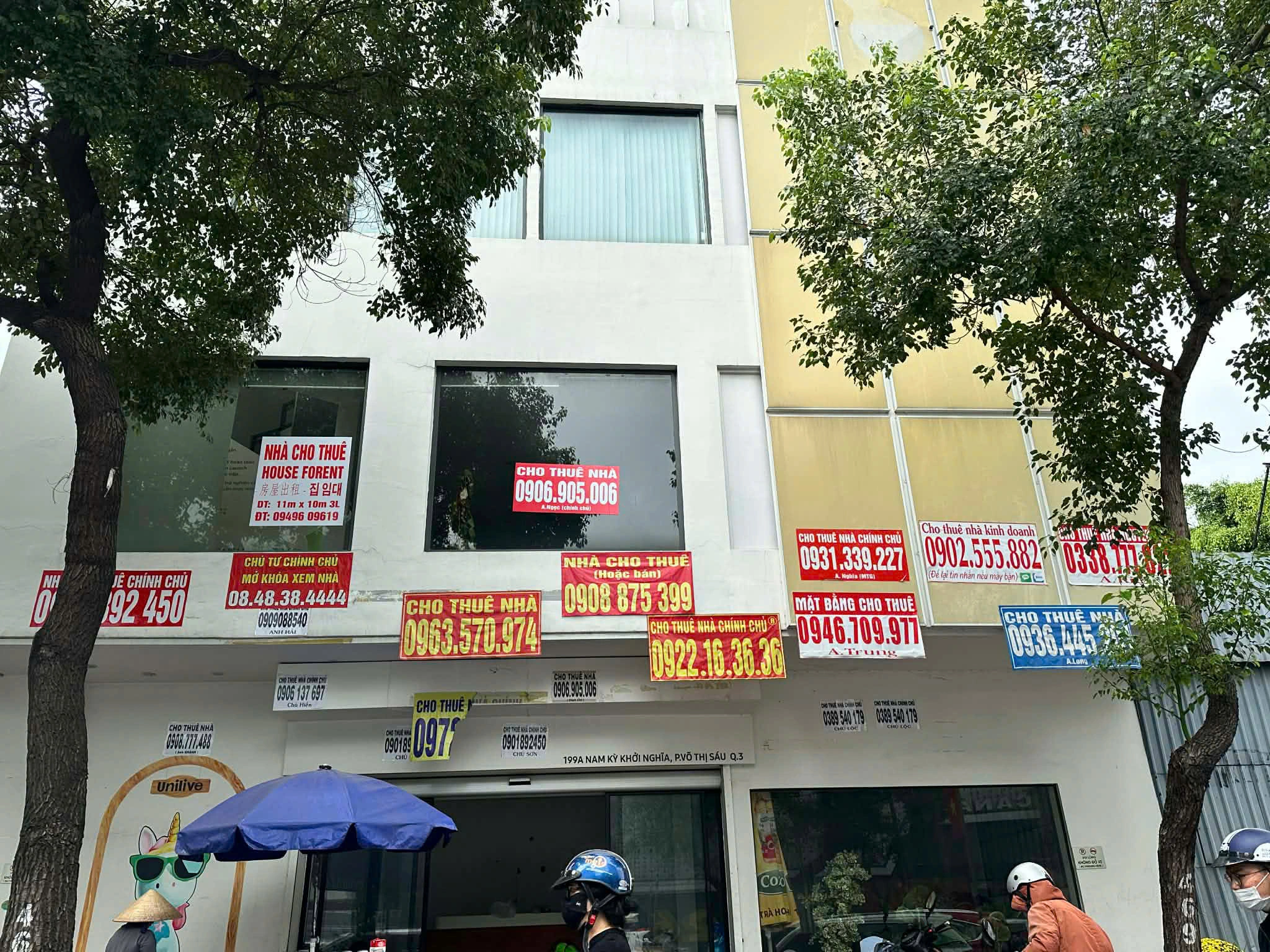 |
Vacant premises advertised for rent in Ho Chi Minh City. Photo: Le Tuyet |
Vacant premises advertised for rent in Ho Chi Minh City. Photo: Le Tuyet
Beyond businesses that were "already dead long ago," Pham Binh An also emphasized the city's need to closely monitor the health of the business sector, especially small and medium enterprises. According to An, this group faces significant challenges, possesses low resilience, and is currently "at rock bottom."
The primary difficulty is market demand and orders. Many businesses lack new orders while consumer demand declines. Rising logistics costs also inflate production prices, affecting the competitiveness of goods, particularly in import and export activities.
The next pressure point is capital flow. Experts indicate that despite policies aimed at reducing interest rates, current lending rates remain high compared to what many small and medium enterprises can withstand.
Furthermore, a segment of businesses has limited adaptive capacity. As digital and green transformation increasingly become mandatory requirements, many small businesses lack sufficient resources to keep pace, leading to a market shake-out.
An suggested that instead of merely compiling statistics after businesses withdraw from the market, the city should survey active businesses through industry associations and consultation channels to identify early difficulties related to market conditions, orders, capital flow, and adaptability.
Le Tuyet