


Three days ago, the discovery of 130 tons of African swine fever-infected pork in a Halong Canfoco warehouse was announced. Following this information, many F&B brands temporarily halted sales of products linked to the supplier.
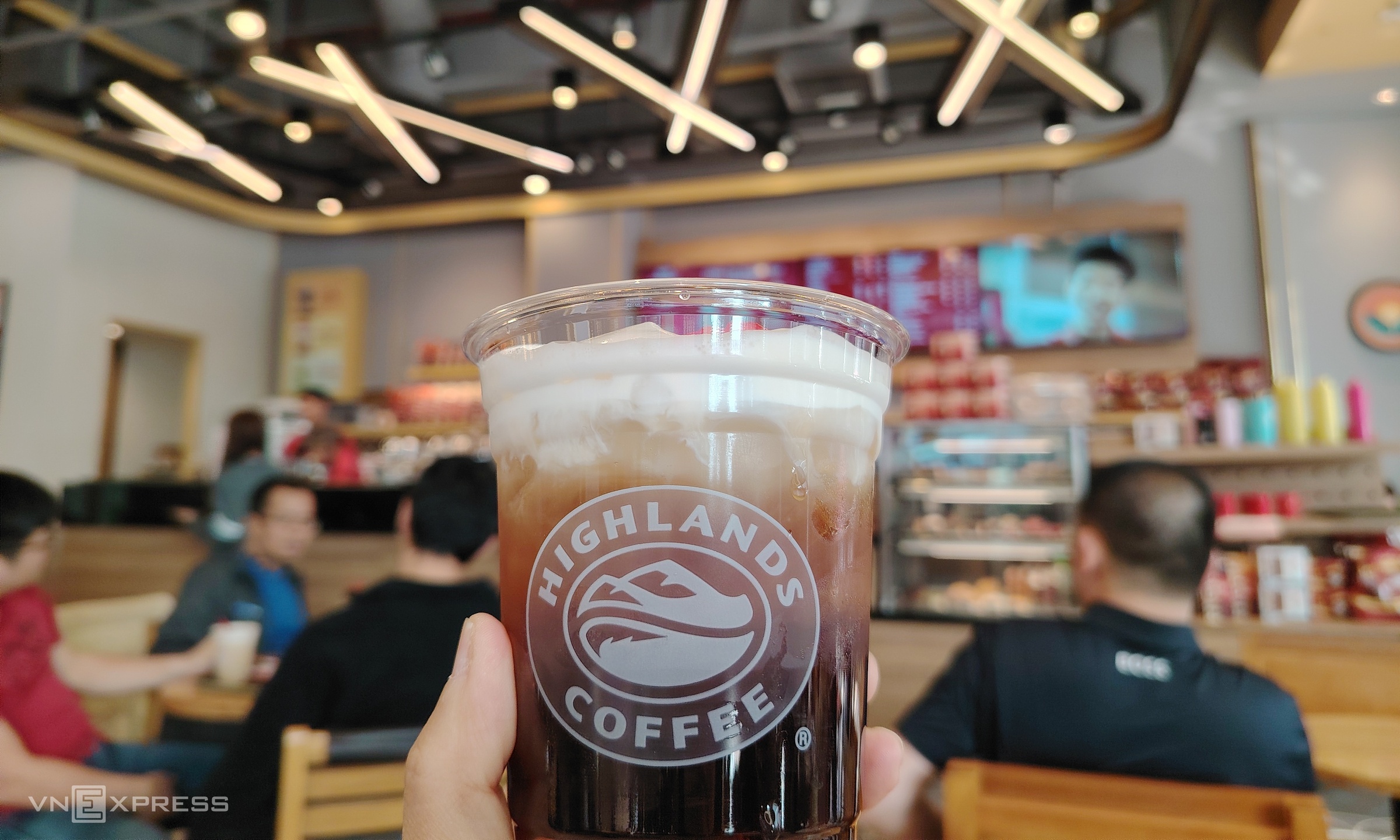 |
Golden lotus tea sold at a Highlands Coffee store in Tay Mo ward, Hanoi. *Photo: Thuy Truong*
On 10/1, staff at The Coffee House stores announced a temporary halt of two specific products: Fujian lychee lotus tea and lychee Americano. A return date remains unknown.
That morning, the brand announced it had proactively ceased serving these two products because some ingredients were sourced from Halong Canfoco. They are now transitioning to alternative suppliers that meet safety and quality standards. The Coffee House also confirmed that its bread products do not use pate or any processed meat from the supplier.
Phuc Long confirmed to VnExpress that it does not use Halong Canfoco's processed meat products across its nationwide store system. Its transactions with Halong Canfoco were solely for lychee ingredients. From 9/1, the beverage chain temporarily ceased importing lychee from this supplier, transitioning to other alternative sources.
Last night, Highlands Coffee also stated it does not use pate or processed pork from Halong Canfoco. The company announced it would stop serving products that use ingredients from this supplier, though it did not specify which items.
At several Highlands Coffee stores in Tan Mai, Tay Mo, and Thanh Xuan wards in Hanoi, staff reported a temporary halt in lychee jelly tea sales, while golden lotus tea, a bestseller, remains available. However, some brand outlets revealed they still sell lychee jelly tea without the lychee fruit, if customers agree. Online food delivery platforms show both items are still available for order at these locations.
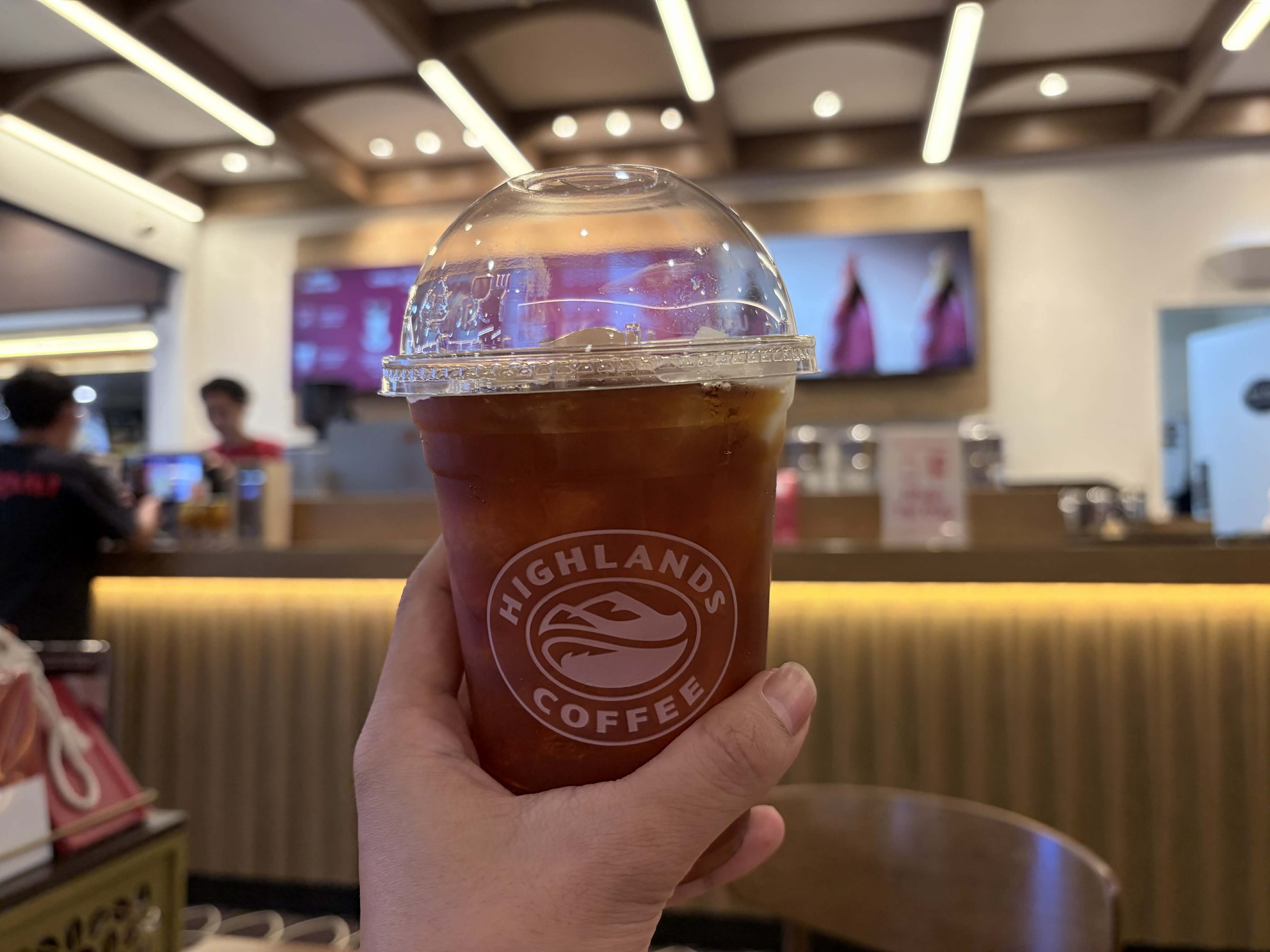 |
Lychee jelly tea sold at a Highlands Coffee store in Tan Thuan ward, TP HCM. *Photo: Tat Dat*
According to Halong Canfoco's financial reports over the years, the Highlands Coffee beverage chain consistently appeared among its short-term debtors. In the most recent record, one branch of the chain owed over 3 billion VND, accounting for nearly 6.7% of the total customer receivables.
Additionally, previous financial reports also indicated other large F&B chains as customers. For instance, the 2021 report noted Pho 24 owed nearly 5.4 billion VND. Pho 24 is a pho restaurant chain with 10 locations, also part of the Jollibee Group, similar to Highlands Coffee.
In 2019, Halong Canfoco had receivables of over 2.6 billion VND from Phuc Long, a tea and coffee chain with nearly 200 stores nationwide. At the time of this transaction, Masan Group had not yet acquired Phuc Long from Lam Boi Minh.
In the same year, the half-year financial report recorded The Coffee House with nearly 4 billion VND in outstanding debt. This tea and coffee chain operated over 80 stores nationwide. At the time of the transaction, the chain was still under Seedcom, prior to joining Golden Gate.
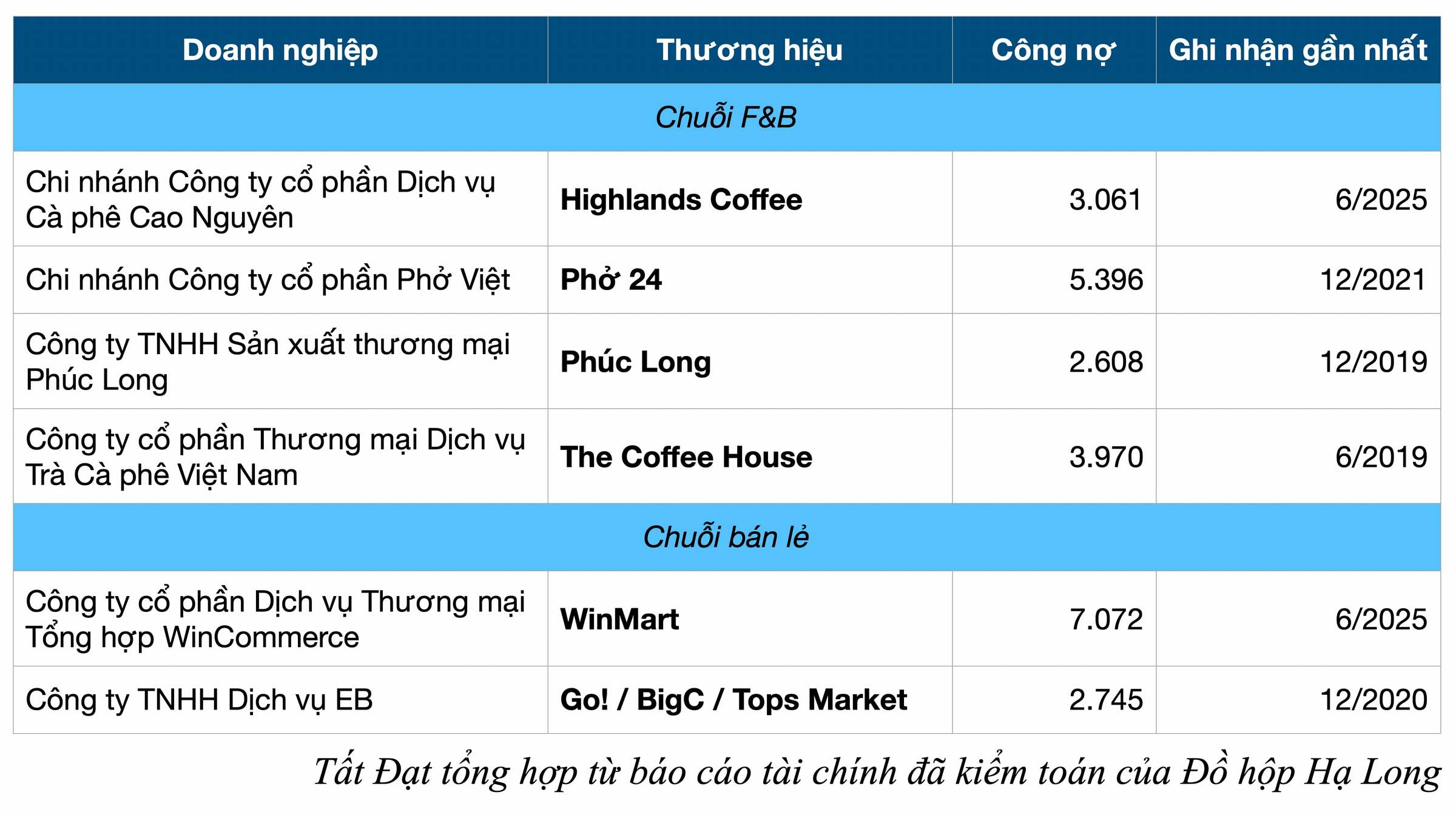 |
Some brands that previously recorded debt with Halong Canfoco. Unit: million VND.
To fairly assess F&B chains' use of Halong Canfoco products, Do Duy Thanh, Director of FnB Director Consulting and founder of Horeca Business School, suggested reviewing the supplier selection process within chain operations.
For medium to large chains, supplier selection typically involves five layers of control: legal and corporate profile assessment, evaluation of supply capacity and stability, brand reputation and market history, technical assessment and internal testing. Only after these steps are contracts signed and risk control mechanisms established.
For major suppliers, many chains also conduct direct site visits and audits of production facilities.
Thanh also noted that Halong Canfoco's factory holds ISO 22000:2018 certification. This comprehensive food safety management system integrates hazard analysis and critical control points (HACCP), traceability, and continuous improvement. This standard offers superior reliability compared to conventional food safety certifications.
"F&B chains using Halong Canfoco products cannot be considered careless," Thanh stated. He added that Halong Canfoco is a supplier with a nearly 70-year history, a widespread market presence, and meets all criteria typically set by F&B chains.
However, the expert emphasized that high standards reduce the probability of risk and enhance detection and handling capabilities, but they cannot completely eliminate the possibility of incidents occurring in large-scale production.
Beyond F&B chains, Halong Canfoco's past financial reports also indicated numerous distribution and retail businesses as customers, including major supermarket chains such as Winmart, GO!, and BigC. However, consumer reaction to these retail chains was not as intense.
Thanh explained that this disparity stems from the entirely different roles within the value chain and how consumers perceive responsibility. Retail chains act as distribution channels, selling products under the manufacturer's brand. In the event of an incident, consumer perception of responsibility remains closely tied to the original brand.
In contrast, F&B chains serve as value re-processors. Raw ingredients, regardless of their brand or high standards, become an integral part of the F&B brand's product once incorporated into a drink or dish. In the eyes of customers, they are consuming the establishment's brand, not supplier A's product. Trust, a sense of safety, and the overall experience are directly associated with the F&B brand, lacking the identification buffer present in retail.
Tat Dat - Thuy Truong


