Reporting at the National Assembly Standing Committee meeting on 1/4, Minister of Finance Nguyen Van Thang stated that by 2026, the global situation would be rapidly changing and unpredictable, affecting Vietnam's growth targets. The Minister specifically noted that the Middle East conflict, ongoing for over one month, significantly impacts oil supply and prices, with complex domestic repercussions anticipated in the coming period.
An supplementary government report also indicated that the military conflict involving Israel, the US, and Iran, which escalated on 28/2, has caused damage to all parties and affected numerous economies. For Vietnam, these developments are projected to have significant, wide-ranging impacts.
Firstly, the sharp increase in world oil prices has led to considerably higher domestic gasoline prices in recent adjustment periods compared to before the conflict. This situation creates inflationary pressure and raises living costs for citizens, as well as production and business expenses for enterprises.
Furthermore, the situation poses potential risks to energy security and macroeconomic stability. Sectors such as manufacturing, business, exports, tourism, foreign direct investment (FDI) attraction, financial and monetary markets, and economic growth could all be affected.
The government has implemented various response measures. For instance, Resolutions 36 and 55 were issued with urgent solutions to ensure gasoline supply and energy security. The Prime Minister also established a task force to guarantee energy security and initiated diplomatic activities to secure additional gasoline supplies from partners, ensuring supply in all circumstances.
Concurrently, ministries, agencies, and localities are required to implement synchronized solutions to limit the impact of international energy prices on domestic gasoline prices and control inflation. Relevant agencies are enhancing market management, inspecting, and strictly penalizing acts of smuggling, speculation, and hoarding.
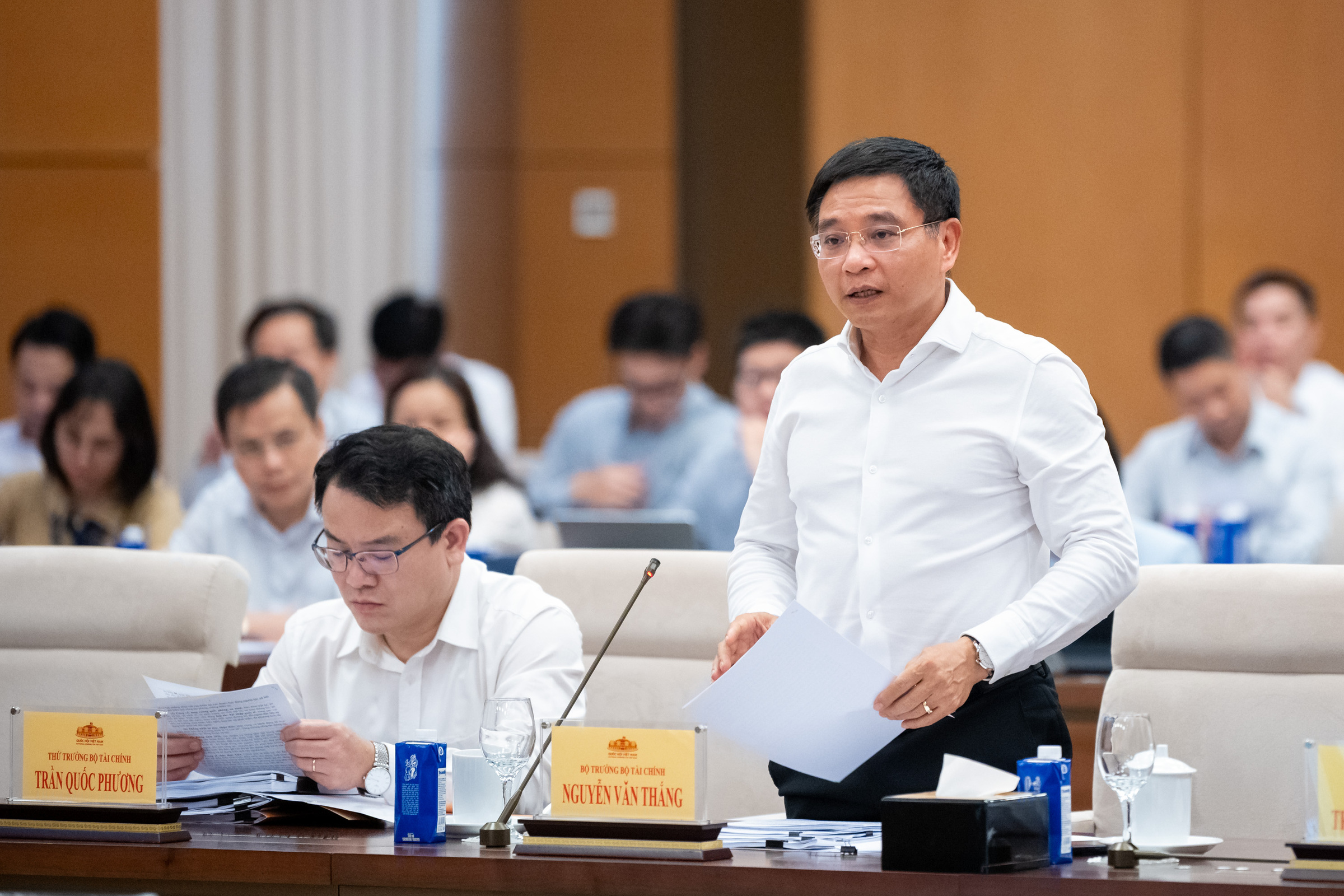 |
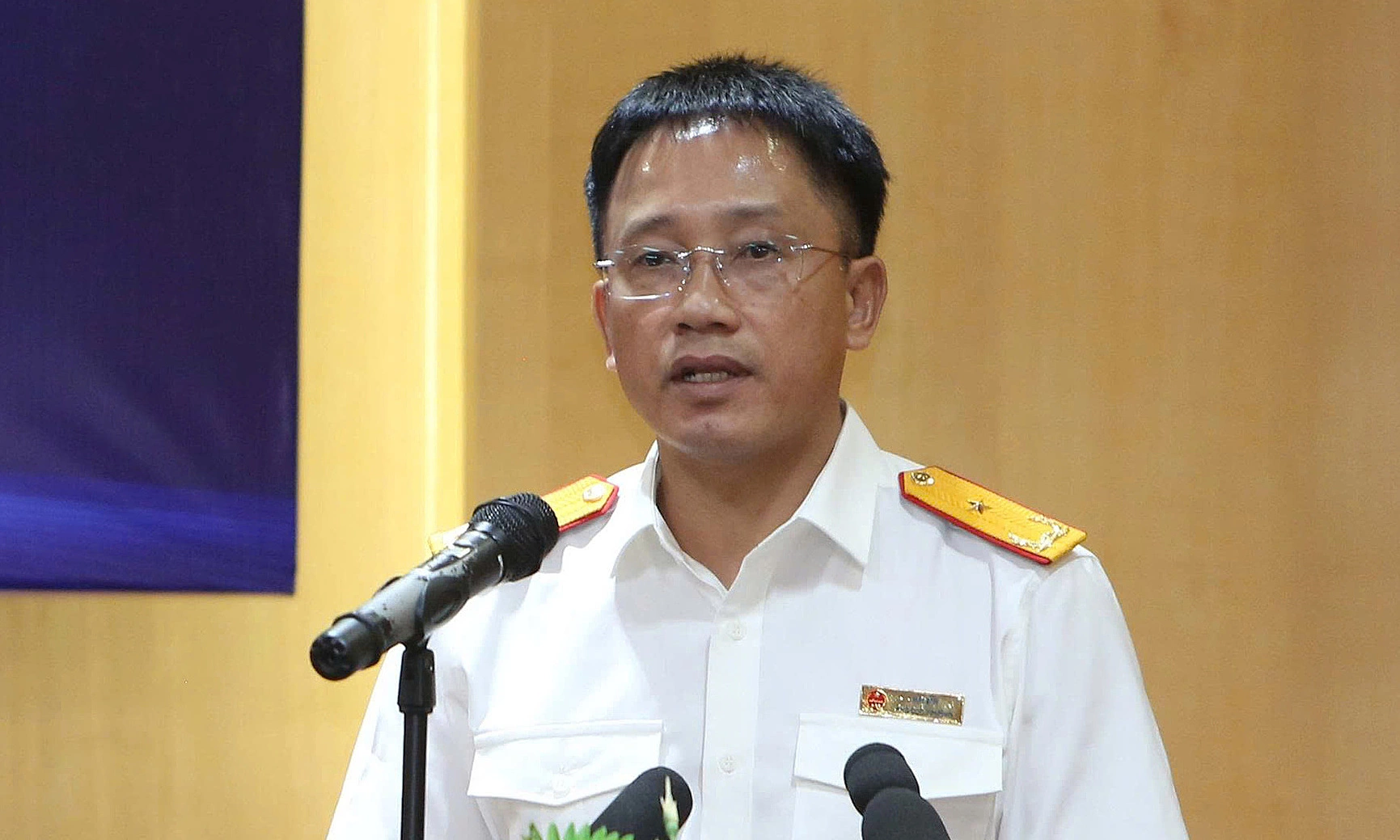
Minister of Finance Nguyen Van Thang presents the government report at the meeting, 1/4. Photo: Pham Thang |
The Middle East conflict, ongoing for over one month, combined with congestion in the Hormuz Strait, has driven up energy prices and disrupted global supply chains and trade. Late last month, the Asian Development Bank (ADB) presented three scenarios regarding the conflict's impact on growth and inflation in Asia-Pacific countries.
According to the ADB, under these three scenarios, developing countries in Southeast Asia would suffer the most significant losses, with a reduction of approximately 0.6-2.3% of gross domestic product (GDP). These countries include Vietnam, Indonesia, Malaysia, Philippines, Thailand, Myanmar, Timor-Leste, Brunei, Cambodia, and Laos.
Against this backdrop, Vietnam aims to maintain a double-digit growth target in the coming period to become a high-income country by 2045. According to National Assembly Secretary General Le Quang Manh, Vietnam must capitalize on its golden opportunities, such as a golden population structure, an enhanced national standing, low public and government debt ratios, and favorable fiscal space.
Manh argued that if Vietnam fails to overcome the middle-income trap by 2035, it will miss all favorable conditions and risk "permanently becoming a second-tier nation, unable to join the group of developed countries."
To achieve high growth targets, Minister of Finance Nguyen Van Thang stated that the government will review and assess the impact of the Middle East conflict under various scenarios to identify sectors with remaining growth potential and appropriate response solutions.
Simultaneously, policymakers will continue to improve institutions, shifting from a "management" mindset to one of "development creation," flexibly managing fiscal and monetary policies to support growth while controlling inflation and maintaining macroeconomic stability. The government is also accelerating capital market development, disbursing public investment to lead private investment, and fostering new growth drivers such as science and technology, innovation, and the digital economy.
Providing additional recommendations on solutions, delegate Le Quang Manh suggested that policymakers need to develop a specific scenario and plan. He pointed out that Vietnam's incremental capital output ratio (ICOR) index, which measures capital utilization efficiency, has not improved in the past 10 years. This indicates that current growth primarily relies on "injecting more capital" and increasing total social investment, rather than on productivity gains. If Vietnam continues this approach, Manh believes it will be challenging to achieve a 10% growth target in the next 5 years, let alone 10 years.
In the short term, he believes Vietnam needs to maintain and increase total social investment (including private investment and FDI) and resolve stalled projects nationwide to sustain an 8-10% growth momentum. In the long term, policymakers must focus on enhancing national productivity and ensuring policy implementation is synchronized.
The delegate highlighted the importance of synchronization between the national master plan and major public investment projects like Long Thanh Airport and the North-South High-Speed Railway. He emphasized that without careful calculation of efficiency, these projects, if not operational within the next 10 years, will not contribute to overall growth performance.
Phuong Dung