Several nations are opposing the Donald Trump administration's imposition of 10% and 12,5% tariffs. These countries cite that the US claims trade partners are not preventing the circulation of products made with forced labor.
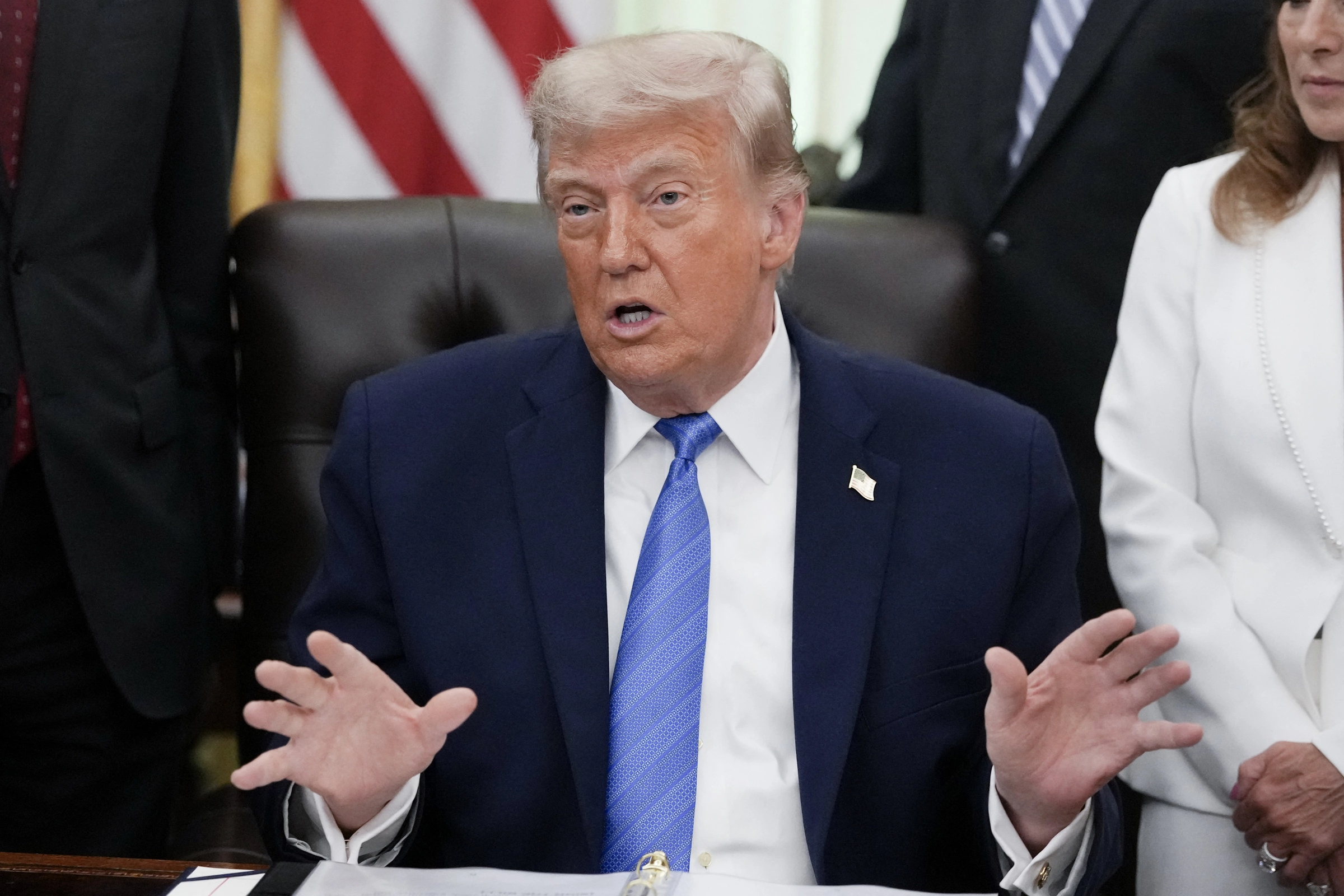 |
President Donald Trump speaks in the Oval Office of the White House, 22/6. Photo: AP |
Speaking on Channel News Asia, Kaja Kallas, the European Union's (EU) high representative for foreign policy, stated that compared to US labor policies, EU workers enjoy paid leave and excellent working conditions. "The imposition of tariffs is baseless", she said.
The US imposed a 12,5% tariff on New Zealand. The country's Prime Minister, Christopher Luxon, said the tariff was "extremely disappointing", unjustified, and harmful to their trade. Furthermore, the US administration's investigation – the basis for the tariffs – did not provide compelling evidence for its accusations.
"Tariffs are not the solution – they increase costs and destabilize businesses", Christopher wrote on social media.
Japan also opposed the 12,5% tariff imposed on its exports. Cabinet Secretary Minoru Kihara noted that Tokyo had been reassured by Washington that there would be no additional tariffs beyond the previous agreement on a 10% import duty.
"It is unfortunate that tariffs are imposed based on the failure to prevent the circulation of products made with forced labor, while Japanese industry and trade adhere to international rules", Kihara stated.
China, the world's second-largest economy, "opposes all forms of unilateral tariffs". Foreign Ministry spokesperson Lin Jian emphasized that tariff and trade wars serve no one's interests.
Trade tensions have cast a shadow over relations between the US and China. The heavy tariffs Trump imposed on "Liberation Day" led to a sharp decrease in goods from China to the US. In May, Trump and Chinese President Xi Jinping agreed to establish new trade and investment councils. The two leaders are expected to meet again in September, when Xi visits the US.
The wave of opposition to the Trump administration's new tariffs is also occurring within the US. On 24/7, two small businesses filed a lawsuit against the administration's new round of tariffs, citing that the imposition of the new tax policy exceeded the President's authority. The lawsuit argues that the new tariffs must be based on more detailed findings regarding the specific conduct of each nation. The plaintiffs are supported by a non-profit advocacy group that previously successfully challenged earlier rounds of tariffs.
The US proposed the new tariffs in early June, following a lengthy investigation into partners' policies on preventing the circulation of products made with forced labor. The investigation was conducted under Section 301 of the Trade Act of 1974. The Office of the United States Trade Representative (USTR) stated that this puts the US at a competitive disadvantage.
Bao Bao (according to AP, Reuters)