Two years ago, The New York Times reported on a billboard at a construction site in Belgium that read: "Hey ChatGPT, finish this building". This metaphorical statement prompted many to question whether technology, especially AI and data, could resolve the bottlenecks in the real estate industry.
In reality, a wave of technology is quietly penetrating the global real estate sector. Instead of creating noisy disruptions, it is gradually shifting how businesses manage their operations. The focus of this transformation is not on software or devices, but on organizing, connecting, and leveraging data.
Nguyen Hoang Vinh Vien, acting Chief Executive Officer of Nam Long Commercial Property and Deputy Director of Digital Transformation for Nam Long Group, recently shared his insights on digital transformation in real estate.
The challenge of data fragmentation
A significant paradox in the real estate industry is the substantial amount of data generated, yet it remains fragmented. According to a JLL report, data in this sector is often scattered across spreadsheets, manual reports, and disconnected systems. This prevents data, a strategic asset, from realizing its full value. Such fragmentation slows down decision-making, introduces risks, and limits long-term forecasting capabilities.
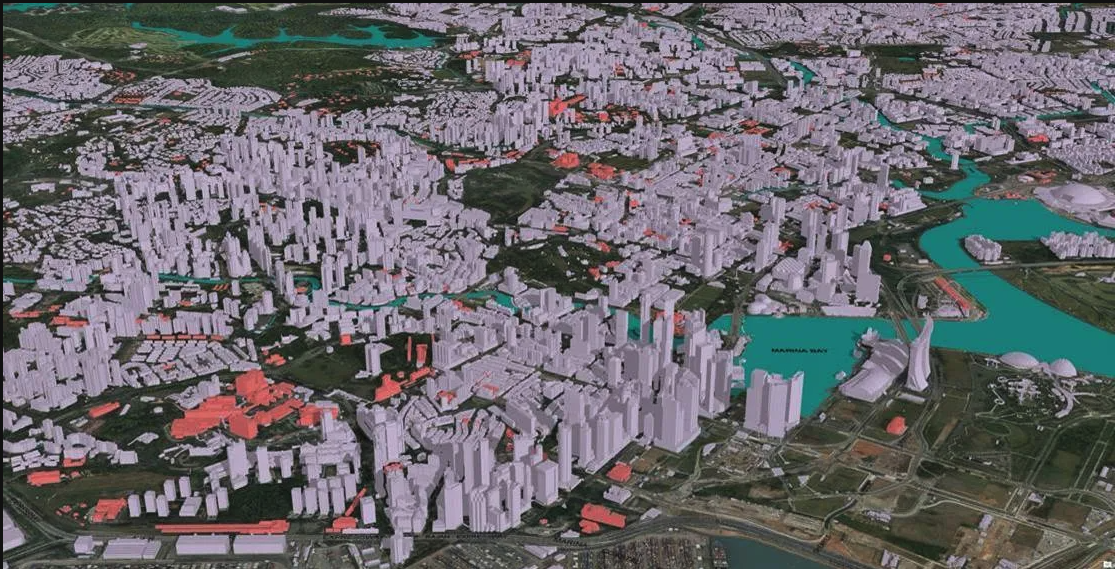 |
Singapore's digital twin model, based on data about building areas and information. Photo: Singapore Land Authority |
Singapore's digital twin model, based on data about building areas and information. Photo: Singapore Land Authority
Singapore is one of the nations addressing this challenge at an urban level. The Virtual Singapore project created a digital twin of the entire urban space, utilizing over 3 million ground images, 160,000 aerial photographs, and billions of data points to reconstruct a 3D model. Victor Khoo, an expert at the Singapore Land Authority, told Bloomberg that the project's goal is to create an "accurate, consistent, and reliable" data system.
According to the Organization for Economic Cooperation and Development (OECD), Virtual Singapore's core value lies not in its simulation technology, but in its ability to transform data into a decision-making tool for various stakeholders. Researchers use the data to analyze public health and environmental impacts. Businesses reduce planning risks. Residents benefit from a more efficiently operated living environment. With fully organized data, cities can shift from passive reactions to proactive forecasting and early intervention.
In Vietnam, some real estate companies are beginning to adopt digital transformation with a similar approach. According to Nguyen Hoang Vinh Vien, the prerequisite for digital transformation is "clean" and "meaningful" data. Digitization involves not just collecting raw data, but building a data system that can track a project throughout its lifecycle, from planning and construction to handover and operation.
"Real estate data is crucial but scattered across a long value chain, stored in various tools and formats", Vien explained. To overcome this, businesses need to build a central data platform, which helps synchronize data sources and provides a basis for consistent decision-making.
 |
Nguyen Hoang Vinh Vien. Photo: NVCC |
Nguyen Hoang Vinh Vien. Photo: NVCC
Nam Long's "property passport" strategy
According to a representative of Nam Long Group, data only truly delivers value when it is easily understood by users. Vien stated that the challenge is not a lack of data, but transforming technical data into visual information suitable for each user group. An architectural drawing, when properly converted, can support the sales team while helping customers better understand a home, from its physical form and legal aspects to future maintenance potential.
Consequently, Nam Long developed the "Property Passport" model - a data passport for real estate. Vien explained that a house is not just a physical asset; it is a compilation of information regarding planning, materials, repair history, and ownership. Building a data "profile" for real estate helps buyers continue to manage and develop their assets long-term. Part of this concept is being implemented on the Nam Long Living platform for the company's residents.
To realize this strategy, Nam Long chose an implementation model combining internal resources with external technology partners. The company maintains a central role in defining problems, data architecture, and business objectives, while partners co-develop solutions tailored to operational reality. In parallel, a "quick win - fail fast" approach is applied for rapid testing, measuring effectiveness, and flexible adjustments.
"The Nam Long Living platform took 4.5 months to launch its first version. After that, we measured its effectiveness and confidently removed unsuitable features. This is how we maintain the agility of a startup within a group that has developed for over 33 years", Vien said.
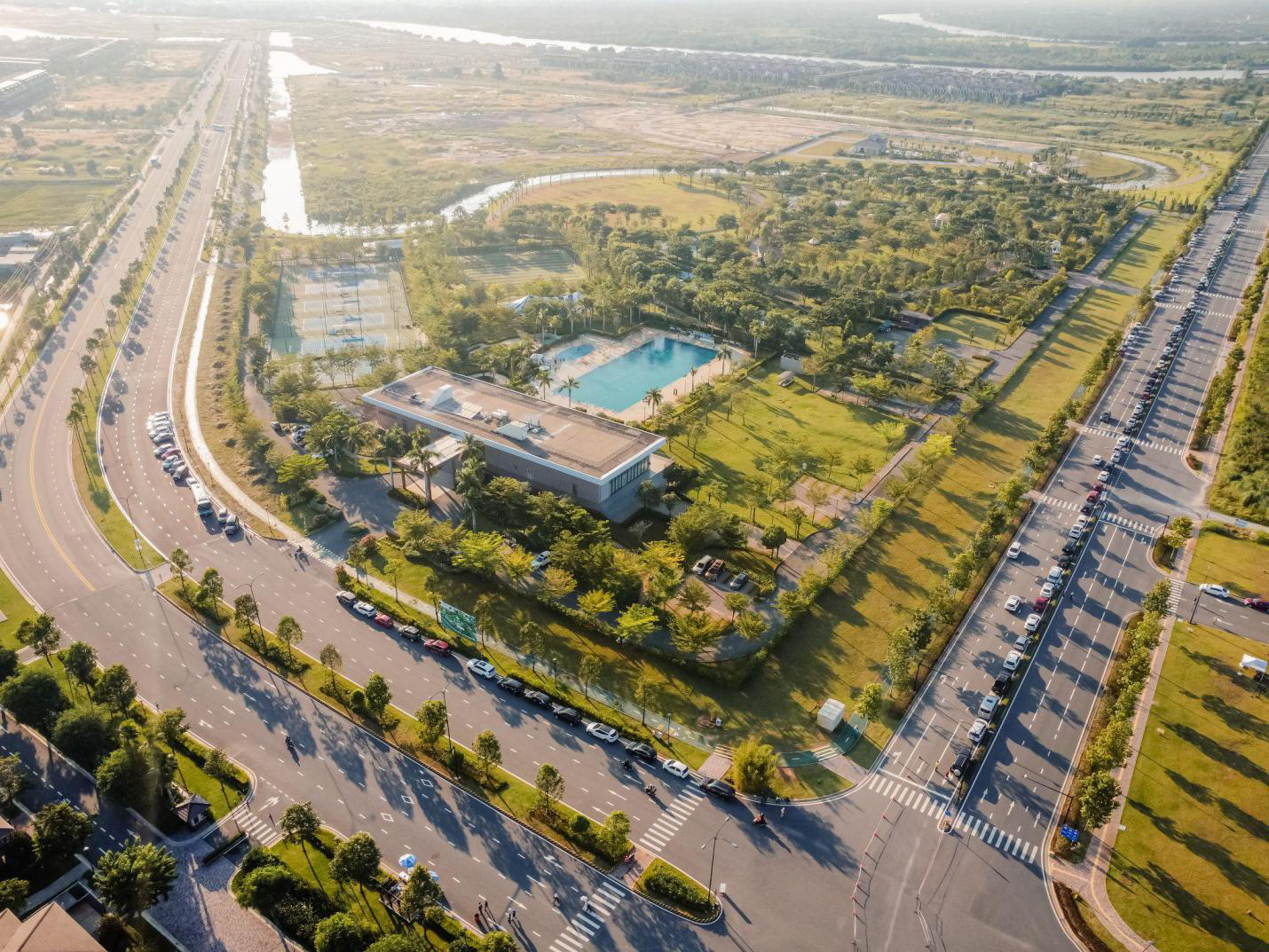 |
A corner of Nam Long's Waterpoint urban area. Photo: Nam Long |
A corner of Nam Long's Waterpoint urban area. Photo: Nam Long
According to Vien, data is not a byproduct of business activities; it is the core foundation that determines how a real estate company operates. Digital transformation is therefore a long journey demanding a management mindset, a clear roadmap, and sustained commitment.
At Nam Long, the data transformation process is divided into two stages. First, data standardization and centralization aim to identify original data, limit misinformation, and create a foundation for effective coordination among departments such as: investment, legal, construction, and operation. Second, data is leveraged to support operations and decision-making, with data tiered to specific end-user groups, assisting in decision-making, optimizing processes, and tracking operational efficiency.
Even in Singapore, the management and exploitation of large-scale urban datasets is continuously adjusted. As Victor Khoo once noted, data transformation is a long-term commitment that cannot be completed overnight. In this context, data-driven and human-centric approaches are considered the path that can shape the future of the real estate industry.
Hoai Phuong