On the morning of 23/4, the National Assembly discussed the draft Law amending and supplementing several articles of tax laws, including the special consumption tax.
In the draft, the government proposes extending tax incentives for electric vehicles with fewer than 24 seats for another three years. Specifically, the special consumption tax for electric vehicles with fewer than 9 seats could remain at 3% until the end of 2030. From 2031, this tax for electric vehicles is expected to increase by 3,5-4 times. The proposed rates are:
| Vehicle type | Tax rate until end of 2030 (%) | Projected tax rate from 2031 (%) | Increase (times) |
| Electric vehicles with fewer than 9 seats | 3 | 11 | 3,7 |
| Electric vehicles with 10 - fewer than 16 seats | 2 | 7 | 3,5 |
| Electric vehicles with 16 to 24 seats | 1 | 4 | 4 |
| Van, pickup trucks | 2 | 7 | 3,5 |
However, several delegates argued for a gradual tax increase roadmap to avoid sudden market impacts. Vo Ngoc Thanh Truc, Deputy Chairwoman of the Vietnam Fatherland Front Committee, urged the drafting agency to consider adjusting the tax increase roadmap using a tiered mechanism.
Instead of a sharp increase in 2031, she suggested breaking down the tax adjustment into smaller increments over two to three-year cycles, for example, from 3% to 8%, then to 11%.
The delegate from TP HCM noted that a 3-4 fold tax increase, as proposed in the draft, could create a 'tax-rush' buying mentality and an artificial market boom by the end of 2030. This could also jeopardize the financial recovery plans for charging station infrastructure investors.
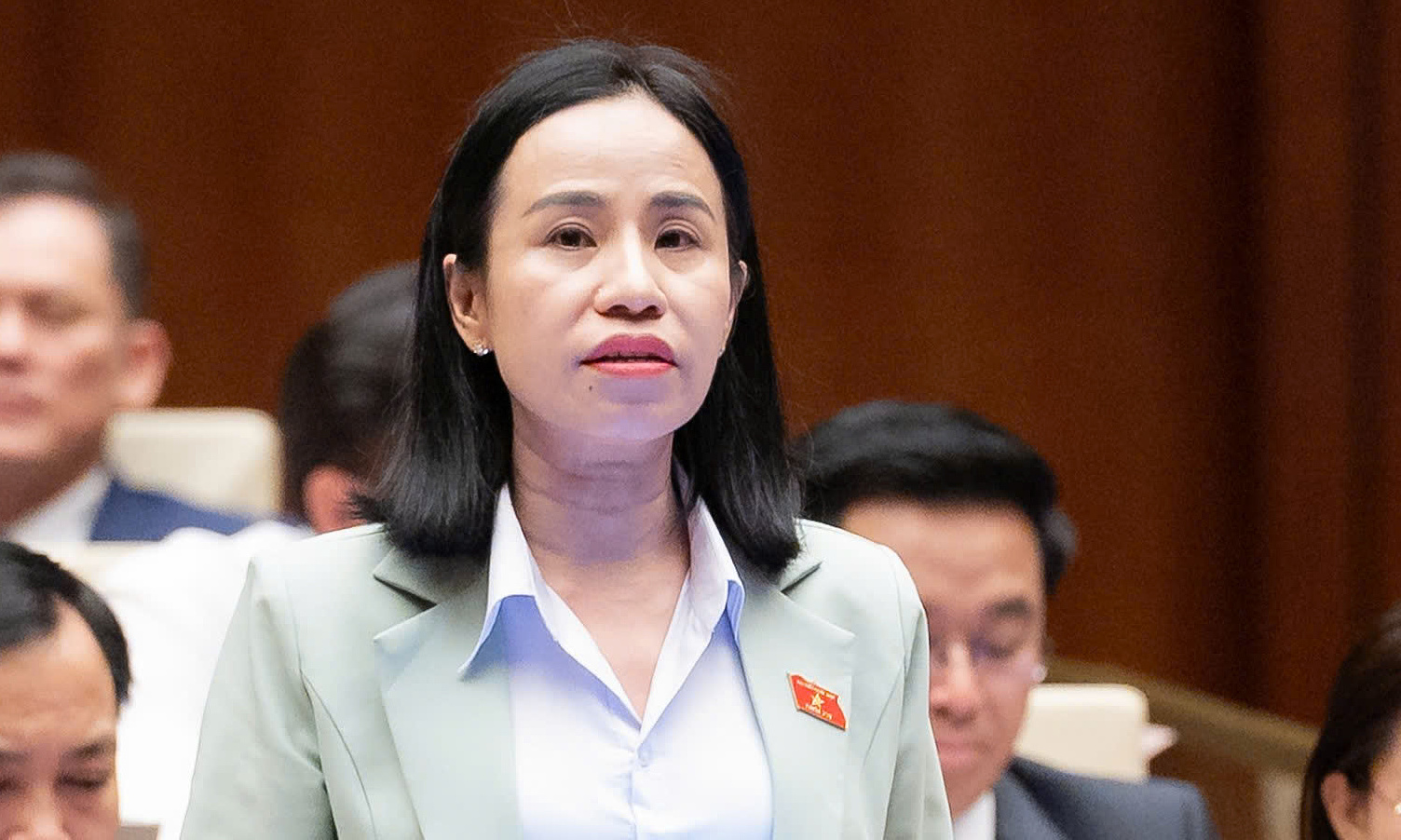 |
Delegate Vo Ngoc Thanh Truc speaking on the morning of 23/4. Photo: National Assembly Media |
According to Ms. Truc, increasing taxes gradually on electric vehicles would help mitigate vehicle price 'shocks', ensure market stability, maintain momentum for developing a green transportation ecosystem, and secure budget revenue.
Similarly, Thach Phuoc Binh, Deputy Head of the Vinh Long delegation, commented that the proposed tax increase for electric vehicles with fewer than 9 seats from 2031 to 11%, nearly four times the current rate expected to be maintained until 2030, could abruptly impact the market. Mr. Binh suggested an early market impact assessment in 2028 and a phased tax increase roadmap.
Trang A Duong, a full-time delegate at the Ethnic Council, also recommended considering a 'softer' tax increase roadmap, linked to market indicators such as electric vehicle penetration, charging infrastructure, and battery costs.
He added that electric vehicle taxes should be considered within the broader context of other policies, such as registration fees and charging station incentives. "This would help prevent a 'wait-and-see' mentality for a fixed period or a rush to buy before a deadline, which could distort the market", the delegate stated.
Responding to the delegates' recommendations, Minister of Finance Ngo Van Tuan said the ministry would "seriously consider them to finalize the plan".
The National Assembly will vote to approve the Law amending and supplementing several articles of the Personal Income Tax, Value Added Tax, Corporate Income Tax, and Special Consumption Tax laws during tomorrow morning's session (24/4).
Anh Tu