"In less than five years, Europeans are for the second time paying the price for their reliance on imported fossil fuels," the European Commission (EC) stated on 22/4.
The agency reported that the European Union (EU) has spent an additional 24 billion euro (28 billion USD), equivalent to over 587 million USD daily, on energy imports since the conflict erupted.
To protect the economy from soaring energy prices, the EC proposes establishing a joint body to quickly identify risks of jet fuel and diesel shortages. This body would also coordinate fuel sharing or the release of emergency reserves among member states.
These proposals highlight the economic damage the Iran conflict is inflicting on Europe. The region had only recently emerged from the energy crisis caused by the Russia-Ukraine conflict in 2022.
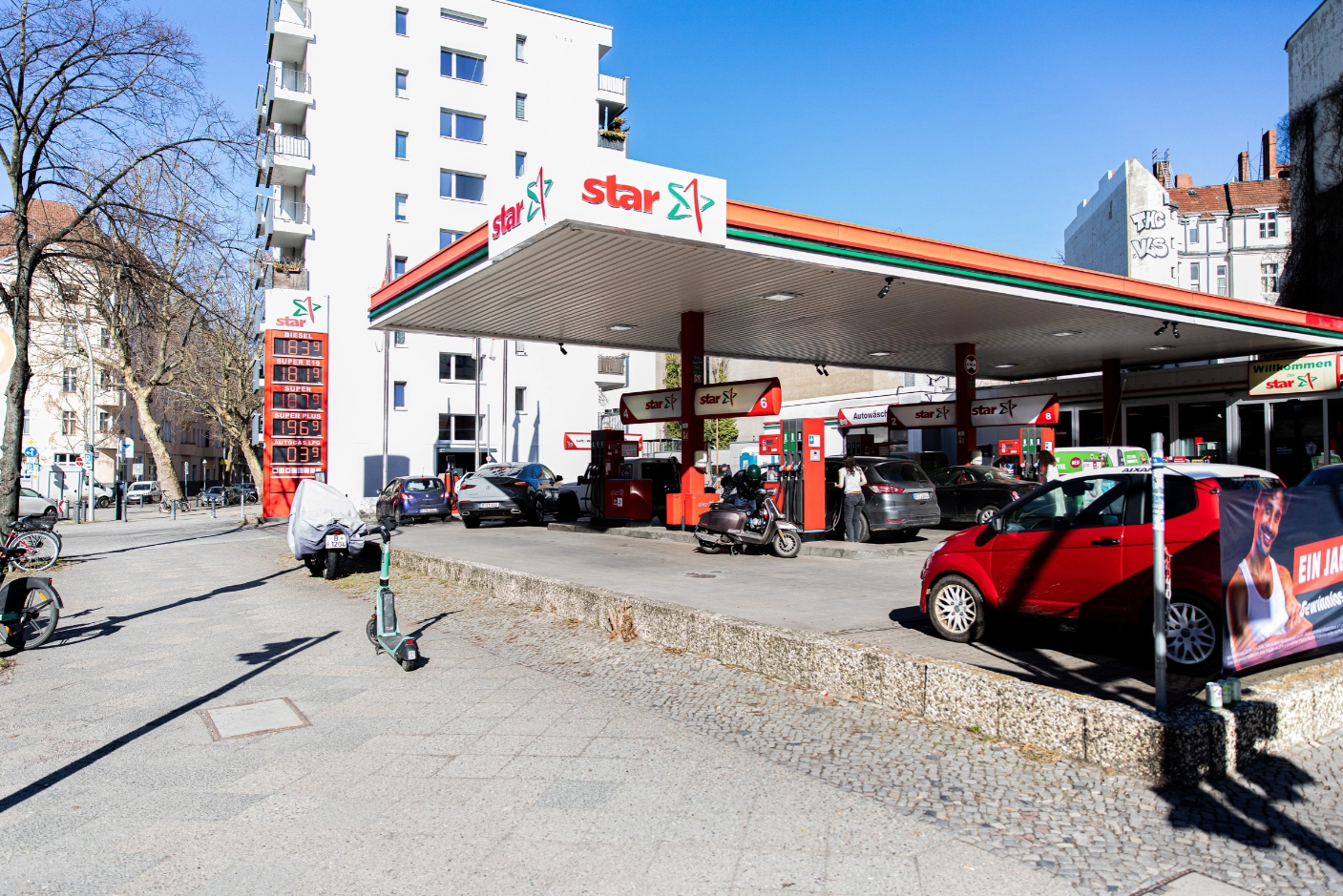 |
A gas station in Berlin, Germany on 3/3. Photo: Reuters
The International Energy Agency (IEA) and the ACI Europe aviation industry association previously warned that Europe could face jet fuel shortages in the coming weeks. The EU currently imports about 70% of its supply of this product.
Olivier Jankovec, Director General of ACI Europe, suggested that EU nations should also "urgently suspend" aviation taxes to ease price pressure. Other proposed measures include income support, energy vouchers, and reduced electricity taxes. The industry group warned that a decrease in air travel would "significantly harm the European economy", particularly for tourism-dependent countries.
The decline in oil and gas supplies due to the conflict in Iran most severely impacts Asia but is gradually spreading to the West. According to the EC, even if peace talks resolve the conflict this week, Europe's economy will still suffer due to prolonged energy supply disruptions.
"Households and businesses face increasing difficulties, from rising gasoline and food prices to fewer and more expensive flights," the EC report stated.
Lufthansa Group (Germany) announced it would cut 20,000 flights until October to conserve jet fuel. They stated that "fuel prices have doubled since the Iran conflict erupted."
Some sectors are experiencing particularly severe impacts. Many European fishers, for example, have stopped going to sea as rising energy and material costs severely affect their profits, the EC reported. Last week, the European Commission activated a "crisis mechanism", allowing member states to provide direct financial aid to fishers and seafood vendors.
Businesses and households may also be affected by sharp increases in plastic and detergent prices. The German chemical company BASF has raised prices for many products, from formic acid used in animal feed to household care items. Some have increased by over 30%.
The German Chemical Industry Association stated that the Middle East conflict has delivered a "heavy blow" to Germany's economic recovery expectations this year. The German and European chemical industries will continue to face a lack of orders, and factories will struggle to be profitable. The association warned that "further production shutdowns and job cuts are likely."
Neil Shearing, chief economist at Capital Economics, believes Europe could enter a recession if the Iran conflict extends through the first half of the year and "energy supply disruptions become more widespread." In its report last week, the International Monetary Fund (IMF) also lowered its growth forecast for this year for the 21 euro-using countries to 1,1%, down from 1,3% in January.
Ha Thu (according to CNN, Reuters)