On the morning of 23/4, the National Assembly debated amendments to several tax laws: personal income tax (PIT), value added tax (VAT), corporate income tax, and special consumption tax.
According to the draft law, the government will specify the tax-exempt revenue threshold for business households and small enterprises. Nguyen Duy Thanh, Vice Chairman of the Business Association, supports this approach, stating it would increase operational flexibility and suit practical realities given the diverse scale of business households.
However, he noted that the government's adjustment plan is unclear. "The Economic and Financial Committee proposed a tax threshold of 2 billion VND, but I recommend 3 billion VND", he said.
He explained that 3 billion VND corresponds to a monthly revenue of 250 million VND. His calculations show that after deducting expenses like rent, interest, and labor, business households would have a profit of about 10%, equivalent to 20 million VND.
"A 20 million VND income for a family with two spouses and two children, divided among them, results in about 5 million VND per person, which is a low income", Thanh added.
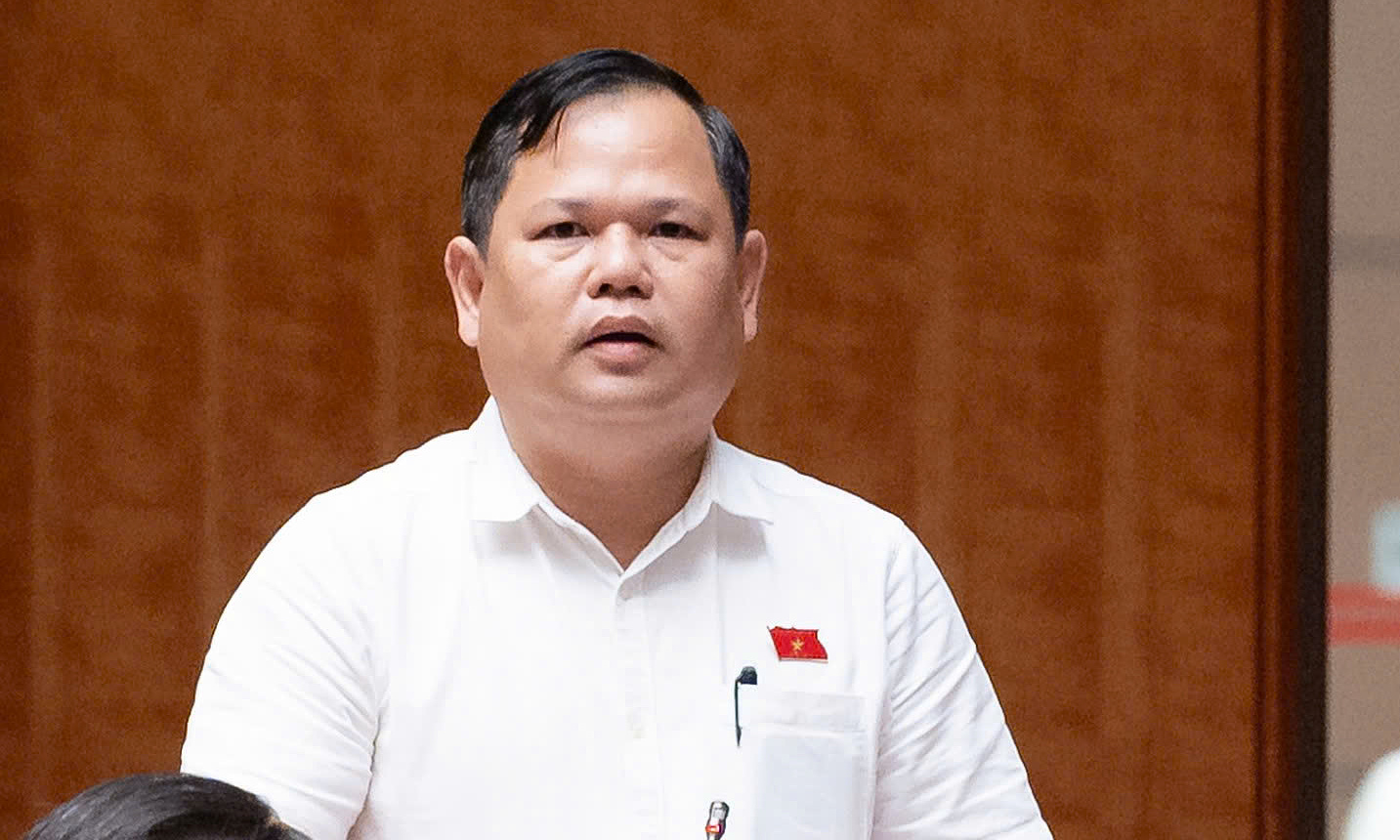 |
Nguyen Duy Thanh, Vice Chairman of Ca Mau Business Association, speaks at the session on the morning of 23/4. Photo: Media Quoc Hoi
Additionally, he suggested establishing criteria or regulations for minimum and maximum tax-exempt revenue levels to ensure stability and clarity. Thanh proposed that these criteria should include per capita income, living standards, or the consumer price index, providing a transparent and predictable basis for government adjustments.
Similarly, Phan Duc Hieu, a full-time member of the National Assembly's Economic and Financial Committee, also suggested a tax framework for business households ranging from 1 billion to 3 billion VND, allowing the government to set a specific threshold within this range.
Hieu believes this approach would allow the National Assembly to determine both minimum and maximum tax thresholds. "A minimum threshold that is too low will increase the cost burden on production and business activities. Conversely, if the maximum threshold is too high, we must consider balancing the reduction of cost burdens with budget collection", he stated. According to Hieu, an excessively high tax-exempt threshold could also lead to businesses being disincentivized from growing.
Meanwhile, Trinh Thi Tu Anh, a member of the Science, Technology, and Environment Committee, proposed a floor of 1 billion VND and a ceiling of 2 billion VND for the business household tax threshold. She noted that the current 500 million VND tax threshold is about four times higher than per capita GDP, which is considerably lower than international practice.
She cited survey data from several Southeast Asian and Asian countries with economies similar in size to Vietnam, showing tax-exempt thresholds for the small business sector ranging from 8 to 15 times per capita GDP. If this practice were applied to Vietnam, Tu Anh estimated the tax threshold would be 1-1,9 billion VND.
Furthermore, she advocated for reducing compliance costs for individuals and business households "as a mandatory requirement in policy design". She emphasized that tax authorities should simplify processes and provide user-friendly tools to save people time.
Nguyen Van Than, Chairman of the Association of Small and Medium Enterprises, proposed a fixed tax rate for business households with revenues between 1 billion and 3 billion VND. For households earning over 3 billion VND annually, he suggested "nurturing them into enterprises".
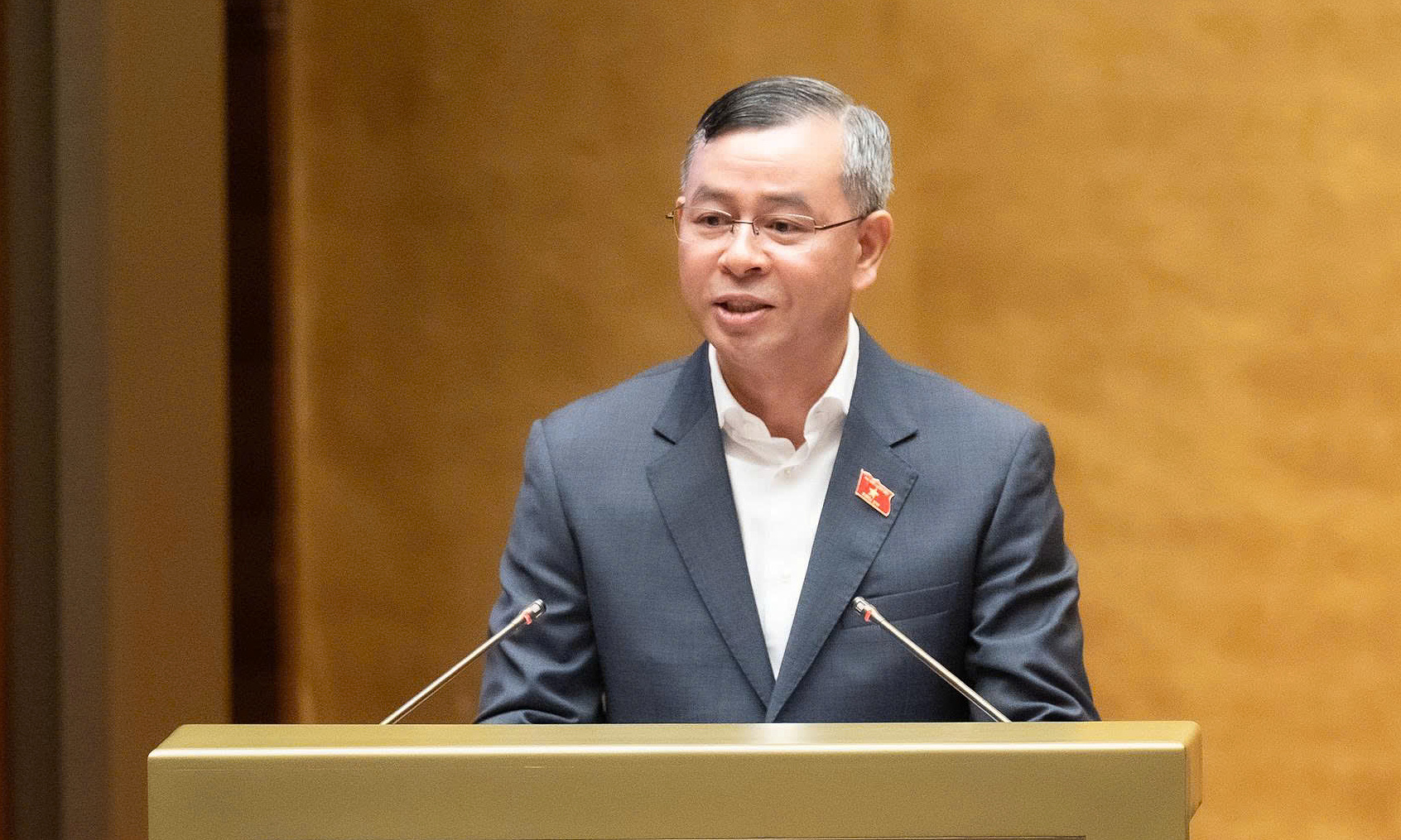 |
Minister of Finance Ngo Van Tuan explains at the session on the morning of 23/4. Photo: Media Quoc Hoi
After listening to the delegates' opinions, Minister of Finance Ngo Van Tuan spent about three minutes clarifying issues. According to the Ministry of Finance's proposal to the government, the tax-exempt revenue threshold for business households is projected to be 1 billion VND, double the current level.
Tuan stated that this threshold was carefully considered and calculated for its impact on budget revenue and the group of taxpayers.
According to the finance minister, doubling the tax-exempt threshold is expected to reduce budget revenue by about 7,000 billion VND. This includes a reduction of approximately 4,800 billion VND from business households and 2,200 billion VND from small enterprises. Despite this, he affirmed that they would continue careful consideration and report to the National Assembly.
According to the Ministry of Finance, from 2022-2025, the country had 3-4 million business households, with over 2 million consistently filing taxes, contributing about 2% of total budget revenue. Last year alone, tax revenue from this sector reached 32,840 billion VND, an increase of 37,5% compared to the same period.
Anh Tu