According to the global electricity report by research organization Ember on 21/4, the world has "entered an era of green growth," with renewable energy accounting for 34% of the electricity supply, surpassing thermal power for the first time. This is Ember's seventh annual report, analyzing data from 215 countries.
The report indicates that solar power increased by 30%, adding 636 TWh, which is double the United Kingdom's annual electricity demand. More than half of this output originated from Trung Quoc. Alongside wind and nuclear power, renewable energy reached 887 TWh, exceeding the total increase in electricity demand (849 TWh). Notably, solar power alone met three-quarters of this demand.
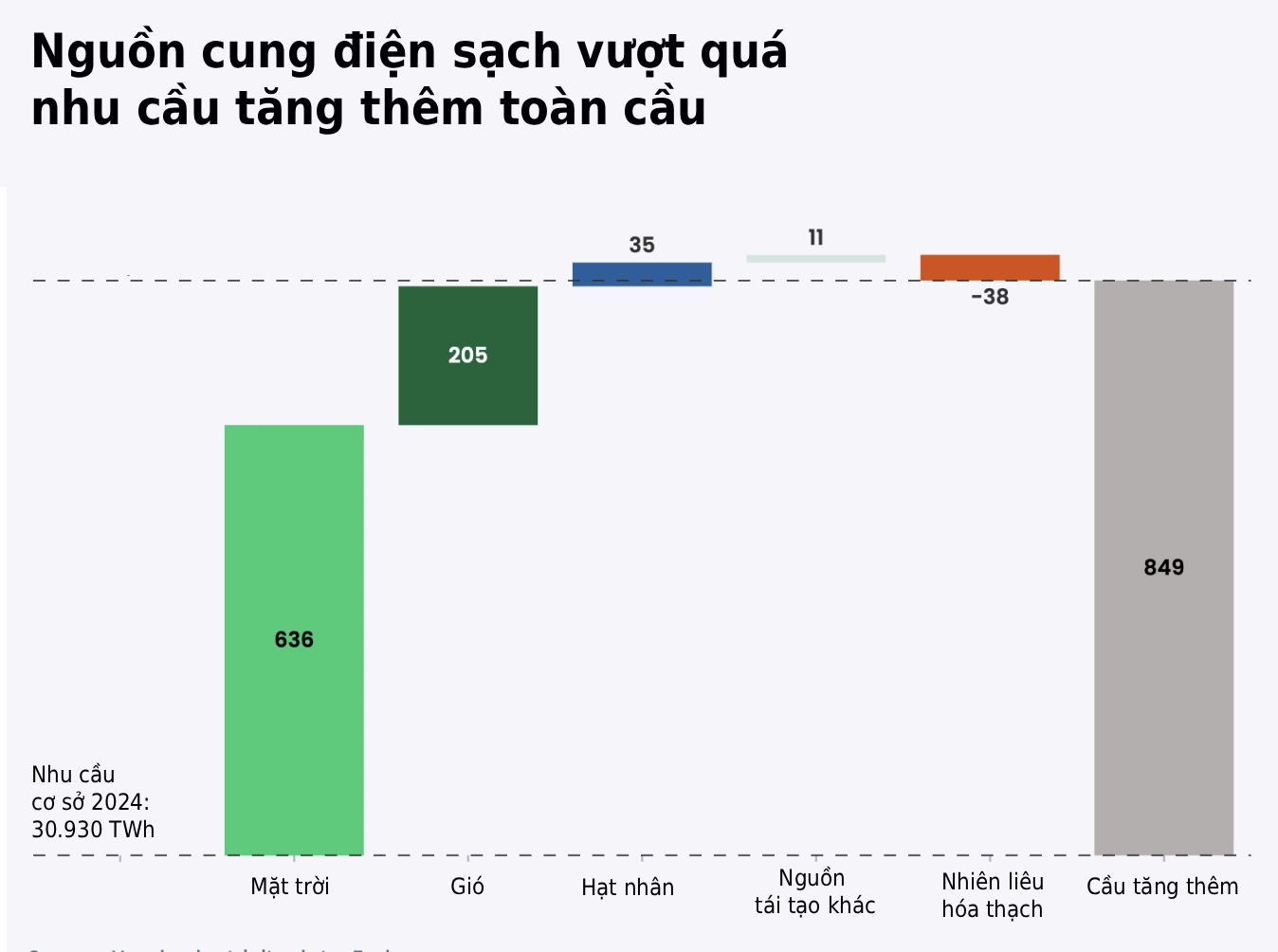 |
Power source structure meeting additional demand in 2025. Source: Ember. |
Analysts also noted this marks the second time in history that the power sector has recorded new capacity from a single source exceeding 500 TWh. The first instance was in 2021 with coal power, as the entire industry recovered post-Covid-19.
According to Ember, ten years ago, solar power only reached 256 TWh, accounting for one-tenth of nuclear power and one-third of wind energy. Currently, this power source has increased its capacity tenfold, with its share now equivalent to nuclear power.
Battery energy storage systems (BESS) are key technologies driving the surge in solar power, transforming it into an energy source usable "at any time," rather than solely during daylight hours.
Last year, the world installed enough battery capacity to store 14% of the additional solar power generated, thanks to costs nearly halving. In Chile and Australia specifically, these percentages were 76% and 53% respectively, owing to their large share of solar power.
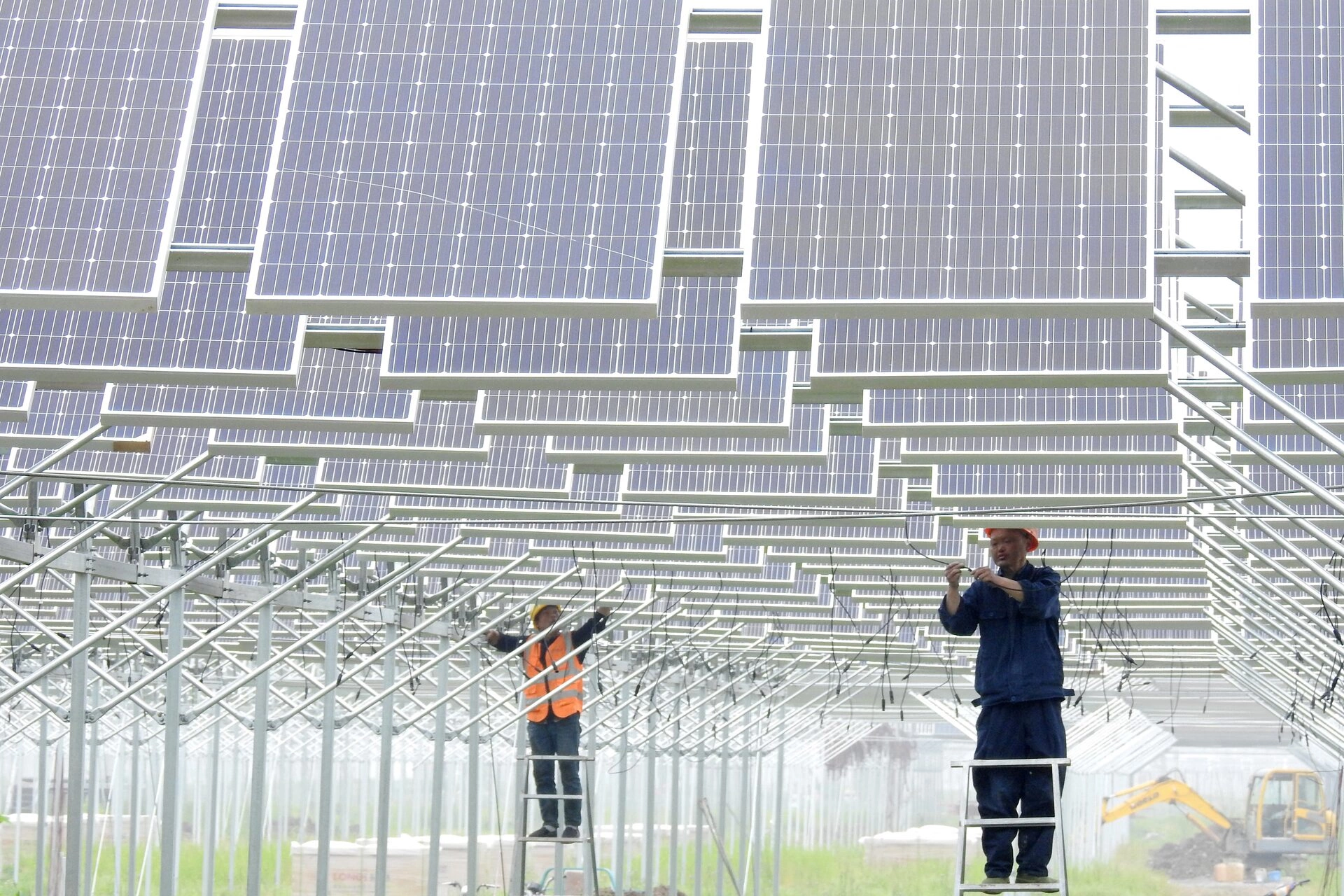 |
Workers install solar panels in Lianyungang, Jiangsu province, Trung Quoc, on 15/5/2018. Photo: Reuters. |
In Chile, battery storage capacity is set to double in 2024, reducing solar power waste from grid overload to 8% from 43%. Meanwhile, in Australia, storing solar energy during sunny periods and utilizing it when needed helped cut wholesale electricity prices by 44% in QIV/2025.
Thanks to the record increase in clean electricity, demand for coal power decreased by 38 TWh, equivalent to 0,2%. This marks the first reduction in coal power since 2020. Last year, thermal power accounted for 33% of the global supply, lower than renewable energy's 34%.
On a national level, this clean energy transition is largely driven by the two most populous nations, Trung Quoc and India. Over the past two decades, these countries have been the largest global consumers of fossil fuels. However, in 2025, both nations experienced a surge in clean electricity generation, far exceeding their electricity demand growth rates.
According to the South China Morning Post, amidst Middle East conflicts, these figures demonstrate that clean electricity offers a solution for nations seeking to reduce their reliance on fossil fuels, thereby ensuring energy security.
Bao Bao (according to Ember, SCMP)