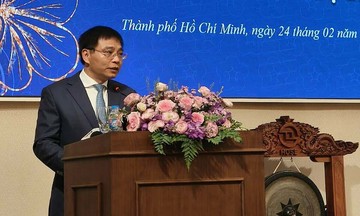
On the morning of 25/2, over 2 million delegates attended a national conference to implement Politburo Resolutions 79 and 80. During the conference, Nguyen Thanh Nghi, Head of the Central Policy and Strategy Department, presented a specialized topic on Resolution 79, focusing on the development of the state economy.
Resolution 79 introduces new directions for the equitization and divestment of state-owned enterprises (SOEs), an area that has been largely stagnant from 2023 to 2025 due to land-related issues and hesitation stemming from a fear of making mistakes, according to Nguyen Thanh Nghi.
"The view is to avoid affecting state control in key, strategic sectors and to prevent the loss of reputable national brands", he stated.
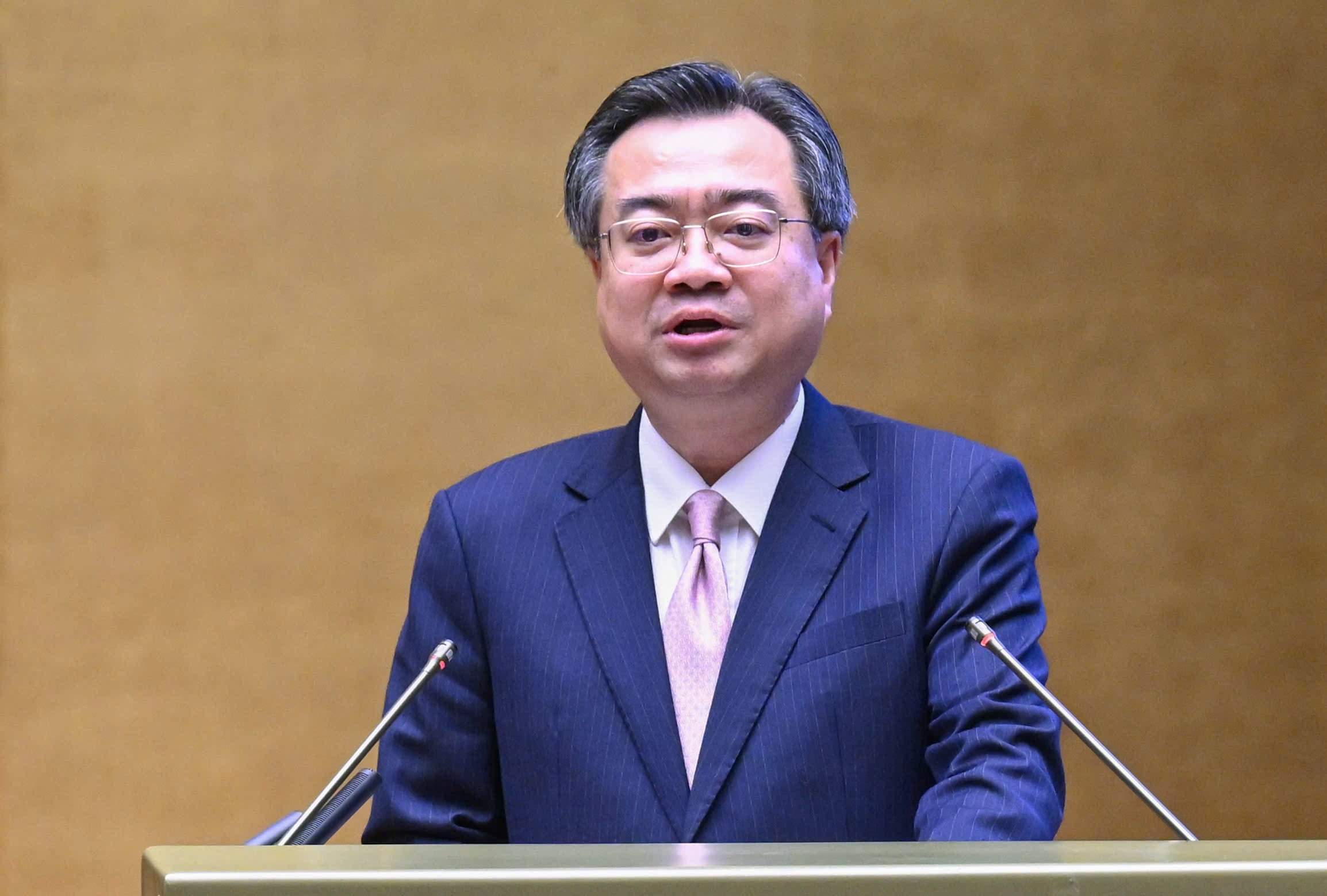 |
Nguyen Thanh Nghi, Head of the Central Policy and Strategy Department, presenting at the conference on 25/2. Photo: Giang Huy
For companies where state dominance is not essential, Nguyen Thanh Nghi explained that the government will establish appropriate mechanisms and roadmaps for mergers or transfers to state capital investment companies. This process will adhere to the principle that "the state undertakes what the private sector cannot do, is incapable of doing, or can do better".
Concurrently, reputable national brands will continue to receive investment to enhance their operational efficiency. SOEs may also utilize all revenue generated from equitization and divestment, and increase the percentage of retained post-tax profit to expand their charter capital.
The State Capital Investment Corporation (SCIC) will undergo restructuring to become a professional capital management entity, aiming for the formation of a National Investment Fund. The network of state commercial banks will be reorganized, with increased charter capital, improved financial capacity, enhanced capital adequacy ratios, and greater operational efficiency.
As of 2025, Vietnam has 671 state-owned enterprises, representing 0,23% of the total number of businesses but holding assets exceeding 4 million ty VND. These SOEs contributed 27,2% of the total state budget revenue in 2024. State commercial banks collectively possess total assets of 9,36 million ty VND, accounting for approximately 50% of the entire system's credit market share.
Resolution 79 also clearly outlines the development of strong, large state-owned groups and enterprises that will play a leading role in key, strategic sectors of the economy. These include: national defense and security, energy, transportation, logistics, finance and banking, science and technology, electronics and telecommunications, digital infrastructure, strategic minerals, chemicals, and construction.
By 2030, Vietnam aims to have 50 state-owned enterprises among the top 500 in Southeast Asia, and 1 to 3 enterprises within the world's top 500. In the financial and banking sector, the objective is to have at least three banks ranked among Asia's top 100 in terms of total assets.
To achieve these ambitious goals, Nguyen Thanh Nghi indicated that the government will implement policies to motivate SOEs to expand their scale, ensure sufficient capital, provide interest rate support, and allocate adequate credit for national key projects. Additionally, SOEs will be encouraged to lead in scientific and technological research and application, invest in partnerships to master core technologies, foster innovation, and drive digital, green, and circular transformation.
Furthermore, the state will establish mechanisms to permit the formation of venture capital funds and evaluate SOE performance holistically, separating business objectives from political tasks, and not solely prioritizing profit.
Beyond state-owned enterprises and credit institutions, Resolution 79 defines the state economy as encompassing all resources held, managed, and controlled by the state. These include: land, natural resources, infrastructure, the national budget, national reserves, and public service units.
To foster the development of this sector, Nguyen Thanh Nghi, Head of the Central Policy and Strategy Department, stated that the government will refine legislation, enhance the investment and business environment, and improve the quality of its personnel.
"The amended Land Law and its guiding documents will be issued in 2026 to resolve existing issues and unlock resources from land", Nguyen Thanh Nghi informed.
Phuong Dung