On 18/6, Kpler reported that 25 vessels, including cargo ships, oil tankers, and other types, passed through Hormuz. This marks the highest volume since 2/6.
Traffic improved after the US Navy ended its blockade of Iranian ports, and Tehran allowed vessels to transit Hormuz for a 60-day period without fees. However, current traffic remains below pre-conflict levels, which saw over 100 vessels, including dozens of oil tankers, passing through daily.
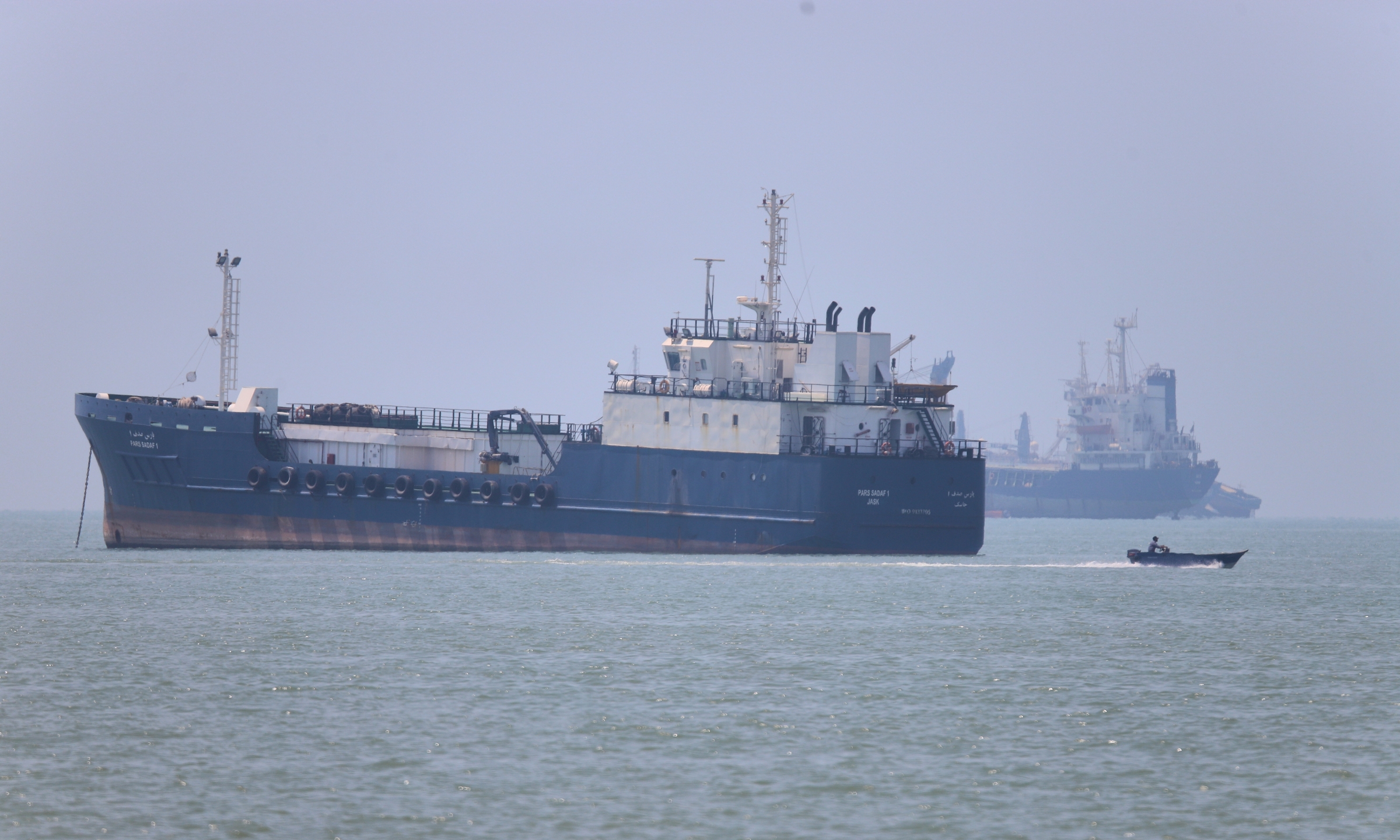 |
Vessels are anchored in the Strait of Hormuz off Bandar Abbas, Iran, on 17/6. Photo: AP |
Matt Smith, Kpler's director of commodity research, stated, "Vessel traffic is generally balanced, with 13 movements in the west-east direction and 12 in the opposite direction." Before the conflict, Hormuz served as a transit route for about 20% of global crude oil and liquefied natural gas (LNG).
According to Kpler, on 18/6, three Saudi Arabian very large crude carriers (VLCCs) and one from the UAE transited the Strait of Hormuz. These VLCCs are capable of transporting up to 2 million barrels of oil per voyage.
In a report sent to clients on 19/6, Kpler analysts also indicated that Iranian supertankers are reactivating their transponders after turning them off during the conflict. Five Iranian supertankers departed the area on 19/6 after being fully loaded with oil.
Analysts observed, "Vessel movement in both directions suggests Iran's crude oil exports are gradually returning to normal operations."
Kpler reported that among the vessels that transited the Strait of Hormuz on thursday, 18 used the maritime route designated by Iran. Only one vessel followed the route specified by the International Maritime Organization (IMO). For the remaining 6 vessels, Kpler stated it could not confirm the route used.
The US and Iran announced a peace agreement on 14/6. Both sides also signed a memorandum of understanding on the issue. On 18/6, US Vice President JD Vance informed reporters that "Iran is upholding its commitments" thus far.
However, the agreement between the US and Iran also raises questions about the future management of the Strait of Hormuz. Under the terms, after the 60-day transit fee exemption period concludes, Iran will negotiate with Oman and other Gulf states on how to manage the strait. This implies that the possibility of future transit fees for vessels remains open.
Ha Thu (according to Reuters, CNBC)