BEST Express’s Cu Chi sorting center (SC Hub) is a modern facility leveraging advanced technology for high-volume processing. However, during the pre-Tet peak season, when package volumes increase three to four times compared to normal days, the human factor remains crucial. Three key operational roles at the Cu Chi SC demonstrate how the facility maintains a smooth flow of goods during this busy period.
The first point of contact for the high volume of incoming packages is the inbound area. Here, Tuan, a loading and unloading staff member, continuously transfers packages from recently arrived 5-ton trucks onto the sorting conveyor belt.
According to Tuan, this job requires stamina and high concentration. "Tet packages often include heavy boxes, as well as fragile items like cakes, candies, and soft drinks that can easily get damaged, so we must work quickly yet carefully," he stated, as he continued placing parcels onto the input conveyor belt before they entered the sorting system for delivery to post offices.
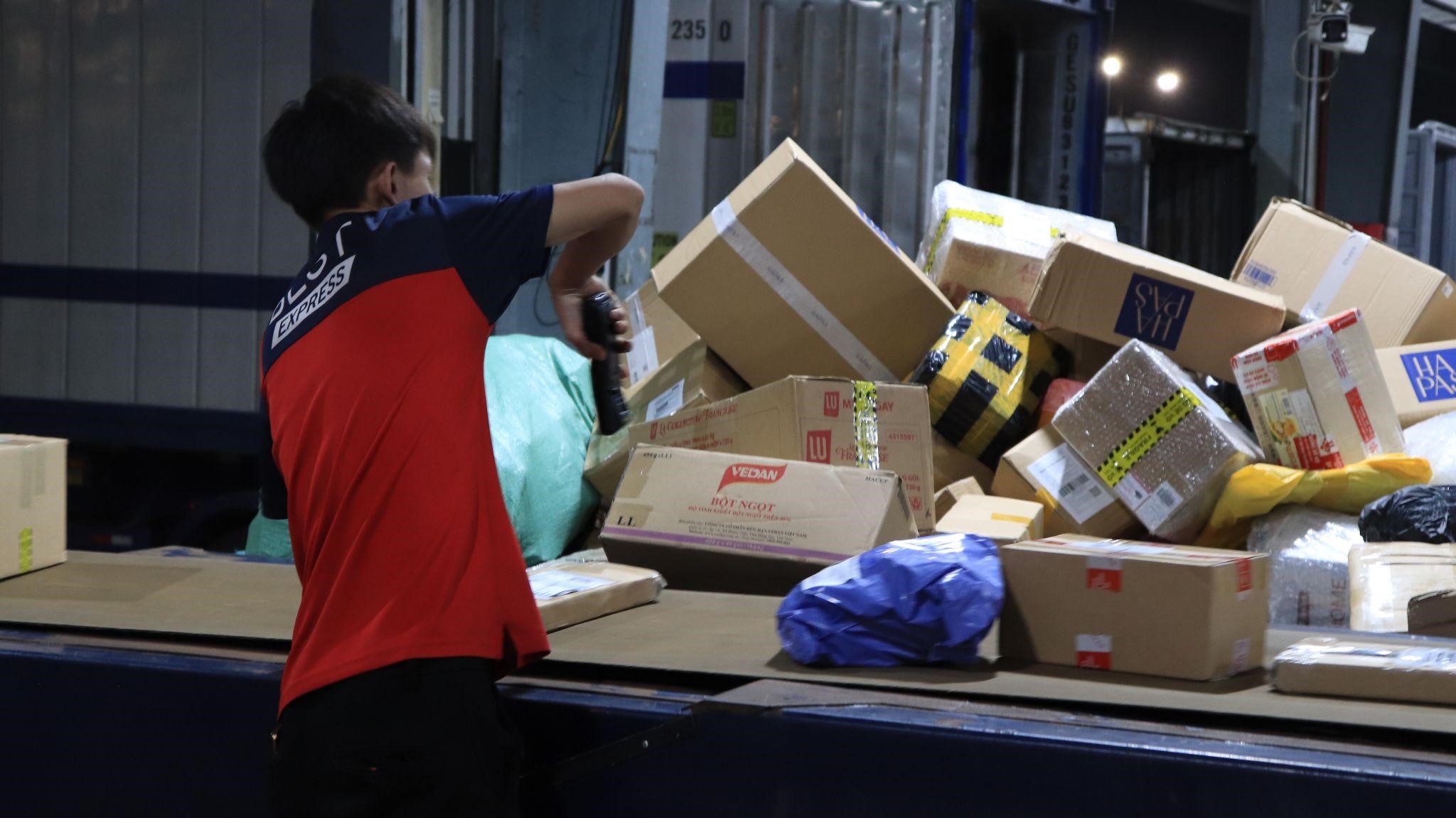 |
A huge volume of packages processed nightly in the inbound area. Photo: BEST Express |
Tuan explained that the greatest pressure comes not from the weight of individual packages, but from the continuous pace of work. As one truck finishes unloading, another is already in position, ready to be processed. Despite working through the chilly pre-Tet nights, he maintains a steady loading rhythm to ensure packages enter the system promptly.
"The sooner each package gets onto the conveyor, the shorter its storage time. This allows recipients to get their goods on time before Tet," Tuan said, before returning to his loading duties.
In the next stage, Minh supervises the DWS (automatic weighing, measuring, barcode scanning, and 3D imaging) system, ensuring continuous operation of the processing line.
Monitoring the display screen, he tracks the equipment's activity. Although the system automates weight measurement and three-dimensional sizing, during peak periods, package jams or blurry barcodes can still occur, requiring immediate resolution.
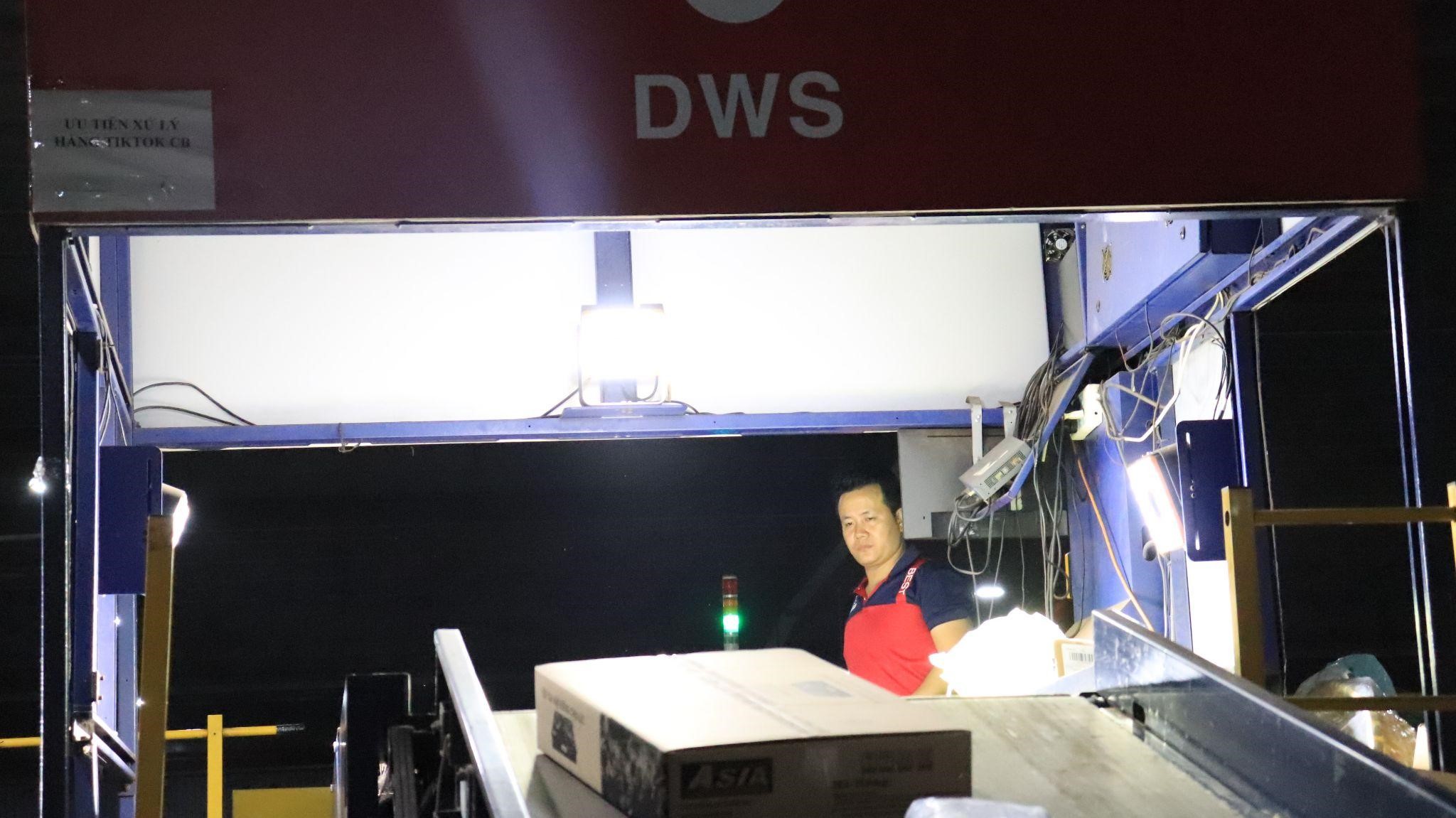 |
The DWS system monitoring area. Photo: BEST Express |
Specifically, Minh is responsible for monitoring alert signals and resolving emergent situations to prevent disruptions to the processing line. When a warning light appears or a package veers off its lane, he must intervene immediately to avoid bottlenecks.
"The machines operate at high speeds; even a few seconds of delay can cause packages to pile up. During Tet, demand for deliveries increases, so accurate input data is essential to minimize loss," Minh explained, while observing the stream of packages moving through the scanner.
In another area, packages that cannot be processed by the automated conveyor due to incorrect or blurry waybill codes are diverted to the manual handling department, managed by Hang.
This section serves as a collection point for packages with non-standard dimensions or waybill information. After being automatically rejected by the system, Hang and experienced staff re-check the codes, sort, and direct the packages to the correct areas based on their shipping routes.
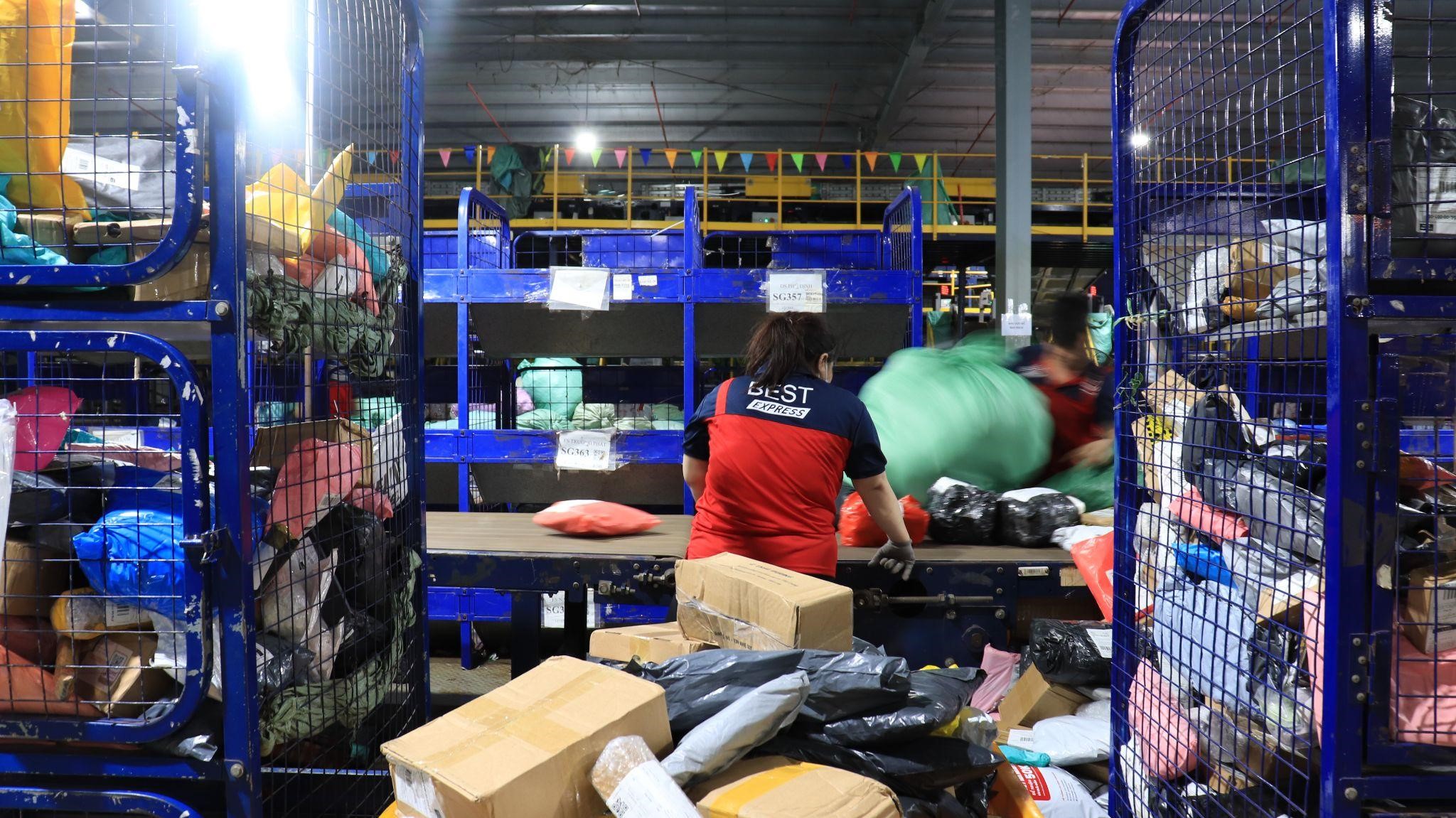 |
The manual area processes non-standard waybills. Photo: BEST Express |
After packages are weighed and their waybill codes corrected, Hang inspects and reinforces any loose boxes before sorting them into individual cages by area. This task demands high concentration, a strong memory for symbols, and knowledge of zone allocations to minimize errors during processing.
"Many packages contain household items or Tet gifts that recipients need at a specific time. Therefore, we must work quickly, yet precisely, ensuring the correct codes and zones," Hang stated.
Tuan, Minh, and Hang are three of many staff working shifts at BEST Express’s Cu Chi SC during this peak period. Across their different stages, they share the common goal of maintaining a smooth flow of goods throughout the Tet season.
The coordination among these departments ensures stable system operation despite the pressure of increased volume. This shortens processing times, helping to deliver Tet packages to recipients on schedule.
The Dan