For many years, diagnostic imaging primarily focused on enhancing image sharpness. The advent of photon-counting CT technology introduces a new approach, aiming for earlier disease detection and more effective treatment decision support.
At the 13th Ho Chi Minh City Extended Scientific Conference on Diagnostic Imaging in 2026, this technology was lauded as a significant advancement with the potential to improve diagnostic accuracy – a critical factor in clinical practice.
According to Tran Viet Hai, product manager for CT and solution consulting at Siemens Healthineers Vietnam, current CT systems play a crucial role in detecting and monitoring various diseases. However, in complex cases, acquired images can sometimes be noisy or lack sufficient detail for accurate lesion characterization.
 |
Tran Viet Hai, product manager for CT and solution consulting at Siemens Healthineers Vietnam, presents on photon-counting CT technology at the conference. *Photo: Siemens Healthineers* |
Unlike traditional CT systems, photon-counting CT technology offers a novel approach. Previously, CT scans primarily detected morphological changes such as lesion size, shape, or structure. With this new technology, by directly registering X-ray photons passing through the body, the system can provide more information about lesion characteristics in images.
This information not only assists physicians in morphological assessment but also provides a basis for deeper insights into the biological nature of lesions. This leads to a clearer understanding of each patient's condition and enables more tailored treatment decisions, aligning with current trends in personalized and precision medicine.
"When photon-counting CT technology is applied in practice, the differences are evident across various disease groups," Hai stated.
For cardiovascular diseases, especially in patients with stents or severe coronary calcification – cases often challenging to assess with conventional CT – this technology yields clearer images. This allows physicians to visualize vessel lumens and atherosclerotic plaques, even in patients with high heart rates or arrhythmias, without requiring additional medication.
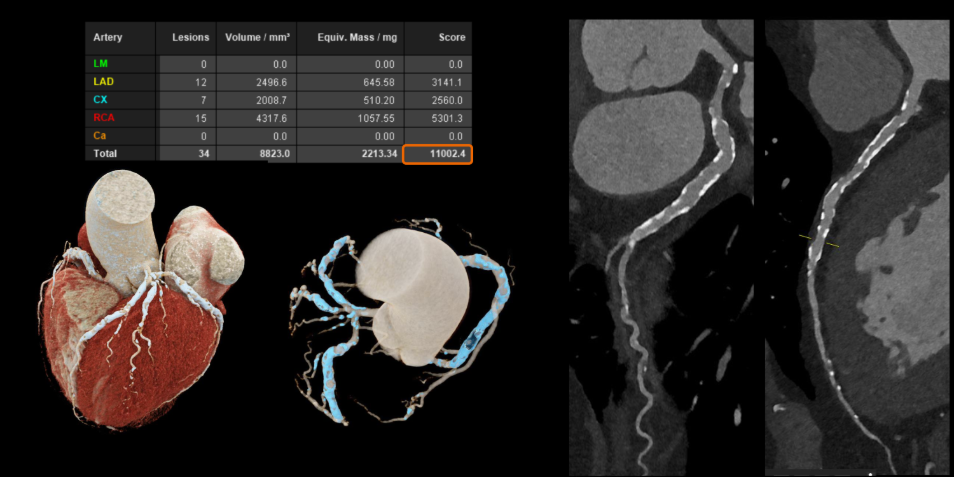 |
Coronary artery images show enhanced clarity, reduced noise, and enable more precise assessment. *Photo: Siemens Healthineers* |
In oncology, early detection of very small lesions is crucial for effective treatment. Photon-counting CT technology enables image reconstruction with very thin slices (up to 0.2 mm), aiding the detection of abnormalities that might previously have been missed. This allows physicians to identify early signs of abnormalities and accurately characterize lesions, effectively supporting early diagnosis and recurrence monitoring.
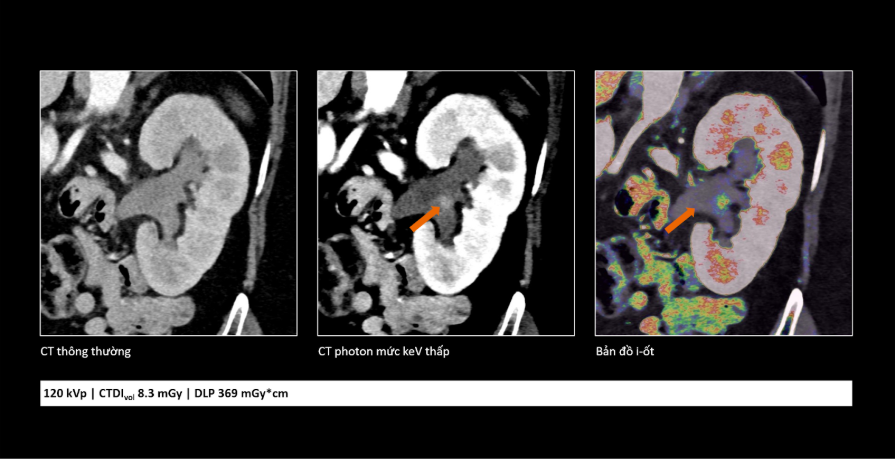 |
Comparison shows photon-counting CT technology provides clearer images and additional information, supporting physicians in more accurate lesion assessment. *Photo: Siemens Healthineers* |
For neurological conditions like stroke, where every minute can impact treatment outcomes, this technology enhances image contrast. This aids in early identification of infarcts or microhemorrhages and their differentiation from contrast agents. Additionally, its ability to reduce metal artifacts post-intervention helps physicians better assess vascular status.
Beyond improving image quality, photon-counting CT technology also reduces X-ray dosage and the amount of contrast agent used. "This contributes to increased patient safety, especially for those at risk of renal failure or with complex underlying conditions," Hai commented.
According to a Siemens Healthineers representative, photon-counting CT technology has now been deployed in over 35 countries, benefiting more than 2.5 million patients and forming the basis for over 1,000 published scientific studies. In Vietnam, this technology is also gradually being adopted in hospitals and specialized conferences.
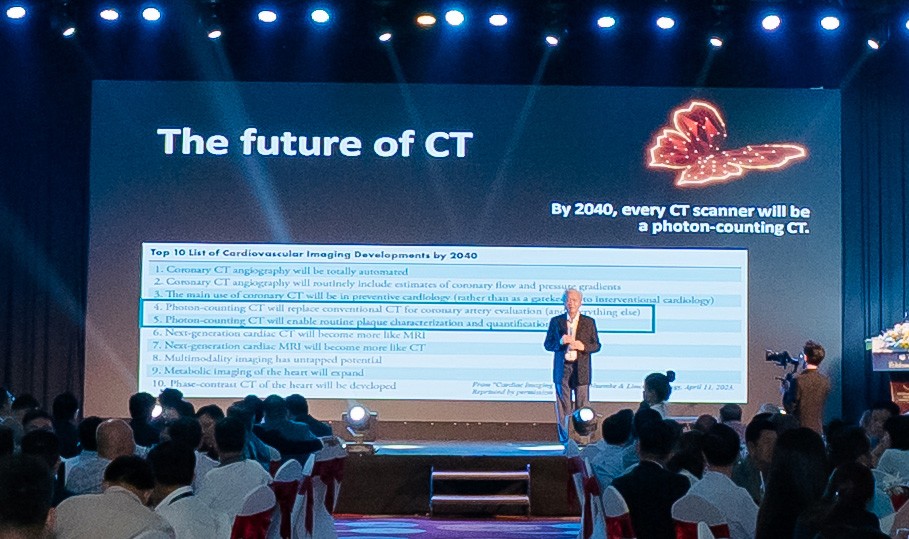 |
Associate Professor, Doctor Vo Tan Duc discusses photon-counting CT technology at the 13th Ho Chi Minh City Extended Scientific Conference on Diagnostic Imaging in 2026. *Photo: Siemens Healthineers* |
"In the near future, photon-counting CT technology could become the new standard in diagnostic imaging," remarked Associate Professor, Doctor Vo Tan Duc, President of the Ho Chi Minh City Society of Diagnostic Imaging.
At that point, the value of a CT system will extend beyond generating clear images; it will also support physicians in making accurate decisions and provide patients with the opportunity for early detection and timely treatment from the initial stages.
(Source: Siemens Healthineers)