Last year, the National Assembly approved raising the annual tax-exempt revenue for individual business owners to 500 million dong for both personal income tax and value-added tax.
In its proposal to amend several tax laws, the Ministry of Finance suggested revising the tax-exempt revenue threshold for personal income tax and value-added tax (VAT). This threshold would be set by the government, rather than being fixed by law.
The Ministry of Finance cited fluctuating domestic economic conditions since the regulation's issuance late last year. Early this year, rising input costs, declining purchasing power, and operational difficulties have impacted business households.
Therefore, adjusting tax policy for business households is essential. This ensures policies are scientific, appropriate, and consider taxpayers' capacity.
The Ministry of Finance stated that "adjusting the tax-exempt revenue threshold aims to support small and low-medium scale business households, helping them maintain operations, especially in industries with low-profit margins and those heavily affected by cost fluctuations."
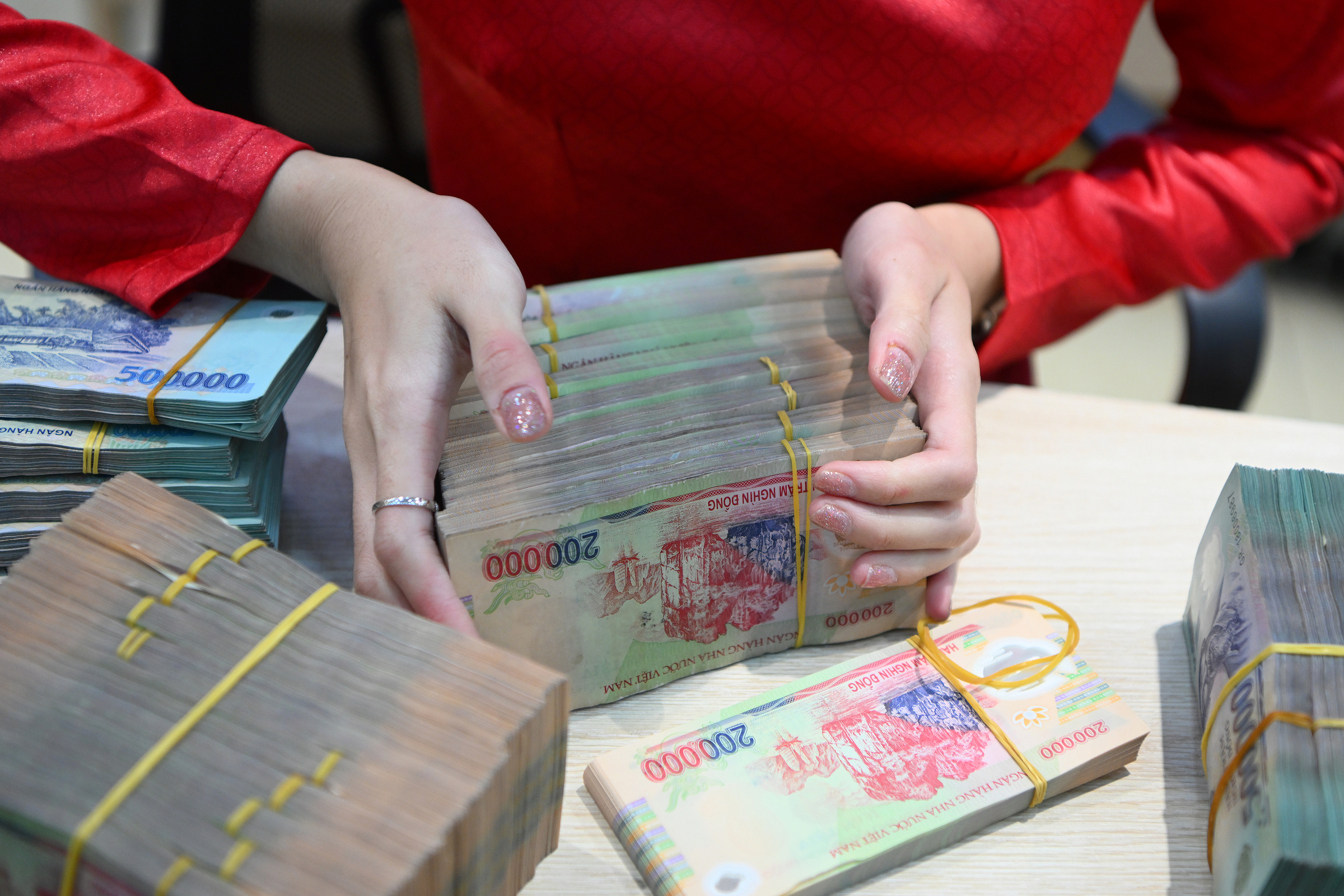 |
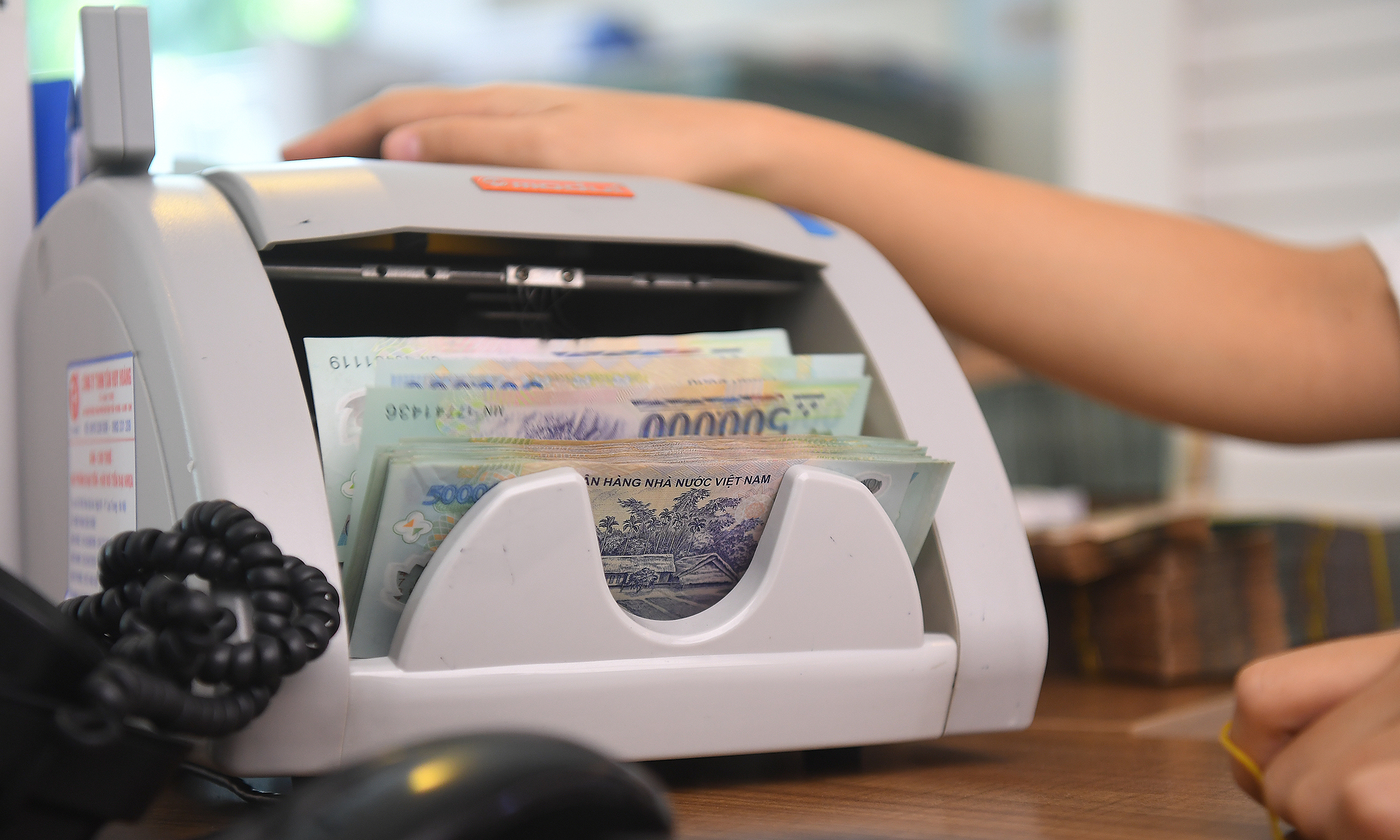
Cash transaction at a bank. Photo: Giang Huy.
Ministry of Finance data shows that by late 2025, Vietnam will have 3-4 million business households, with over 2 million consistently filing taxes. Last year, tax revenue from this sector reached 32,840 billion dong, a 37,5% increase year-on-year. During the 2022-2025 period, these 3-4 million business households, with over 2 million consistently filing taxes, contributed about 2% of the total state budget revenue.
Beyond business households, the Ministry of Finance also proposed a corporate income tax exemption threshold for small and micro-enterprises. The government would also regulate this threshold, not fix it by law. This policy is expected to take effect from the 2026 tax period.
Currently, no legal provision exists for an income tax exemption threshold for small businesses. Vietnam has about 900,000 active enterprises, with nearly 94% being small and micro-enterprises.
The Ministry of Finance cited international experience, noting that this group often receives preferential tax support, such as lower tax rates or exemptions.
The government offers incentives, including a two-year corporate income tax exemption for businesses converting from business households, or a 15-17% tax rate for small revenue businesses. However, the Ministry of Finance believes that adding a tax-exempt revenue threshold, similar to that for business households, would ensure fairness for small businesses. This policy also encourages business households to convert into enterprises.
The Ministry also proposed submitting the law to the National Assembly for approval under a streamlined procedure, during its first session from 20-24/4.
Phuong Dung