Vinasun reported that the average monthly income for employees in 2025 increased by approximately 2%. This means each employee earned about 158 million VND annually, the second highest in the past 10 years.
Last year's employee income doubled compared to 2015, a period when Vinasun first entered intense competition with ride-hailing technology companies.
According to Vinasun, last year, incentive packages and financial subsidies were maintained to attract and retain drivers. For example, new drivers received a bonus of 2 million VND and a low initial deposit (minimum 1,5 million VND). The company continued to apply a revenue-sharing mechanism, allowing drivers to keep up to 90% of revenue exceeding a set quota. The company retained a small portion to cover operating costs for its booking application, call center, and parking facilities.
In its annual report released on 15/4, Vinasun's management stated that salary is a crucial tool for motivating, attracting, and retaining skilled personnel. They believe current compensation aligns with general market standards.
While average income increased, Vinasun's workforce size is shrinking. By the end of last year, the company had about 1.400 employees, a decrease of over 140 people compared to the same period the previous year.
At its peak, Vinasun once employed over 17.000 people. The company experienced its most significant fluctuation in 2017 when its workforce decreased by 10.000. This was due to employees resigning or transitioning to operate under a franchise model, thus no longer being considered direct employees of the company.
Competitive pressure from ride-hailing technology companies and newly established taxi firms also directly impacted Vinasun's business results. Its fleet, which comprised over 6.100 vehicles 10 years ago, has now shrunk to about 2.100 vehicles. Last year, the company's revenue dropped by 19% year-on-year, to 882 billion VND. After-tax profit more than halved, falling from 84 billion VND to less than 40 billion VND, extending a four-year streak of negative growth.
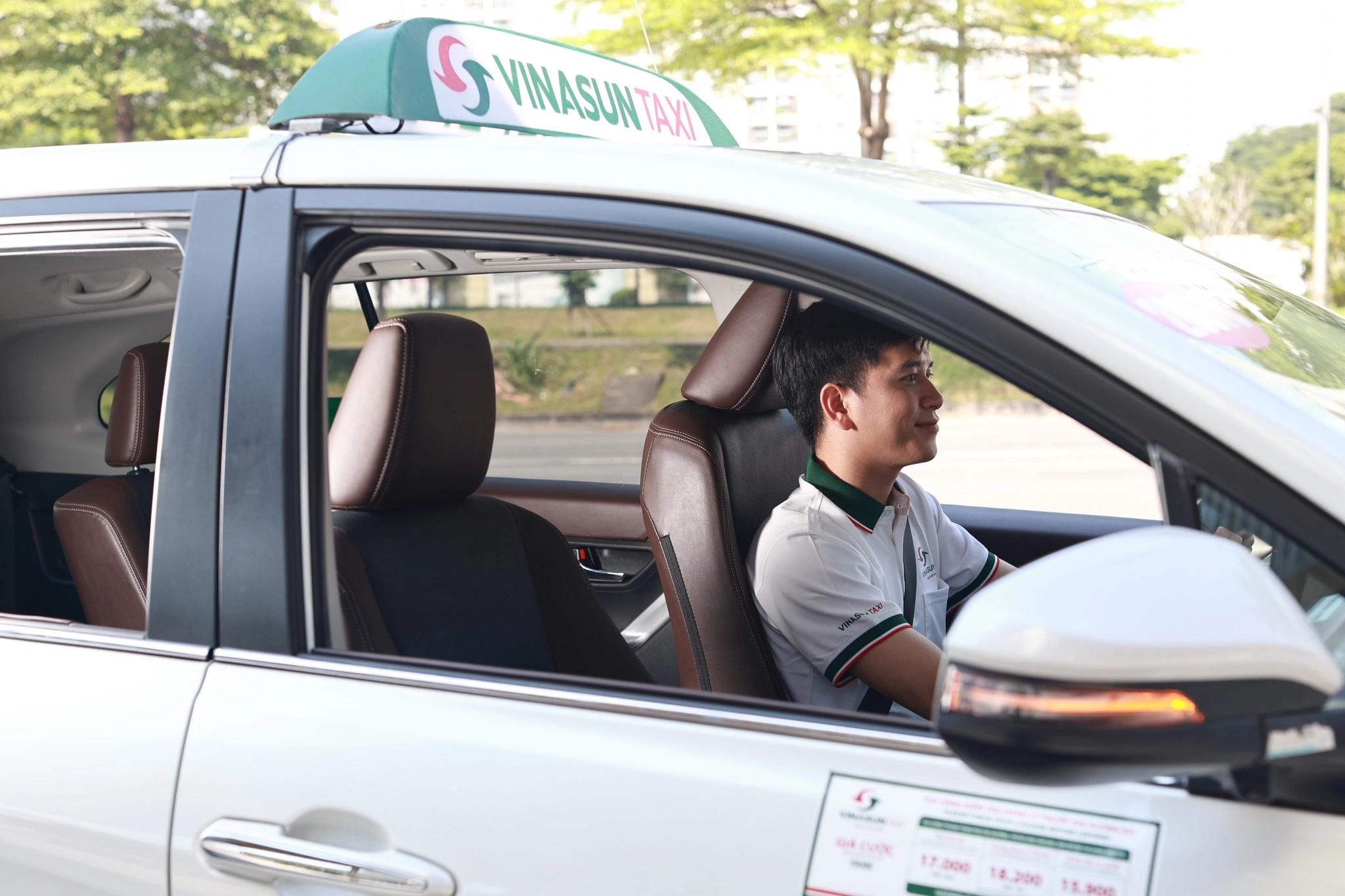 |
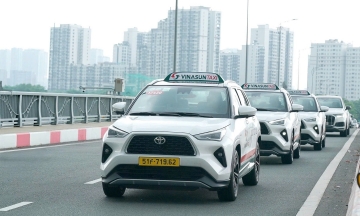
Vinasun taxi employees. Photo: *Vinasun FB Fanpage*. |
In shareholder meeting documents for the end of this month, Vinasun's management stated that 2026 will still be a challenging year, marked by weakened consumer purchasing power and competition from industry rivals.
The company projects a slight 2% increase in revenue this year, reaching nearly 903 billion VND. However, after-tax profit is expected to continue to decline, to approximately 32 billion VND. Regarding employee income, the company stated it will "ensure it to the highest extent possible".
In addition to its traditional business segments of taxi services and contract passenger transport, Vinasun is seeking new cooperation opportunities in transportation, technology, consumer goods, and payment sectors. The company continues to invest in new hybrid vehicles to replace gasoline cars, meeting customer demand.
Phuong Dong