The Politburo recently issued Conclusion 14, aimed at ensuring stable fuel supply and prices amidst new circumstances. This conclusion comes as global gasoline and oil supply and prices fluctuate dramatically due to military conflicts in the Middle East and other regions worldwide.
Accordingly, the Politburo encourages fuel conservation to reduce supply pressure, which could affect business operations and people's lives. Additionally, Vietnam aims to soon develop a national strategy for long-term raw material and fuel supply and reserves.
Efficient energy use stands as a key solution to mitigate supply risks and bolster national energy security. Previously, the Prime Minister urged ministries and localities to promote electric vehicle adoption, develop charging stations, and reduce reliance on imported gasoline and oil. The Ministry of Industry and Trade also recommended that businesses allow employees to work remotely when possible to reduce commuting and transportation demand.
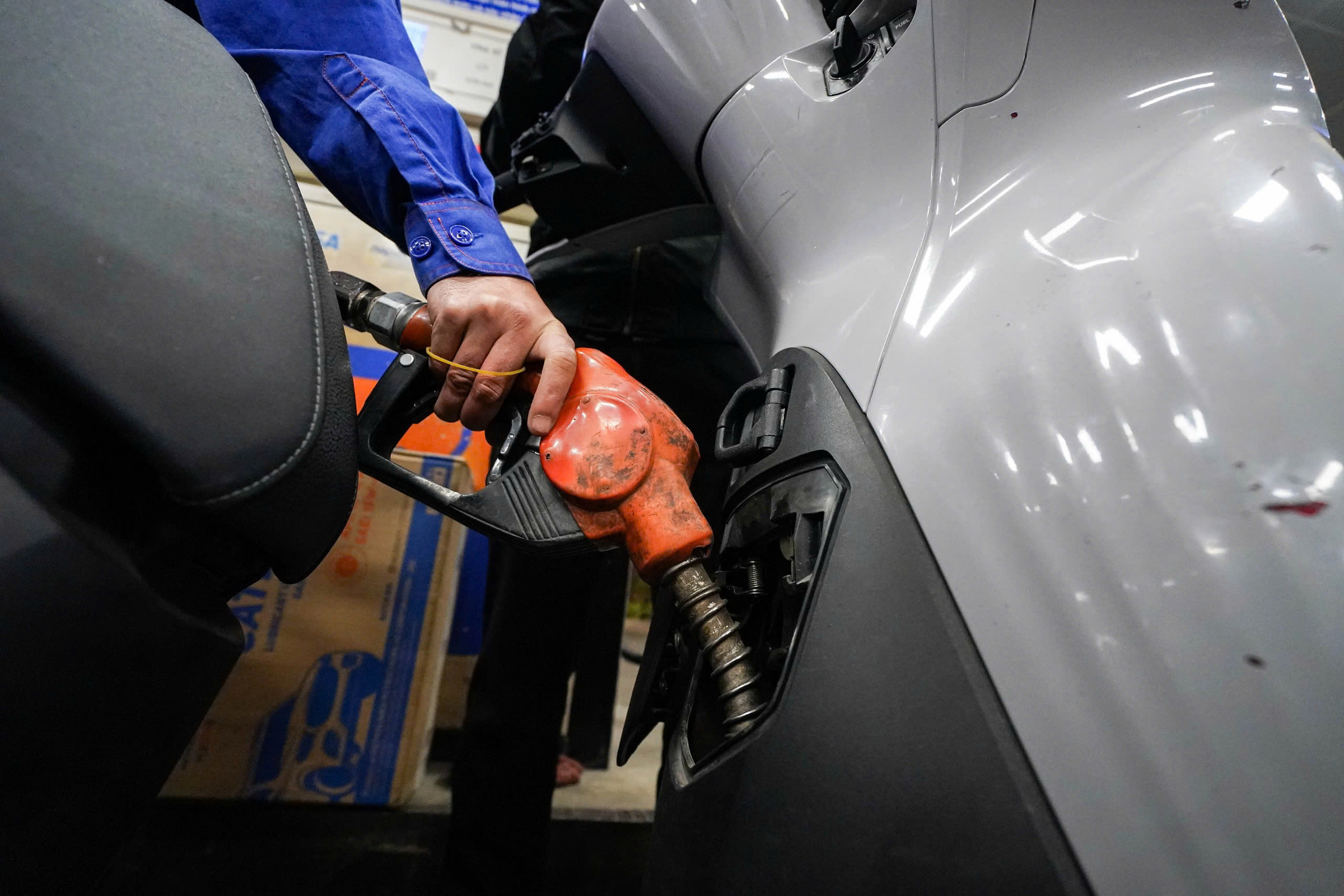 |
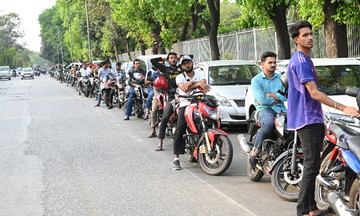
An employee at a store on Lang street, Hanoi, pumps gasoline for a customer on 11/3. *Photo: Hoang Giang* |
At this afternoon's meeting of the Standing Government, Prime Minister Pham Minh Chinh assessed this global fuel crisis as very complex and unpredictable. However, the Prime Minister reiterated the primary goal: to prevent any shortage of energy, gasoline, and oil for production, business, and consumption under any circumstances. The government remains committed to achieving growth of 10% or more in 2026 and subsequent years, while managing potential risks.
Government leaders outlined several key solution groups, assigning specific tasks to ministries, sectors, and businesses for the implementation of the Politburo's Conclusion 14.
According to the government, many countries in the region have implemented domestic fuel-saving measures, urging people to use alternative transportation amidst regional fuel supply scarcity. China, Japan, and Thailand have restricted fuel exports. The International Energy Agency also recommended working remotely to save daily commuting fuel and advised vehicles to travel at slower speeds (at least 10 km per hour below the maximum allowed on highways).
In addition to encouraging conservation, the Politburo's conclusion also addresses solutions for managing the gasoline and oil market.
Specifically, the Politburo assigned the Standing Committee of the Government's Party Committee to direct agencies to closely monitor and forecast global gasoline and oil supply, demand, and prices to develop effective response scenarios. The government must also consider immediately using tools to stabilize the market, such as fiscal policies (taxes, fees, expenditures, budget advances), monetary policies (interest rate support, capital, foreign currency), price management policies, and trade policies.
Regulatory agencies will intensify inspections and tighten management of key enterprises and traders. Concurrently, these bodies must severely penalize acts of hoarding, profiteering, commercial fraud, and smuggling.
The Party Committees of the Ministries of Foreign Affairs, Industry and Trade, and Finance need to proactively engage with foreign partners, facilitating domestic enterprises' access to stable raw material and fuel sources. Party committees at central and local levels must fully implement policies on socio-economic development, ensure national defense and security, and steadfastly pursue the goal of double-digit economic growth in 2026 and subsequent years.
Phuong Dung