In northern Vietnam, traders in Quang Ninh, Bac Ninh, Hanoi, and Hung Yen are purchasing live hogs at around VND 73,000 per kg, nearly 9% lower than before Tet. Some areas, such as Lao Cai and Lai Chau, recorded prices of approximately VND 70,000 per kg.
Meanwhile, in central Vietnam, live hogs in Nghe An, Ha Tinh, and Dak Lak traded at about VND 71,000 per kg, approximately 10% lower than the same period last year. The southern market saw a slight fluctuation but also decreased to nearly VND 71,000 per kg.
This trend is evident in the wholesale sector. Reports from Hoc Mon Wholesale Market indicate that the volume of pork arriving at the market in recent days has averaged only 55-60 tons daily, a sharp 80% decrease from the peak period just before Tet. Many traders have not yet resumed operations after the holiday, leading to a significant drop in market supply. Purchasing power at the market is also around 30-50% lower than pre-Tet, showing that consumption demand has not recovered.
The decline in live hog prices has led to adjustments in retail prices. At supermarket chains, many pork products are currently selling for VND 100,000-180,000 per kg, with additional 10-20% promotions for members.
In traditional markets in Ho Chi Minh City, pork belly is now VND 150,000-170,000 per kg, a decrease of approximately VND 10,000 compared to before Tet. Young spare ribs are commonly priced at VND 150,000-180,000 per kg. Lean ground pork, ham, and shoulder cuts decreased by 5-7%, now ranging from VND 100,000-130,000 per kg.
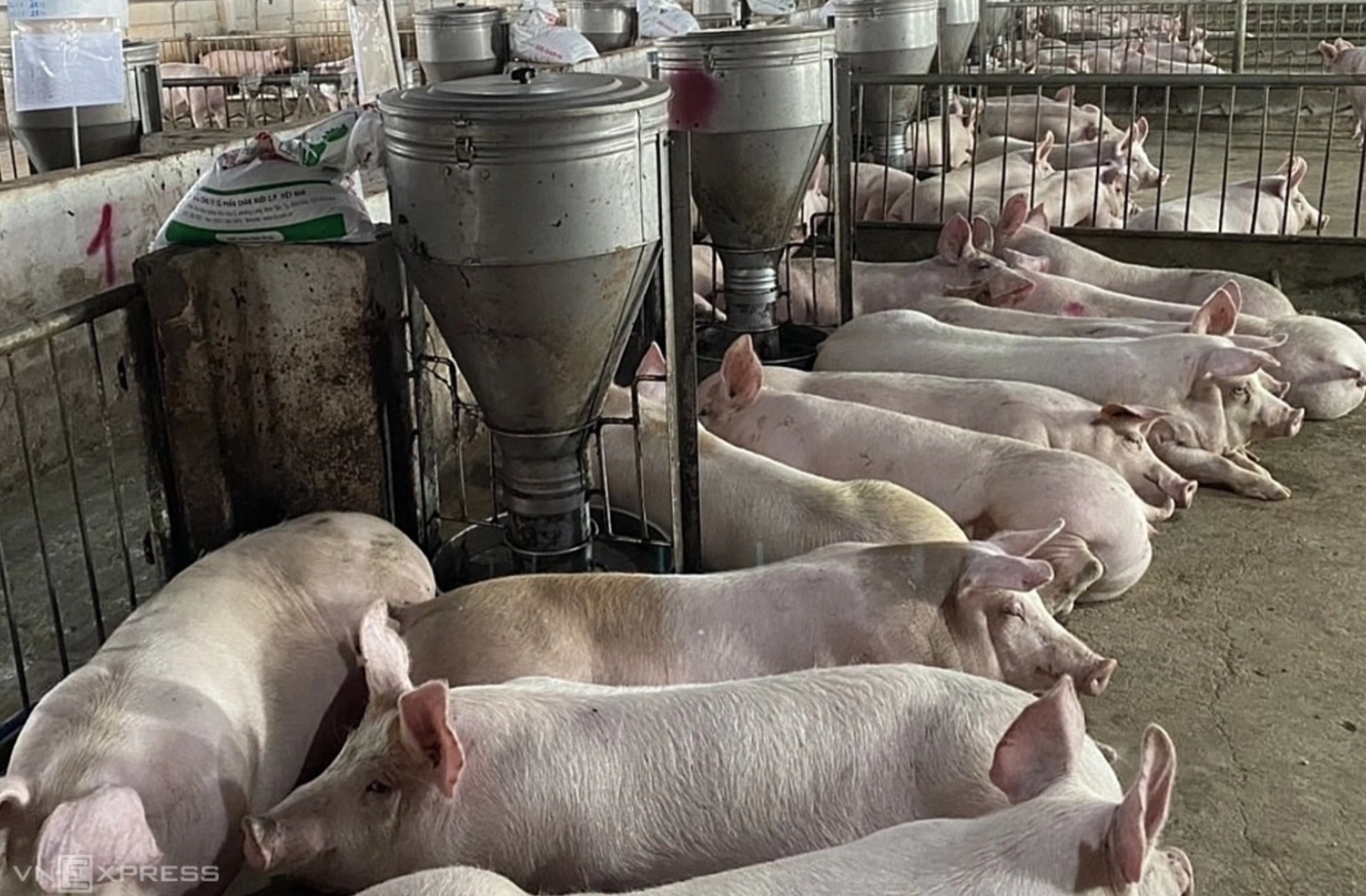 |
Hoang Anh Gia Lai's pig farm. Photo: Thi Ha |
From a short-term market perspective, small traders attribute the price reduction to decreased purchasing power. Ms. Hanh, a trader at Xom Moi Market in An Hoi Dong ward, stated that many schools and factories have not yet returned to normal operations. Additionally, some residents remain in their hometowns after Tet, resulting in a noticeable reduction in customers. If prices remain high, traders face difficulty selling and risk accumulating unsold stock.
The Southeast Region Livestock Association suggests that consumers stocked up on food before Tet, leading to low demand for new purchases. Processing businesses are primarily producing based on actual orders rather than increasing capacity as they would during peak periods.
Furthermore, a sustained high level of imported meat supply adds competitive pressure. According to data from the General Department of Vietnam Customs, in 2025, Vietnam imported 978,000 tons of meat and meat products, valued at 2 billion USD, marking an 11.6% increase in volume and a 12.2% increase in value compared to 2024. Specifically, imports of fresh, chilled, or frozen pork reached 183,400 tons, worth 418.5 million USD, an 18.75% increase in volume and a 20.88% increase in value. The average import price was approximately 2,273 USD per ton, a 2.8% decrease.
In terms of supply structure, Russia accounted for 48.44% of imported pork, followed by Brazil at 31%. Markets like Germany, Canada, and the Netherlands held smaller proportions. A stable supply of foreign goods provides businesses with more raw material options, thereby reducing pressure on domestic hog procurement.
According to experts, live hog prices may improve when production and educational activities return to normal, and consumer demand gradually increases after the first lunar month. However, given the stable domestic supply and consistently high imports, a significant price increase is unlikely. In the short term, the market may continue to fluctuate around current levels before entering a new consumption cycle.
Thi Ha