At the meeting of the National Steering Committee for the implementation of Resolution 68 on private economic development on 31/1, Prime Minister Pham Minh Chinh affirmed that enterprises are the core, infrastructure is the foundation, and institutions are the driving force for breakthrough development of the private sector in the coming years.
To achieve this, the government needs to establish a mechanism for assigning major, challenging, and breakthrough tasks to enterprises. This approach demonstrates trust, a constructive spirit, and a sense of care and responsibility towards businesses, according to the Prime Minister. He tasked relevant ministries and agencies with reviewing regulations related to the private economic sector's activities and proposing solutions to institutionalize this policy.
The Prime Minister also requested the early submission of the "Go Global" project to reach international markets in February. This initiative aims to connect businesses and integrate them into global supply chains. He emphasized that large enterprises should take a leading role, supporting smaller ones for collective development.
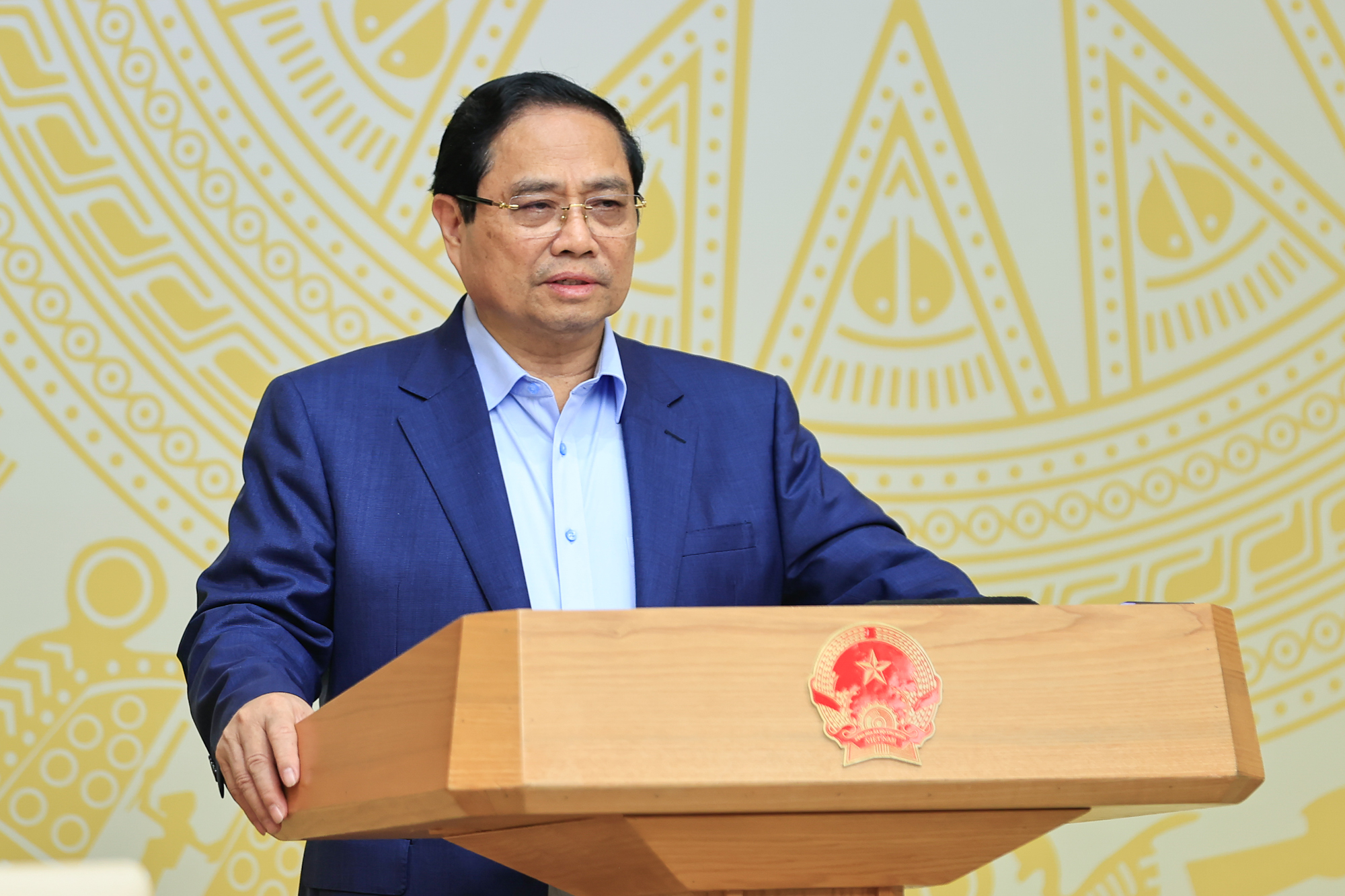 |
Prime Minister Pham Minh Chinh speaks at the meeting, 31/1. *Photo: VGP* |
Furthermore, according to the government leader, policymakers must closely monitor the situation of enterprises and entrepreneurs, understanding both their difficulties and advantages to ensure timely and effective policy responses. Agencies and units should leverage the role of their leaders, combining the strengths of the state and the private sector, as well as domestic and international resources, for development.
He outlined the state's "five pillars" of support: open institutions and procedures; synchronous, smooth infrastructure; smart human resources and governance; unblocking resources; and resolving business bottlenecks. In return, enterprises need to uphold "five pioneering aspects": innovation, institutional building, and culture, while contributing and mobilizing all resources for national development.
Under Resolution 68, Vietnam aims to have 2 million active enterprises by 2030. The private economic sector is targeted to grow at an average annual rate of 10-12%, exceeding the GDP growth rate. By 2030, Vietnam expects to have at least 20 large enterprises participating in global value chains.
At the session, many attendees noted the increasingly clear impact of Resolution 68 on the business community's development. The number of businesses entering and re-entering the market has shown strong growth, averaging over 26,000 enterprises per month.
For the whole of 2025, nearly 297,500 enterprises were newly registered and resumed operations – a record high, increasing by nearly 27,4% compared to 2024. The total registered capital for private sector enterprises reached nearly 6,4 quadrillion VND, an increase of 77,8%. By the end of 2025, the country had over 1 million active enterprises.
While the investment and business environment has significantly improved, private enterprises still face numerous barriers that require timely removal. Administrative procedures in some areas remain complex, and informal costs persist. Access to production resources such as credit capital and land remains difficult for small and medium-sized enterprises (SMEs) and business households. The competitiveness, technology, and governance capabilities of most domestic private enterprises are still limited, insufficient to participate in high-value chains.
Phuong Dung