In a telegram issued on the night of 3/2, Prime Minister Pham Minh Chinh urged ministries, sectors, and localities to focus on resolving issues in implementing Decree 46, which guides the enforcement of the Law on Food Safety. This directive aims to ensure timely and smooth customs clearance for goods, preventing continued congestion and difficulties for businesses.
The Prime Minister specifically instructed the Ministries of Health, Agriculture and Rural Development, and Industry and Trade, along with other relevant ministries, to immediately issue guiding documents for the inspection of imported and exported food and goods within their assigned management areas. They must also urge units and localities to prepare necessary facilities, personnel, and equipment to facilitate timely and smooth customs clearance.
These ministries are also tasked with establishing a 24/7 hotline and publicizing it through mass media. They must assign permanent staff to be on duty to promptly address any issues arising during the implementation of Decree 46. Additionally, all parties are required to review the decree, compile identified issues, and report them at the regular government meeting for January today (4/2).
The Ministry of Finance is directed to instruct the Customs Department to deploy forces to work 24/7 at border gates. They must closely coordinate with other functional forces to clear congestion and ensure timely customs clearance for food and goods. This agency must also ensure the electronic customs clearance system operates smoothly during peak periods.
The Prime Minister further requested that the People's Committees of provinces and cities clearly assign responsibilities to state inspection agencies for food safety. Localities must fully designate testing facilities as regulated and support businesses in completing inspection and testing procedures. Concurrently, local authorities must organize 24/7 working forces at border gates, reasonably manage traffic flow, and prioritize staging areas for agricultural products and essential foodstuffs.
"If documentation is complete as committed, immediate customs clearance must be granted, with sampling conducted concurrently or through post-inspection at the business's warehouse," the telegram stated. The Ministry of Health will chair and coordinate with relevant ministries to report daily on the implementation status of Decree 46 and promptly propose measures to address any arising issues.
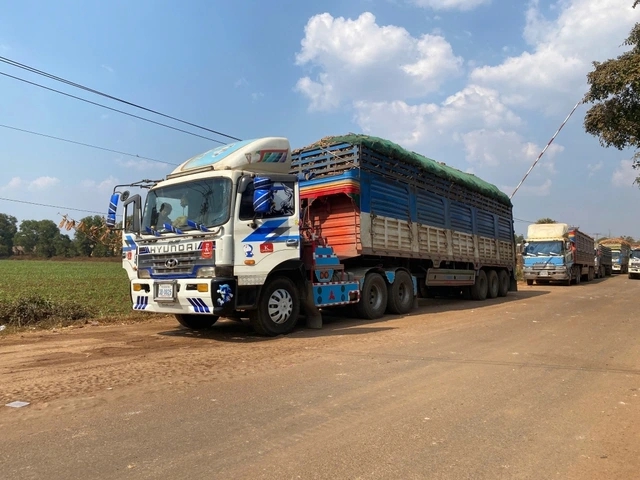 |
Goods vehicles at Tay Ninh border gate. *Photo: VGP* |
The congestion stems from the implementation of Decree 46 without detailed guidelines or a transition mechanism, which has caused significant difficulties for businesses, according to a report by the Ministry of Agriculture and Rural Development. Many consignments now require additional physical inspection and sample testing, extending the waiting time for results by 5-7 days. Limited warehousing and storage conditions at border gates, especially land border gates, have increased the risk of damage and costs for businesses.
Current regulations further complicate matters by not clarifying testing indicators and applicable standards for fresh agricultural products, leaving both inspection agencies and businesses uncertain. Another issue highlighted by the ministry is the requirement for product standard documents in food safety inspection dossiers for fresh agricultural products and goods not subject to conformity declaration. This new requirement lacks specific guidance on forms and content, creating difficulties for businesses and agencies during the dossier appraisal process.
The pressure intensified as the decree's implementation coincided with the period leading up to Tet Nguyen Dan (Lunar New Year), when demand for imported fresh agricultural products surged. Storage facilities at border gates could not meet preservation requirements, and current regulations do not allow businesses to move goods to their private warehouses while awaiting inspection results, thereby increasing the risk of economic losses.
Phuong Dung